

Ireland's dessert tradition runs deeper than most people realise. Beyond the pub and the pint, there's a whole world of baked, stewed, fried and cream-laden sweets that have kept Irish families fed and happy through centuries of long winters. Many of these recipes lean on simple pantry staples — butter, oats, cream, treacle, dried fruit — yet the results are anything but plain. They carry the warmth of turf fires, the richness of Irish dairy and a knack for turning modest ingredients into something genuinely comforting.
Whether you've got Irish roots or simply a sweet tooth that craves something beyond the usual suspects, this collection covers the desserts that matter most on the island. Some are centuries old, others evolved during the twentieth century, and a few have been gently modernised without losing their soul. From dense, fruit-packed cakes to pillowy bread puddings, here are ten Irish desserts worth making at least once — and almost certainly more than that.
Barmbrack
Barmbrack — báirín breac in Irish, meaning "speckled loaf" — straddles the line between bread and cake. Dried fruit, usually sultanas and raisins, is soaked overnight in strong black tea, then folded into a lightly spiced batter with just enough sugar to coax out the fruit's natural sweetness. The tea-soaking step is the secret: it plumps the fruit and keeps the crumb moist for days. Traditionally baked for Halloween, the loaf once contained hidden charms — a ring for marriage, a coin for wealth, a thimble for spinsterhood. Sliced thick and spread with salted Irish butter, barmbrack is autumn in edible form. The best versions have a dark, glossy crust and a dense, fragrant interior that fills the kitchen with the scent of mixed spice and citrus peel.
Bread and butter pudding
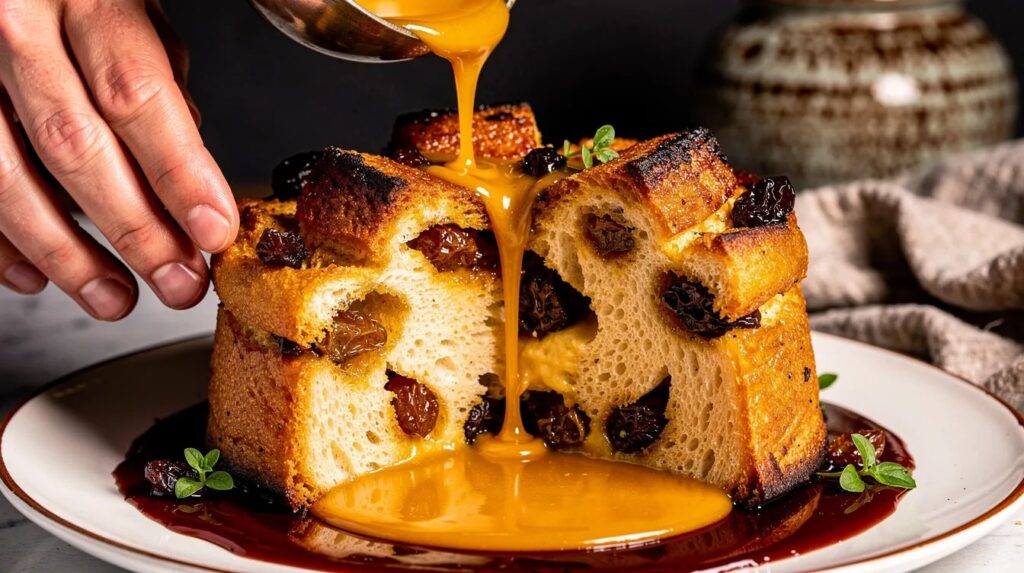
The Irish version of this classic leans heavily on white soda bread rather than the sandwich bread common in English recipes. Stale slices are layered with butter and sultanas in a baking dish, then drowned in a custard of eggs, cream, sugar and vanilla. It bakes until the top puffs golden and the centre wobbles just slightly — that gentle tremor is the sign to pull it from the oven. Served warm with a jug of pouring cream, it transforms yesterday's bread into something entirely new. The soda bread gives the pudding a faintly tangy note that balances the richness of the custard. It's thrifty cooking at its finest, and it has graced Irish Sunday tables for generations.
Porter cake
Porter cake gets its name — and its deep, malty flavour — from the dark stout stirred into the batter. Guinness is the most common choice, though any good porter works. The beer mellows during baking, leaving behind a complex bitterness that pairs beautifully with brown sugar, mixed dried fruit and warm spices like cinnamon and nutmeg. The crumb is tight and dark, almost like a fruitcake, but moister and less cloying. Wrapped in greaseproof paper and stored in a tin, porter cake actually improves over several days as the flavours deepen and merge. It needs nothing more than a cup of tea alongside it, though a thin slice of mature cheddar is a surprisingly good companion.
Apple tart
Not a French tarte aux pommes, not an American pie — the Irish apple tart is its own thing entirely. A shortcrust pastry shell, made with cold butter and a light hand, holds a generous pile of peeled Bramley apples tossed with sugar, a squeeze of lemon and sometimes a whisper of clove. A pastry lid seals it shut, brushed with egg wash and sprinkled with caster sugar before baking. The apples collapse into a fluffy, almost cloud-like filling — Bramleys are cooking apples that break down completely, creating a texture somewhere between sauce and mousse. Every Irish family has their own version, passed down through generations with minor adjustments. It's served warm with softly whipped cream or, in some households, a scoop of vanilla ice cream.
Sherry trifle
Irish sherry trifle is a layered affair that appears at Christmas, Easter and any celebration worth its name. The base is sponge cake — often Swiss roll — doused liberally in sweet sherry until it's properly sodden. Then comes a layer of raspberry or strawberry jam, followed by tinned fruit (usually peaches or mixed fruit cocktail, without apology), a thick blanket of Bird's custard, and finally a crown of whipped cream. Some versions add jelly between the fruit and custard, giving the trifle a wobbling, jewel-coloured stratum. The key is generosity at every layer. A trifle made with restraint is a trifle that's missed the point. It's assembled in a glass bowl so the layers are visible, and it sits in the fridge for hours before serving, giving the sherry time to seep through everything.
Carrageen moss pudding
This is perhaps the most distinctly Irish dessert on the list. Carrageen moss is a type of red seaweed harvested along the Atlantic coast, particularly in the west and southwest. When simmered gently in milk, it releases a natural gelling agent that sets the liquid into a delicate, trembling pudding — no gelatine required. The flavour is subtle: creamy, faintly oceanic, lightly sweetened with honey or sugar and lifted with vanilla or lemon zest. The texture falls somewhere between panna cotta and blancmange but lighter than both. It was once considered a health food, given to invalids and children for its mineral content. Today it's experiencing a quiet revival among chefs interested in foraged, hyper-local Irish ingredients. Served cold with a drizzle of honey and a scattering of seasonal berries, it's elegant and unlike anything else.
Guinness chocolate cake
A more modern addition to the Irish dessert canon, this cake pairs the roasted, coffee-bitter notes of Guinness stout with dark chocolate and cocoa powder. The stout is heated with butter, then combined with the dry ingredients and sour cream to produce an exceptionally moist, almost black crumb. The classic topping is a thick layer of cream cheese frosting, its tang cutting through the richness of the cake below. Some bakers add a tablespoon of espresso to amplify the depth. The stout doesn't make the cake taste of beer — it deepens the chocolate flavour in a way that's hard to achieve otherwise, much like adding coffee to a brownie batter. It's become a staple of modern Irish baking blogs and appears at birthday parties and office celebrations across the country.
Boxty pancakes with sugar and lemon
Boxty — bacstaí — is traditionally a savoury potato pancake from the northwest, particularly counties Leitrim, Cavan and Donegal. But the dessert version deserves equal attention. The batter combines grated raw potato with mashed potato, flour, baking powder and buttermilk, then the pancakes are fried in butter until crisp at the edges and tender within. Served as a sweet, they're sprinkled with caster sugar and a generous squeeze of lemon, much like French crêpes. The potato gives the pancakes a slightly chewy, earthy quality that makes them more satisfying than a standard pancake. The old rhyme goes: "Boxty on the griddle, boxty in the pan; if you can't make boxty, you'll never get a man." Gender politics aside, the rhyme speaks to how deeply embedded this dish is in rural Irish identity.
Baileys cheesecake
Baileys Irish Cream, the whiskey-and-cream liqueur produced in Dublin since 1974, has inspired an entire sub-genre of Irish desserts, and the cheesecake is the crown jewel. A crushed digestive biscuit base, pressed firm and chilled, supports a filling of whipped cream cheese, icing sugar and a generous measure of Baileys. It's a no-bake recipe — the filling sets in the fridge, producing a silky, mousse-like texture rather than the dense New York style. Some versions layer chocolate ganache on top or fold melted dark chocolate through the filling. The Baileys comes through clearly: caramel, vanilla, a gentle warmth from the whiskey underneath. It's rich enough that small slices are wise, though second helpings are almost inevitable. A dusting of cocoa powder over the top finishes it simply.
Rhubarb crumble
Rhubarb grows like a weed in Irish gardens, and by early spring its pink-red stalks are ready to harvest — making this a perfect dessert for the season ahead. The filling is straightforward: chopped rhubarb, sugar and sometimes a strip of orange zest, tumbled into a baking dish. The crumble topping is where individual style shows. The classic mix is flour, butter and demerara sugar, rubbed together until it resembles rough breadcrumbs. Some cooks add rolled oats for a chewier texture, others stir in ground almonds or a pinch of ginger. It bakes until the fruit bubbles up at the edges and the topping turns deeply golden and crunchy. Served with hot custard or cold cream, rhubarb crumble is one of those desserts that tastes like home regardless of where you're eating it. The sharp tang of the rhubarb against the buttery, sweet crumble is a balance that never gets old.
What makes Irish desserts different
A thread runs through all ten of these desserts: restraint in technique, generosity in ingredients. Irish baking doesn't chase architectural precision or elaborate decoration. It values butter, cream, good fruit and honest flavour. Many of these recipes were born from necessity — using up stale bread, stretching dried fruit through a lean winter, putting the oats and potatoes that sustained the island to sweeter use. That history of making much from little gives Irish desserts a groundedness that fancier pastry traditions sometimes lack. The dairy, too, matters enormously. Irish butter and cream, from grass-fed cows on rain-soaked pastures, have a richness and colour that's hard to replicate elsewhere.
These are desserts built for sharing: carried to a neighbour's house in a tin, served at the centre of a crowded table, eaten standing in the kitchen with a fork. They don't demand pastry school training or specialist equipment. A mixing bowl, a wooden spoon, a reliable oven and decent ingredients will get you there. That accessibility contributes to their lasting appeal, and explains why they've survived, largely unchanged, while food trends have come and gone around them.
Questions frequently asked
Are Irish desserts very different from British ones?
There's overlap — bread and butter pudding and crumbles appear on both sides of the Irish Sea — but Irish versions often lean on specifically local ingredients like soda bread, Irish stout, carrageen moss and Baileys. The dairy is also distinct: Irish butter has a higher fat content and a deeper yellow colour from grass-fed herds, which noticeably affects baked goods. Cultural context matters too; barmbrack's Halloween charms and boxty's roots in the rural northwest are uniquely Irish traditions.
Can these desserts be made outside Ireland with local ingredients?
Almost all of them translate well to any kitchen. Bramley apples can be swapped for other tart cooking apples like Granny Smiths. Guinness is widely available internationally, and any good stout will work in porter cake or chocolate cake. Carrageen moss is the trickiest ingredient to source — try health food shops, specialist Irish grocers or online suppliers. Dried carrageen keeps for months in a cool, dry cupboard.
Which of these desserts are suitable for making ahead?
Porter cake and barmbrack both improve with a few days' rest and keep well for up to a week wrapped in paper and stored in a tin. Baileys cheesecake needs at least four hours in the fridge and can be made a full day ahead. Sherry trifle benefits from overnight chilling. Crumble and apple tart are best eaten the day they're baked, though both reheat well in a moderate oven for ten to fifteen minutes.
Are any of these desserts naturally gluten-free?
Carrageen moss pudding is naturally gluten-free, as it relies on seaweed, milk, sugar and eggs with no flour involved. Baileys cheesecake can be made gluten-free by using a base of crushed gluten-free biscuits. For the others, gluten-free flour blends can be substituted in most cases, though results may vary slightly in texture — particularly for pastry-based desserts like apple tart.
What's the best Irish dessert for someone trying Irish food for the first time?
Apple tart or rhubarb crumble present a gentle introduction, offering familiar formats with distinctively Irish character. For a more adventurous choice, Guinness chocolate cake surprises those who expect a beer flavour, revealing instead an incredibly rich, deep chocolate experience. Carrageen moss pudding is recommended for anyone seeking a truly novel taste.