



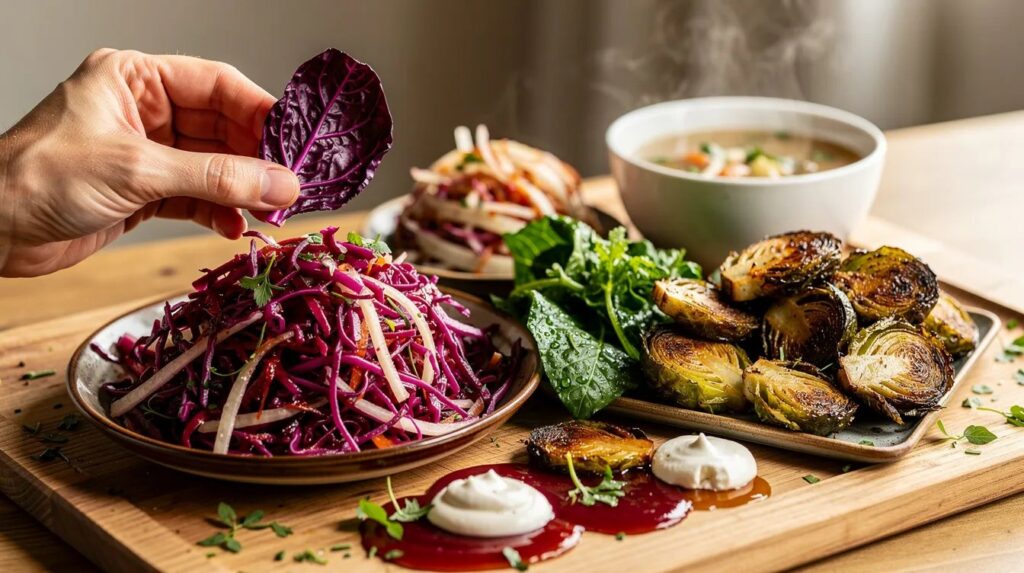
Cabbage sits quietly in the crisper drawer, waiting for its moment. Most of the time, it gets shredded into coleslaw and left at that—a side dish afterthought at a barbecue. That's a waste of one of autumn and winter's most versatile, affordable vegetables. A single head can feed a household for days, moving from a charred wedge on Monday to a bubbling gratin on Thursday, shifting between Asian, European and Middle Eastern kitchens without breaking a sweat.
Here are eleven ways to cook cabbage that have nothing to do with mayonnaise or a plastic fork. Some are quick weeknight fixes; others reward a slow weekend afternoon. Each recipe leans into what cabbage does best: absorb flavour, hold its texture under heat, and deliver a satisfying bite that heavier vegetables can't match. Roll up your sleeves, grab a sharp knife, and give that humble head the attention it deserves.
Roasted cabbage wedges with miso butter
Cut a green cabbage into thick wedges, keeping the core intact so the leaves hold together. Brush each wedge with a mixture of white miso paste, softened unsalted butter, a splash of rice vinegar and a pinch of caster sugar. Lay them flat on a lined baking tray and roast at 220 °C for 25–30 minutes, flipping once, until the edges blacken and the inner leaves turn silky. The miso caramelises into something deeply savoury, almost meaty. Finish with toasted sesame seeds and a squeeze of lime. This works as a side for grilled salmon or as a standalone dish over steamed rice.
Cabbage and pork belly potstickers
Finely shred half a savoy cabbage, salt it, and let it sit for ten minutes. Squeeze out every drop of moisture—this is the step that separates soggy dumplings from crisp ones. Mix the cabbage with 300 g minced pork belly, grated ginger, two finely sliced spring onions, a tablespoon of soy sauce and a teaspoon of sesame oil. Spoon the filling into round dumpling wrappers, pleat the edges shut, and pan-fry in a hot skillet with a thin film of vegetable oil. Once the bottoms are golden, add 80 ml of water, cover, and steam for 4 minutes. The result: a lacy, crunchy base with a juicy interior. Serve with black vinegar and chilli oil.
Slow-braised red cabbage with apple and star anise
This is a dish that fills a cold-weather kitchen with the kind of smell that makes people appear from other rooms. Shred a whole red cabbage and layer it in a heavy-bottomed pot with two peeled and diced Granny Smith apples, 2 tablespoons of brown sugar, 60 ml of red wine vinegar, a generous knob of butter, two star anise and a cinnamon stick. Add 100 ml of water, cover tightly, and cook on the lowest heat for 90 minutes to 2 hours, stirring every half hour. The cabbage collapses into a glossy, sweet-sharp tangle. It pairs brilliantly with roast duck, pork loin or a hearty sausage and is even better as leftovers.
Charred cabbage steaks with romesco
Slice a firm green cabbage into rounds about 2.5 cm thick. Brush both sides with olive oil, season with flaky salt and smoked paprika, and cook on a very hot grill plate or barbecue for 4–5 minutes per side. You want a proper char—dark, almost-burnt lines—while the centre stays just tender. Meanwhile, blitz a romesco sauce: roasted red capsicums, toasted almonds, garlic, sherry vinegar, olive oil and a dried chilli. Spoon the romesco over the steaks and scatter with torn flat-leaf parsley. The smokiness of the cabbage against the nutty, tangy sauce creates something that impresses even committed carnivores.
Japanese okonomiyaki
Often called a Japanese savoury pancake, okonomiyaki is really a cabbage delivery system held together by a light batter. Shred half a green cabbage finely and fold it through a batter of plain flour, eggs, dashi stock and a pinch of salt—the ratio should be far more cabbage than batter. Cook in a well-oiled skillet over medium heat, pressing the mass into a thick disc. Flip when the underside is deeply golden, roughly 5 minutes per side. Top with okonomiyaki sauce (or a mix of Worcestershire and tomato sauce in a pinch), Kewpie mayonnaise, aonori seaweed flakes and bonito flakes that dance in the rising heat. Add sliced pork belly or prawns to the batter if you want more substance.
Cabbage, chickpea and coconut curry
Heat coconut oil in a wide pan and fry a diced onion with mustard seeds, cumin seeds, fresh curry leaves and a slit green chilli until fragrant. Add a teaspoon each of ground turmeric, coriander and garam masala. Stir in a roughly chopped half cabbage and a drained tin of chickpeas, then pour over 400 ml of coconut milk. Simmer uncovered for 15–20 minutes until the cabbage is tender and the sauce has thickened. The cabbage absorbs the spiced coconut, becoming almost creamy without losing its bite. Finish with a squeeze of lemon and fresh coriander. Serve over basmati rice or with warm roti.
Stuffed cabbage rolls with lamb and rice
Blanch whole leaves of a savoy cabbage in salted boiling water for 2 minutes, just long enough to make them pliable. Mix 400 g minced lamb with cooked short-grain rice, diced onion, chopped mint, a pinch of allspice and a generous crack of black pepper. Place a spoonful of filling at the base of each leaf, fold the sides in, and roll tightly. Arrange the rolls seam-side down in a deep baking dish. Pour over a sauce of crushed tomatoes, lemon juice, garlic and a spoonful of tomato paste thinned with a little water. Cover with foil and bake at 180 °C for 50–60 minutes. The rolls emerge plump and tender, the sauce rich and slightly tart. This is a dish found across the Middle East, Eastern Europe and the Mediterranean, with every family claiming theirs is the original.
Crunchy cabbage slaw with nuoc cham
This is emphatically not coleslaw. Shred a mix of red and green cabbage as finely as you can manage, then toss with julienned carrots, sliced red chilli, torn Vietnamese mint and a handful of crushed roasted peanuts. Dress with nuoc cham: fish sauce, lime juice, rice vinegar, sugar and garlic, whisked until the sugar dissolves. The dressing is salty, sour, sweet and funky all at once. Let it sit for 10 minutes before serving so the cabbage softens just slightly while keeping its crunch. It cuts through rich proteins like roast pork belly, fried chicken or grilled prawns, and it holds well for a few hours without wilting.
Cabbage and gruyère gratin
Shred a green cabbage and blanch it briefly in boiling water, then drain thoroughly and squeeze out excess moisture. Make a béchamel: melt butter, stir in flour, then gradually whisk in warm milk until you have a smooth, medium-thick sauce. Season with nutmeg, salt and white pepper. Fold the cabbage through the béchamel, transfer to a buttered baking dish, and top with 150 g grated Gruyère and a scattering of breadcrumbs. Bake at 200 °C for 25–30 minutes until the top is bubbling and deeply golden. The cabbage melts into the cheese sauce, creating layers of soft, savoury richness. This sits comfortably alongside roast chicken or a grilled steak, but a large portion with crusty bread makes a meal on its own.
Stir-fried cabbage with black bean and garlic
This takes 10 minutes from board to plate. Cut a small cabbage into rough squares—don't shred it; you want chunky pieces that hold up to the wok's heat. Get a wok screaming hot, add peanut oil, then toss in sliced garlic and 2 tablespoons of fermented black beans (rinsed). Stir for thirty seconds until the garlic turns pale gold. Add the cabbage in batches, tossing constantly. Splash in a tablespoon of Shaoxing wine and a teaspoon of light soy sauce. The cabbage should be just wilted with charred edges, still with a firm centre. The black beans bring a salty, fermented depth that transforms plain cabbage into something you'll crave on a Tuesday night.
Cabbage, potato and bacon colcannon
An Irish classic that deserves a place in the regular rotation, not just on St Patrick's Day. Boil 800 g of floury potatoes until tender, then drain and mash with warm milk, butter and a good pinch of salt. Meanwhile, finely shred half a green cabbage and fry it in a hot pan with diced smoky bacon until the cabbage is just wilted and the bacon is crisp, roughly 5–6 minutes. Fold the cabbage and bacon through the mash, adding sliced spring onions for a fresh bite. Serve in a mound with a well of melted butter pooling in the centre. Each forkful gives you the fluffiness of potato, the slight chew of cabbage and the salt hit of bacon. It sits alongside bangers, lamb chops or roast chicken, but it also stands alone with a fried egg on top for a no-fuss supper.
Buying and storing tips
Choose heads that feel heavy for their size with tightly packed, crisp outer leaves. Avoid any with soft spots, browning edges or a sulphurous smell. A whole cabbage keeps in the crisper drawer for up to two weeks. Once cut, wrap the remaining portion tightly in cling film and use within four to five days. Savoy cabbage is the most tender variety, ideal for rolls and quick stir-fries. Green cabbage holds up best to roasting and braising. Red cabbage brings colour and a peppery note to raw preparations and slow-cooked dishes. In autumn and winter—peak cabbage season in Australia—you'll find the firmest, sweetest heads at farmers' markets, often for a few dollars each.
Questions frequently asked
Can I freeze cooked cabbage dishes?
Braised and slow-cooked preparations freeze well for up to three months. Stuffed cabbage rolls are particularly good candidates—freeze them in their sauce in an airtight container. Dishes where cabbage is meant to stay crunchy, like the stir-fry or the nuoc cham slaw, do not freeze well and should be eaten fresh.
How do I reduce the strong smell when cooking cabbage?
The sulphurous odour comes from overcooking. Keep cooking times as short as the recipe allows, and avoid boiling cabbage in large amounts of water for extended periods. Adding a splash of vinegar or lemon juice to the cooking liquid can also help neutralise the smell. High-heat methods like roasting, charring and stir-frying produce far less odour than boiling.
Is cabbage nutritious?
Cabbage is low in calories and rich in vitamin C, vitamin K and dietary fibre. Red cabbage contains anthocyanins, the same antioxidants found in blueberries. Fermented cabbage preparations like sauerkraut and kimchi also deliver beneficial probiotics for gut health. Therefore, it is one of the most nutrient-dense vegetables per dollar spent.
What can I substitute for cabbage in these recipes?
Wombok (napa cabbage) works in the potstickers, okonomiyaki and stir-fry. Brussels sprouts, shredded and roasted, can stand in for wedge and steak recipes. Kale or silverbeet substitutes in the gratin and colcannon, though the texture will be slightly different. Each swap brings its own character, so embrace it as a variation rather than an exact replacement.
Which cabbage variety should I use for which recipe?
Green cabbage is the all-rounder—firm enough to roast, sturdy enough to braise. Savoy cabbage, with its crinkled, tender leaves, is the best choice for stuffed rolls and quick-cooking dishes. Red cabbage excels in slow braises and raw slaws where its colour is an asset. Wombok is ideal for Asian-style recipes that call for a lighter, more delicate leaf.