


12 rich and decadent cheesecake recipes that are simply irresistible
Autumn has barely packed its bags in the Southern Hemisphere, and already the cooler evenings of late March are calling for something dense, creamy, and utterly satisfying. Cheesecake answers that call like few other desserts can — a silky filling balanced on a buttery biscuit base, rich enough to slow the conversation around any table. Whether baked low and slow until the centre barely trembles or set overnight in the fridge without ever seeing the inside of an oven, cheesecake rewards patience with a texture that sits somewhere between custard and mousse.
This is a collection of twelve cheesecake recipes spanning classic New York–style slabs through to chocolate-laced, fruit-crowned, and caramel-rippled variations. Some lean on seasonal citrus, and others on pantry staples you likely already have. Each recipe is written to work in a standard Australian kitchen — metric measurements, fan-forced oven temperatures, and ingredients sourced from any decent supermarket or weekend market. Choose one, line your tin, and let the oven do the rest.
1. Classic New York baked cheesecake
The benchmark
Combine three blocks of cream cheese — 750 g total, at room temperature — beaten with 220 g caster sugar until the mixture turns pale and loses its graininess. Add four eggs, one at a time, each fully incorporated before the next goes in. Then, a splash of vanilla bean paste, 300 ml sour cream, and 2 tablespoons plain flour folded through gently to stabilise the set. The base is 250 g crushed plain sweet biscuits bound with 100 g melted unsalted butter, pressed firmly into a 24 cm springform tin and chilled for 20 minutes. Bake at 160 °C fan-forced for 55–60 minutes. The edges should feel firm, and the centre should still carry a visible wobble within a circle roughly the size of a tennis ball. Turn the oven off, crack the door ajar with a wooden spoon, and leave the cheesecake inside for one hour. This slow cool prevents the dramatic crack that ruins so many otherwise flawless tops. Refrigerate for a minimum of six hours, ideally overnight.
The result is a tall, dense, velvet-smooth slice that holds its shape on the plate yet yields the moment a fork presses through. No topping needed — though a thin pour of passionfruit pulp in late March, when the last of the season's fruit is still around at Australian markets, makes a sharp, fragrant contrast.
2. No-bake vanilla bean cheesecake
For the oven-averse
Dissolve 3 teaspoons powdered gelatine in 60 ml warm water and set aside to bloom. Beat 500 g cream cheese with 160 g icing sugar and the seeds scraped from two vanilla beans until smooth. Separately, whip 300 ml thickened cream to soft peaks, then fold into the cheese mixture in two additions — the first loosens the batter, and the second preserves the air. Stream the melted gelatine in while folding. Pour over a biscuit base (same method as recipe one, using 200 g biscuits and 80 g butter) and refrigerate for at least 8 hours.
The texture here is lighter, mousse-like, almost cloudish. It works beautifully with stewed autumn rhubarb spooned over the top just before serving — the tartness cuts the sweetness without overwhelming it.
3. Burnt Basque cheesecake
Cracked, charred, glorious
This is the cheesecake that threw out the rulebook. No base. No water bath. The tin is lined with baking paper that extends above the rim, creased and crumpled rather than smoothed. Beat 600 g cream cheese with 200 g caster sugar, then add 5 eggs, 300 ml thickened cream, 1 tablespoon plain flour, and 1 teaspoon vanilla extract. Pour into a 22 cm tin and bake at 220 °C fan-forced for 30–35 minutes. The top should be deeply bronzed, almost blackened in patches, while the centre remains jiggly and custardy beneath.
Cool completely at room temperature — it will sink and wrinkle. That is the point. Slice and serve at room temperature for maximum creaminess. The caramelised exterior provides a faintly bitter counterpoint to the sweet, barely set interior. A dusting of flaky salt on each slice lifts every flavour present.
4. Double chocolate cheesecake
For serious chocolate devotees
Swap the plain biscuit base for 200 g chocolate-coated biscuits blitzed with 80 g melted butter. For the filling: combine 600 g cream cheese, 180 g caster sugar, 3 eggs, 200 ml sour cream, and 200 g dark chocolate (70% cocoa) melted and cooled to lukewarm. Fold the chocolate into the cheese mixture last, working quickly so it doesn't seize. Bake at 150 °C fan-forced for 50 minutes, then cool using the oven-door-ajar method.
The set filling has the density of a truffle and a bittersweet depth that lingers. Serve thin slices — this is richer than it looks. A scatter of cocoa nibs across the top adds crunch and an extra layer of roasted bitterness.
5. Lemon and ricotta cheesecake
Italian-inflected, lighter than air
Replace half the cream cheese with 350 g fresh ricotta, drained overnight in a muslin-lined sieve. Combine with 250 g cream cheese, 150 g caster sugar, 4 eggs, the zest of 3 lemons, and 80 ml lemon juice. The ricotta introduces a grainier, more open texture — less satin, more rustic. Bake on a biscuit base at 160 °C for 45–50 minutes.
This pairs well with the tail end of Meyer lemon season in Australia. A simple lemon syrup — 100 g sugar, 80 ml lemon juice, reduced by half — poured over the cooled cheesecake soaks into the surface and adds a glossy sheen. Serve with a handful of blueberries if you can still find them at the greengrocer.
6. Salted caramel cheesecake
Sweet, salty, dangerously moreish
Make a dry caramel: combine 200 g caster sugar in a heavy-based saucepan over medium heat, swirling (never stirring) until it reaches a deep amber. Remove from heat and carefully pour in 120 ml hot thickened cream — it will bubble aggressively. Stir until smooth, then add 1½ teaspoons sea salt flakes and 40 g unsalted butter. Cool completely. Fold 150 ml of this caramel through a standard baked cheesecake batter (recipe one, minus the sour cream). Pour over the base, then drizzle the remaining caramel on top and drag a skewer through to create a marbled pattern.
Bake at 150 °C for 55 minutes. The caramel veins set slightly firmer than the surrounding filling, creating ribbons of toffee flavour through every slice. Finish with an extra pinch of flaky salt before serving.
7. Biscoff cheesecake (no-bake)
Spiced, caramelised, cult-favourite
Use 250 g Biscoff biscuits for the base, crushed and mixed with 100 g melted butter. The filling follows the no-bake method from recipe two, with 180 g smooth Biscoff spread warmed to a pourable consistency and rippled through the cream cheese mixture before it sets. Refrigerate overnight.
Top with a thin layer of melted Biscoff spread, allowed to firm up in the fridge until it turns matte and snappable. The warm cinnamon-spice notes of the biscuit complement the tang of the cream cheese filling — a combination that explains why this flavour has taken over bakery cabinets across Melbourne, Sydney, and Brisbane in recent years.
8. Mango and coconut cheesecake (no-bake)
Tropical, fragrant, dairy-light
Swap half the cream cheese for 200 ml coconut cream (the thick layer from the top of a chilled can). Fold 300 g fresh mango purée through the filling, reserving 100 ml for a topping layer. Use a base of crushed coconut biscuits bound with butter and 30 g desiccated coconut. Set overnight.
While mango season peaks earlier in the Australian calendar, late-season Kensington Pride mangoes still appear in northern markets through March. Their honeyed sweetness against the coconut cream and tangy cheese creates something closer to a tropical pavlova than a traditional cheesecake — and that is no complaint at all. A squeeze of lime over each slice sharpens the whole affair.
9. Pumpkin spice cheesecake
Autumn on a plate
Roast 400 g peeled butternut pumpkin at 180 °C until soft — roughly 35 minutes. Blitz to a smooth purée and cool. Add to a standard baked cheesecake batter along with 1½ teaspoons ground cinnamon, ½ teaspoon ground ginger, ¼ teaspoon ground nutmeg, and a pinch of ground cloves. Bake at 150 °C for 60 minutes.
Butternut pumpkin is firmly in season across Australian autumn, and its natural sweetness reduces the amount of added sugar needed. The spice blend should be present but not dominant — warming, not overpowering. Serve with a dollop of lightly whipped cream and a drizzle of maple syrup.
10. Raspberry swirl cheesecake
Sharp, vivid, crowd-pleasing
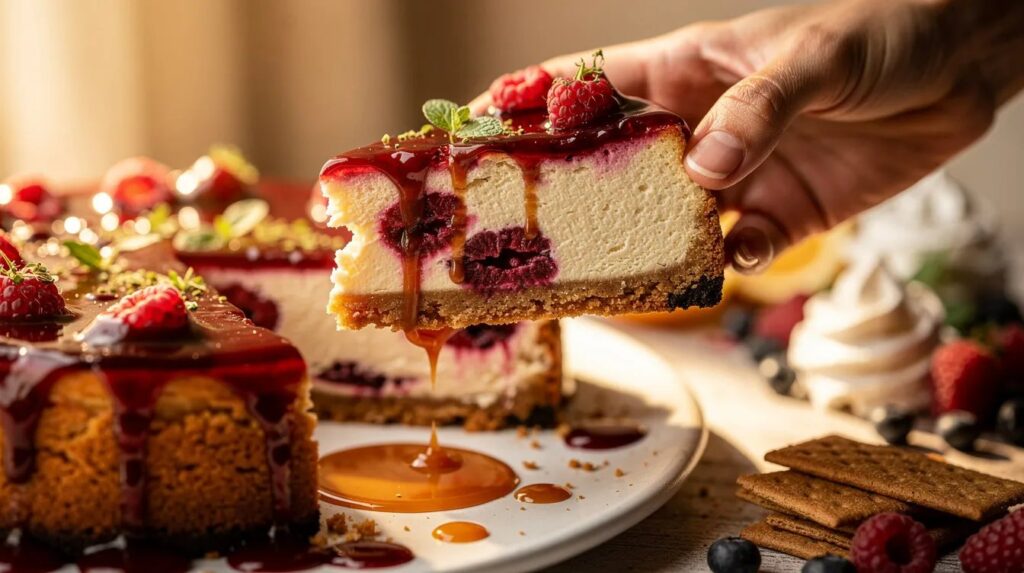
Blitz 200 g fresh or frozen raspberries with 2 tablespoons icing sugar and push through a fine sieve to remove seeds. Pour the standard baked cheesecake batter over the base, then drop spoonfuls of the raspberry purée across the surface. Use a thin skewer to create swirls — three or four figure-eights are enough. Overkill turns the pattern muddy.
Bake as per recipe one. The raspberry pockets bake into slightly jammy ribbons that burst against the neutral cream cheese. Frozen raspberries work admirably here, making this a reliable year-round option when fresh berries are out of season or overpriced.
11. Matcha white chocolate cheesecake
Earthy, sweet, visually striking
Sift 2 tablespoons ceremonial-grade matcha powder into the cream cheese before beating — sifting is non-negotiable, as matcha clumps stubbornly. Melt 150 g white chocolate, cool slightly, and fold into the batter. The colour should be a deep, mossy green, not pale or washed out. Use a plain biscuit base.
Bake at 150 °C for 50 minutes. The matcha's grassy bitterness tempers the cloying tendency of white chocolate, while the white chocolate smooths the matcha's astringency. It is a partnership of opposites that works. Dust the chilled, set cheesecake with a final, fine layer of matcha through a tea strainer for visual impact.
12. Brown butter and fig cheesecake
Nutty, seasonal, sophisticated
Melt 120 g unsalted butter in a small saucepan over medium heat. Swirl occasionally until the milk solids turn a deep hazelnut colour and the kitchen fills with a warm, toasted-nut aroma — this is beurre noisette, or brown butter. Cool completely. Beat into 600 g cream cheese with 180 g brown sugar, 3 eggs, and 200 ml sour cream. Halve 6 fresh figs and press them cut-side up into the top of the batter before baking.
Bake at 155 °C for 55 minutes. The figs sink slightly and soften into jammy pockets within the filling, their seedy interiors providing texture against the smooth brown-butter custard. Fresh figs appear at Australian markets from late February through April, making this a perfect late-summer-into-autumn dessert. The brown sugar deepens the caramel notes already present in the browned butter, giving the whole cheesecake a toffee-like warmth that feels distinctly autumnal.
Tips that apply to every cheesecake on this list
Temperature is everything
Cream cheese must be at room temperature before beating. Cold cream cheese creates lumps that no amount of mixing will resolve — and over-mixing introduces air bubbles that crack the surface during baking. Remove the blocks from the fridge at least two hours before you begin. Eggs, sour cream, and cream should also be at room temperature.
The water bath debate
A water bath — or bain-marie — involves wrapping the springform tin in foil and placing it inside a larger roasting pan filled with hot water to halfway up the sides. It produces a gentler, more even heat and helps prevent cracking. It also risks water leaking into the tin. If you choose to skip it, the oven-door-ajar cooling method described in recipe one achieves comparable results with less fuss.
Cutting clean slices
Run a long, thin knife under very hot water, wipe dry, and slice in one smooth motion. Clean and reheat the blade between each cut. Dental floss — plain, unflavoured — also works: hold taut and press straight down through the cheesecake for wire-clean edges.
Every cheesecake benefits from an overnight rest in the refrigerator. The flavours meld, the texture firms to its ideal state, and the set becomes uniform from edge to centre. Resist the temptation to slice early — the wait is part of the recipe.
Accords: desserts and drinks
Cheesecake's richness pairs well with drinks that either cut through the density or echo its sweetness without compounding it. A glass of late-harvest Riesling from the Clare Valley, with its apricot notes and bright acidity, pairs beautifully with fruit-topped variations. For the chocolate or caramel versions, consider a tawny port from Rutherglen — its nutty, oxidative character mirrors the toasted and caramelised flavours in the filling.
For a non-alcoholic option, a cold-brewed black tea with a squeeze of lemon provides tannin and bitterness that refresh the palate between bites. Espresso, served short and unsweetened, remains the classic companion — its roasted intensity stands up to even the richest, most decadent slice on this list.
A brief history of cheesecake
The earliest recorded cheesecake-like preparation appears in ancient Greek texts, where fresh cheese was pounded with wheat and honey, then baked — a far cry from the cream cheese–based versions dominant today. Roman conquest carried variations of the recipe across Europe, and each region adapted it to local dairy. The Italians favour ricotta, the Germans prefer quark, the Japanese use a soufflé technique that yields something ethereally light.
The cheesecake Australians know best owes its lineage to the New York style, which only became possible after cream cheese was commercialised in the United States in the late 1800s. The dense, tall, sour cream–topped version associated with delis and diners emerged in the early twentieth century and has since become the default template against which all others are measured. The recent popularity of the Basque burnt cheesecake — originating from La Viña restaurant in San Sebastián — shows the form still has room for reinvention, even after centuries of iteration.
Questions frequently asked
Can i freeze cheesecake?
Yes. Baked cheesecakes freeze well for up to two months. Wrap the whole cake (or individual slices) tightly in cling film, then in a layer of aluminium foil to prevent freezer burn. Thaw overnight in the refrigerator — never at room temperature, which can cause the surface to weep condensation and turn soggy. No-bake cheesecakes also freeze adequately, though the gelatine-set texture may soften slightly upon thawing.
Why did my cheesecake crack?
Cracking is almost always caused by one of three things: over-mixing (which traps air that expands and contracts during baking), too-high oven temperature, or cooling too quickly. The oven-door-ajar method — turning the oven off and letting the cheesecake cool gradually inside for an hour — is the single most effective prevention. If a crack does appear, a layer of sour cream, ganache, or fruit compote conceals it without any loss of flavour.
Can i use light or reduced-fat cream cheese?
You can, but the texture and flavour will differ noticeably. Reduced-fat cream cheese contains more water and less fat, which produces a softer set and a less velvety mouthfeel. For baked cheesecakes, the result is often acceptable. For no-bake versions, the reduced fat can mean the filling never firms up properly. Full-fat cream cheese delivers the best results consistently.
What's the best tin size for these recipes?
A 22–24 cm springform tin is the standard for all twelve recipes listed here. Using a smaller tin will give a taller cheesecake that needs a longer bake time; a larger tin produces a thinner result that bakes faster and has a different ratio of filling to base. If you only own a 20 cm tin, reduce the filling by roughly a quarter to avoid overflow.
How far in advance can i make a cheesecake?
Baked cheesecakes taste best when made one to two days ahead and stored, covered, in the refrigerator. The flavours deepen and the texture firms to its ideal consistency during this rest. No-bake cheesecakes should be consumed within three days of setting, as the gelatine can continue to firm and the texture may become rubbery if left longer.