
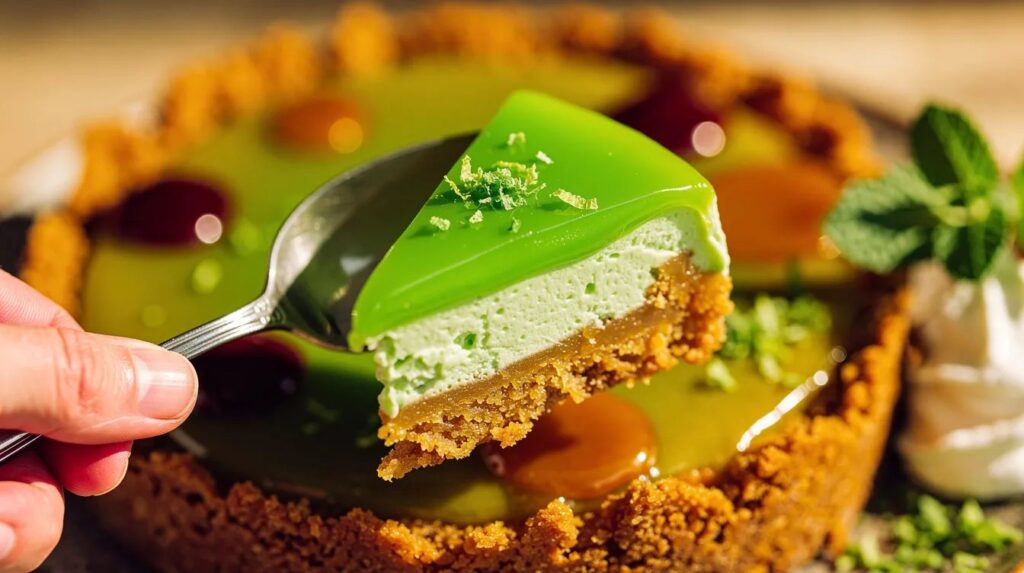
As autumn settles across Australia and the last traces of summer heat linger in the evenings, there's a brief period where a chilled, tangy dessert still hits the spot. No-bake key lime cheesecake is perfect for this—bright, tart citrus folded into a dense, smooth cream cheese filling, all on a buttery biscuit base that crumbles with each spoonful. No oven needed, no tempering chocolate, no watching a water bath. Just a bowl, a whisk, and a bit of patience while the fridge does its magic.
This recipe focuses on the key limes' tartness instead of masking it with sweetness. The filling holds its shape when cut but melts in your mouth, almost mousse-like but still dense. A light layer of whipped cream on top balances the flavours, and a sprinkle of lime zest makes every bite aromatic. If you're looking for a no-bake cheesecake that truly delivers on flavour, not just sugar and gelatine, then this recipe is worth making.
| Prep Time | 25 min |
| Chilling Time | 4–6 hours (or overnight) |
| Servings | 10–12 slices |
| Skill Level | Easy |
| Cost | $$ |
| Season | Late-season limes, autumn citrus |
Suitable for: Vegetarian · Nut-free (if using plain digestive biscuits)
Ingredients
For the base
- 250 g plain digestive biscuits (or graham crackers)
- 100 g unsalted butter, melted
- 1 tablespoon caster sugar
- Pinch of fine salt
For the filling
- 500 g full-fat cream cheese, at room temperature
- 400 g sweetened condensed milk (one tin)
- 160 ml freshly squeezed key lime juice (roughly 12–15 key limes, or 8 regular limes)
- Zest of 4 key limes (or 2 regular limes)
- 1 teaspoon pure vanilla extract
For the topping
- 300 ml thickened cream (heavy cream), cold
- 2 tablespoons icing sugar, sifted
- Zest of 2 key limes for garnish
- Thin lime slices (optional, for decoration)
Utensils
- 23 cm (9-inch) springform tin
- Food processor or zip-lock bag and rolling pin
- Large mixing bowl
- Electric hand mixer or stand mixer
- Microplane or fine grater
- Citrus juicer
- Offset spatula or the back of a spoon
Instructions
1. Crush and press the biscuit base
Break the digestive biscuits into the bowl of a food processor and pulse until you have fine, even crumbs — no large chunks remaining, but not powdered into dust either. The texture should resemble coarse sand. If you don't own a processor, seal the biscuits in a sturdy zip-lock bag, press out the air, and roll over them firmly with a rolling pin until uniformly crushed. Transfer the crumbs to a bowl and pour over the melted butter, caster sugar and salt. Stir with a fork until every crumb is coated and the mixture clumps when pressed between your fingers. Tip the crumb mixture into your springform tin and press it firmly and evenly across the bottom using the flat base of a glass or measuring cup. Push a thin layer about 2 cm up the sides of the tin — this creates a shallow wall that holds the filling beautifully when sliced. Refrigerate the base while you prepare the filling. A cold base sets faster and resists turning soggy once the filling is poured over.
2. Whip the cream cheese until smooth
Place the cream cheese in a large bowl. It needs to be genuinely room temperature — cold cream cheese leaves lumps that no amount of beating will dissolve. Using an electric hand mixer on medium speed, beat the cream cheese for a solid two minutes until it's completely smooth, pale and slightly glossy. Scrape down the sides of the bowl with a spatula at least once during this step. You're looking for a texture like thick sour cream, with absolutely no visible lumps. This foundation determines the final mouthfeel of your cheesecake, so resist the urge to rush.
3. Build the filling
With the mixer on low, pour in the sweetened condensed milk in a slow, steady stream. Increase the speed to medium and beat for one minute until fully incorporated. Add the vanilla extract and the lime zest, then mix briefly to distribute. Now pour in the key lime juice. Here's where the chemistry happens: the acid in the juice reacts with the proteins in the condensed milk and cream cheese, causing the mixture to thicken naturally without any gelatine or setting agent. Beat on low for 30 seconds, just enough to combine — overworking at this stage can introduce too much air, giving you a mousse rather than a dense, sliceable cheesecake. The filling should be noticeably thicker than when you started, with a vivid citrus fragrance rising from the bowl. Taste it. It should be tart first, sweet second, with a lingering lime sharpness at the back of your palate. If it tastes flat, add another tablespoon of juice.
4. Pour and set
Retrieve the chilled base from the fridge. Pour the filling over the biscuit crust and use an offset spatula to spread it into a perfectly even layer, working from the centre outward. Tap the tin gently on the bench two or three times to release any trapped air bubbles — they'll rise to the surface and pop. Cover the tin tightly with cling film, making sure the plastic doesn't touch the surface of the filling. Place in the fridge for a minimum of 4 hours, though overnight is best. The cheesecake needs this time to firm up fully. After 4 hours it will slice cleanly; after 8, the texture becomes almost fudge-like in its density.
5. Whip the cream topping and finish
When you're ready to serve, pour the cold thickened cream into a clean bowl and add the sifted icing sugar. Whip with the electric mixer, starting on low and increasing to medium-high. Watch closely — you want soft peaks, meaning the cream holds its shape gently but the tip of the peak folds over when you lift the whisk. This takes roughly 90 seconds with cold cream. Overwhipped cream turns grainy and begins to split, so stop the moment the texture looks billowy and smooth. Spread the whipped cream over the set cheesecake in sweeping, casual strokes — perfection here looks slightly imperfect, like clouds piled on a plate. Finish with a generous shower of fresh lime zest grated directly over the surface, and arrange thin lime slices around the edge if you like.
6. Unmould and serve
Run a thin knife dipped in hot water around the inside edge of the springform tin. Release the clasp and carefully lift the ring away. The cheesecake should stand firm and proud, with clean edges. Dip your slicing knife in hot water and wipe it dry before each cut — this gives you pristine, sharp slices without dragging. Serve cold, straight from the fridge.
My chef's tip
If key limes are difficult to source — and in Australia during autumn they often are — use a blend of two-thirds regular lime juice and one-third lemon juice. This mimics the slightly more floral, less bitter character of true key limes. Also, zest your limes before you juice them. It sounds obvious, but trying to grate a squeezed, collapsed lime is a thankless task. Store excess zest in a small container in the freezer; it keeps for months and works brilliantly scattered over yoghurt, stirred into dressings, or folded into whipped butter.
Dessert and drink pairings
The sharp citrus profile of this cheesecake calls for something that complements without competing. You want sweetness or effervescence to counterbalance the tartness, not more acid.
A late-harvest Riesling from the Clare Valley or Eden Valley, with its honeyed stone fruit and bright acidity, matches stride for stride. For something lighter, a chilled Moscato d'Asti — slightly sparkling, gently sweet — lifts the lime notes without overwhelming them. If you'd rather skip alcohol, a tall glass of sparkling water with a sprig of fresh mint and a thin wheel of lime keeps the whole experience clean and refreshing. Cold-brewed jasmine tea also works surprisingly well, its floral quality echoing the aromatic oils in the zest.
More about this dessert
Key lime pie originated in the Florida Keys during the late 19th century, where key limes — smaller, rounder and more aromatic than their Persian cousins — grew in abundance and condensed milk arrived by boat long before refrigeration was reliable. The original pie was barely a recipe at all: condensed milk, egg yolks, lime juice, poured into a pastry shell and left to set. No oven needed in many early versions, since the acid did the thickening. Over time, baked versions became standard in American diners, but the no-bake spirit never entirely disappeared.
The cheesecake adaptation adds cream cheese to the equation, transforming a loose custard-style filling into something richer and more structured. Australians have embraced it, swapping in Arnott's biscuits for the base and squeezing whatever limes the season provides. Some versions incorporate a layer of passionfruit curd beneath the cream, firmly placing the dessert in tropical territory. Others fold through a handful of shredded coconut. The beauty of no-bake cheesecake is its flexibility — it absorbs regional ingredients without losing its identity.
Nutritional information (per slice, based on 12 slices, approximate values)
| Nutrient | Amount |
|---|---|
| Calories | ~380 kcal |
| Protein | ~6 g |
| Carbohydrates | ~35 g |
| of which sugars | ~26 g |
| Fat | ~24 g |
| Fibre | ~0.5 g |
Frequently asked questions
Can i make this cheesecake ahead of time?
You can prepare it up to two days in advance. Keep it covered in the fridge without the cream topping. Add the whipped cream and lime zest just before serving — this keeps the topping fresh, light and properly textured rather than deflated and weepy.
How should i store leftovers?
Cover the cut cheesecake with cling film or transfer slices to an airtight container. It keeps well in the fridge for up to 3 days. The base may soften slightly over time as moisture migrates from the filling, but the flavour actually deepens. Freezing is possible: wrap individual slices tightly in cling film then foil, freeze for up to one month, and thaw in the fridge for 4–5 hours before eating.
What if i can't find key limes?
Standard Persian limes work well — use the same quantity of juice but expect a slightly less floral, more straightforward citrus flavour. Adding a small amount of lemon juice (about 2 tablespoons) and a pinch of finely grated lemon zest brings back some of that complexity. Bottled key lime juice is available at some specialty grocers and online; it's a reasonable substitute when fresh key limes are out of season.
Can i use gelatine instead of relying on the acid to set the filling?
You can, though the texture changes. Dissolve 2 teaspoons of powdered gelatine in 2 tablespoons of warm water, let it bloom for 5 minutes, then gently warm until liquid before folding it into the filling. This produces a firmer set — closer to a traditional cheesecake — but loses some of the creamy, almost fudgy quality that makes the acid-set version special. If you live in a warm climate and worry about the filling staying firm, gelatine offers useful insurance.
Can i make this dairy-free or vegan?
A vegan version is achievable with cashew-based cream cheese, coconut condensed milk and a base made from crushed vegan biscuits bound with coconut oil. The filling will need soaked and blended raw cashews or a combination of silken tofu and coconut cream to approximate the richness. Set it with agar-agar (about 1 teaspoon dissolved in 60 ml of warm water) since the acid-thickening reaction depends on dairy proteins. The flavour profile shifts slightly toward coconut, which pairs well with lime.