



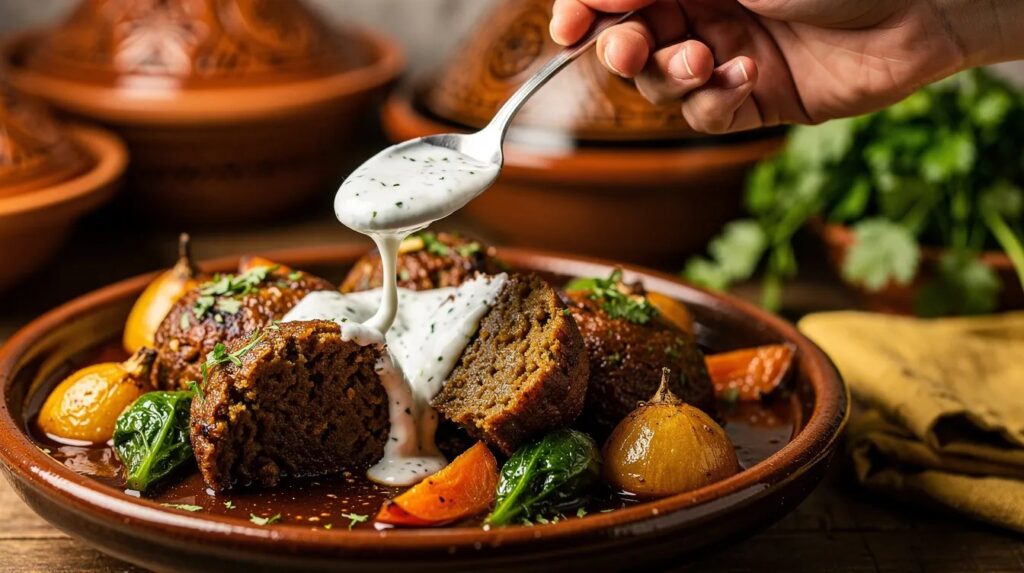
Spiced lamb meatballs simmering in a rich tomato-and-cumin sauce, eggs cracked right into the pan and baked until just set — kefte tagine is the kind of dish that fills a kitchen with warmth from the first minute on the stove. It belongs to those North African recipes that feel both deeply traditional and endlessly adaptable, sturdy enough for a weeknight yet generous enough for a table of friends. As autumn settles in across Australia, the appetite for slow-simmered, fragrant cooking comes back naturally, and this tagine meets it head-on.
What sets this version apart is the jalapeño yoghurt sauce served alongside — cool, tangy, with a grassy heat that cuts through the richness of the lamb and tomato base. The contrast between the warm, cumin-scented tagine and the chilled yoghurt turns a familiar comfort dish into something sharper, more layered. Discover how to shape flavourful meatballs that hold together without breadcrumbs, build a sauce worth mopping up with torn bread, and nail the egg-baking stage so the whites set while the yolks stay molten. Time to tie on an apron and get your hands into the mince.
| Preparation | 20 min |
| Cooking | 25 min |
| Portions | 4 people |
| Difficulty | Easy–Medium |
| Cost | $$ |
| Season | Autumn — hearty mince dishes, ripe tomatoes at their last, fresh coriander |
Suitable for: Gluten-free · High in protein
Ingredients
For the meatballs
- 500 g lamb mince (not too lean — around 15–20 % fat)
- 1 small brown onion, finely grated
- 3 cloves garlic, minced
- 1 tsp ground cumin
- 1 tsp sweet paprika
- ½ tsp ground cinnamon
- ¼ tsp cayenne pepper
- 3 tbsp fresh flat-leaf parsley, finely chopped
- 2 tbsp fresh coriander, finely chopped, plus extra for garnish
- ½ tsp fine salt
- ¼ tsp black pepper
For the tomato sauce
- 2 tbsp olive oil
- 1 medium brown onion, finely diced
- 2 cloves garlic, sliced thinly
- 1 tsp ground cumin
- 1 tsp sweet paprika
- ½ tsp ground coriander
- 400 g tin crushed tomatoes
- 1 tbsp tomato paste
- 120 ml water
- 1 tsp honey or sugar
- Salt to taste
- 4 eggs
For the jalapeño yoghurt sauce
- 200 g Greek yoghurt (full-fat)
- 1–2 jalapeño peppers, deseeded and finely minced
- 1 small clove garlic, grated on a microplane
- 1 tbsp lemon juice
- 1 tbsp extra-virgin olive oil
- Pinch of fine salt
Utensils
- Large deep skillet or shallow braiser with a lid (28–30 cm)
- Large mixing bowl
- Small bowl for the yoghurt sauce
- Microplane or fine grater
- Wooden spoon
Preparation
1. Mix and shape the meatballs
Place the lamb mince in a large bowl. Add the grated onion — grating rather than dicing helps the onion dissolve into the meat, keeping the texture smooth. Drop in the minced garlic, cumin, paprika, cinnamon, cayenne, chopped parsley, coriander, salt and pepper. Combine everything with your hands, squeezing and folding the mixture until the spices are evenly distributed and the mince feels slightly tacky, about two minutes. Be careful not to overwork it past that point or the meatballs may turn dense. Wet your palms lightly and roll the mixture into balls roughly the size of a walnut — you should get around 20 to 24. Set them on a plate while you build the sauce. There is no need to chill them; they will firm up quickly once they hit the pan.
2. Build the tomato sauce base
Heat the olive oil in the skillet over medium heat. Add the diced onion and cook, stirring occasionally, until softened and translucent — about five minutes. Add the sliced garlic, cumin, paprika and ground coriander. Stir for thirty seconds until the spices bloom — meaning their essential oils release into the fat, intensifying the aroma and flavour. You will smell the cumin sharpen, filling the kitchen with a warm, toasty scent. Pour in the crushed tomatoes, tomato paste, water and honey. Stir well, bring to a gentle simmer, then let the sauce bubble for about five minutes until it thickens slightly and the raw tomato edge cooks out. Season with salt — the sauce should be savoury, lightly sweet, and well-spiced.
3. Simmer the meatballs
Nestle the meatballs into the sauce in a single layer, spacing them as evenly as possible. Spoon a little sauce over each one. Cover the pan and reduce the heat to medium-low. Let the meatballs braise — cook gently while partially submerged in liquid — for about twelve minutes. Avoid moving them for the first eight minutes; the bottoms will firm up, releasing naturally when ready. After twelve minutes, the meatballs should be cooked through and the sauce will have deepened in colour and body.
4. Crack in the eggs
Use the back of a spoon to make four small wells in the sauce between the meatballs. Crack one egg into each well. Season the eggs with a tiny pinch of salt and a dusting of paprika if you like. Replace the lid and cook for four to five minutes over medium-low heat. Check at four minutes — the whites should be opaque and set, while the yolks remain soft and trembling. If you prefer firmer yolks, give them another minute or two, but pull the pan off the heat just before they look fully done; residual heat will carry them further.
5. Prepare the jalapeño yoghurt sauce
While the meatballs simmer, stir together the Greek yoghurt, minced jalapeño, grated garlic, lemon juice, olive oil and salt in a small bowl. Taste it — the sauce should be bright and cooling with a slow-building heat from the jalapeño. If you enjoy more fire, leave a few seeds in one of the peppers. If the yoghurt is very thick, thin it with a teaspoon of cold water until it reaches a drizzle-able consistency. Set aside at room temperature — a slight chill is ideal, but straight from the fridge can mute the flavours.
6. Garnish and serve
Remove the lid and scatter a generous handful of fresh coriander leaves and a few torn parsley leaves over the tagine. Drizzle a thin thread of extra-virgin olive oil across the surface. Bring the skillet straight to the table — this dish is meant to be eaten from the pan. Serve the jalapeño yoghurt sauce in its bowl alongside, with plenty of warm crusty bread, flatbread or steamed couscous for soaking up the sauce. Scoop meatballs, egg and sauce into your bowl, then add a spoonful of the cool yoghurt on top.
My chef's tip
The single move that elevates this tagine is blooming the spices in fat before adding the tomatoes. Thirty seconds of cumin and paprika sizzling in hot oil releases fat-soluble flavour compounds that liquid alone cannot extract. If you skip this step, the spices taste dusty rather than deep. During the cooler months here in Australia, try stirring a small handful of pitted green olives and a strip of preserved lemon rind into the sauce at step two — it leans the dish toward a more traditional Moroccan profile, adding a briny, fermented edge that pairs brilliantly with the yoghurt.
Food and wine pairing
The tagine brings warm spice, rich tomato and the fattiness of lamb — you want a wine with enough fruit and structure to stand alongside those flavours without overwhelming the delicate eggs or the cool yoghurt.
A medium-bodied Grenache from the Barossa Valley or McLaren Vale works well: think ripe red fruit, a touch of white pepper and soft tannins that mirror the cumin and paprika. A slightly chilled rosé — dry, Provençal style — is another strong option, especially as autumn days can still hold warmth. For a non-alcoholic pairing, try sparkling water infused with a few slices of cucumber and a sprig of mint; its crispness plays the same refreshing role as the yoghurt sauce.
More about this dish
Kefta tagine — also spelt kofta or kefte — is a staple across Morocco, Tunisia, Algeria and parts of the eastern Mediterranean. The name kefta refers to the spiced minced-meat mixture, while tagine describes both the conical clay cooking vessel and the slow-cooked dish prepared in it. The combination of meatballs simmered in tomato sauce with eggs baked on top is sometimes called kefta mkaouara in Moroccan Arabic. It is often served at lunch with warm khobz bread.
The addition of a yoghurt-based condiment is not traditional in Moroccan cooking, where dairy condiments are less common, but draws on the broader Levantine and Turkish tradition of pairing grilled or braised meat with garlicky yoghurt. The jalapeño — a New World chilli — replaces the more expected harissa or green chilli, offering a brighter, grassier heat. Cross-cultural layering is how home cooking evolves: you keep the soul of the dish and adjust the edges to what your pantry and palate offer.
Nutritional information (per portion, approximate values)
| Nutrient | Amount |
|---|---|
| Calories | ~480 kcal |
| Protein | ~35 g |
| Carbohydrates | ~14 g |
| of which sugars | ~9 g |
| Fat | ~32 g |
| Fibre | ~3 g |
Frequently asked questions
Can this dish be prepared ahead of time?
You can make the meatballs and the tomato sauce up to a day in advance. Store them separately in the fridge. When ready to serve, reheat the sauce in the skillet, nestle the meatballs back in, then crack the eggs in fresh — eggs baked in advance lose their runny yolk appeal. The jalapeño yoghurt sauce also improves overnight as the garlic mellows.
How should I store leftovers?
Transfer any remaining meatballs and sauce to an airtight container and refrigerate for up to three days. The eggs will not reheat well — they tend to turn rubbery — so it is best to eat the egg portions straight away, saving only the meatball-and-sauce base. Reheat gently in a covered pan over low heat, adding a splash of water if the sauce has thickened too much. The yoghurt sauce keeps separately in the fridge for up to two days.
What substitutions work for the lamb?
Beef mince is the most common swap and works without any changes to the spice mix. A blend of half beef, half lamb gives a milder flavour that still carries the cumin and cinnamon well. For a lighter version, use turkey or chicken mince, but add an extra tablespoon of olive oil to the meat mixture to compensate for the lower fat content. The meatballs will be slightly softer, so handle them gently when placing them in the sauce.
Can I make this in an actual tagine pot?
Absolutely — a clay tagine is the traditional vessel resulting in a slightly different result. The conical lid traps steam and returns it to the dish, so you may need a little less water in the sauce. Cook the base on a diffuser over low heat to protect the clay, increasing the simmering time by five to ten minutes. The meatballs pick up a subtle earthiness from the unglazed clay that a metal pan cannot replicate.
What if I cannot find jalapeños?
Long green chillies, serrano peppers or even a mild Anaheim chilli all work. For a North African spin, stir half a teaspoon of harissa paste into the yoghurt instead. Aim for a gentle heat and a fresh, vegetal note — adjust the quantity to your tolerance and taste as you go.