



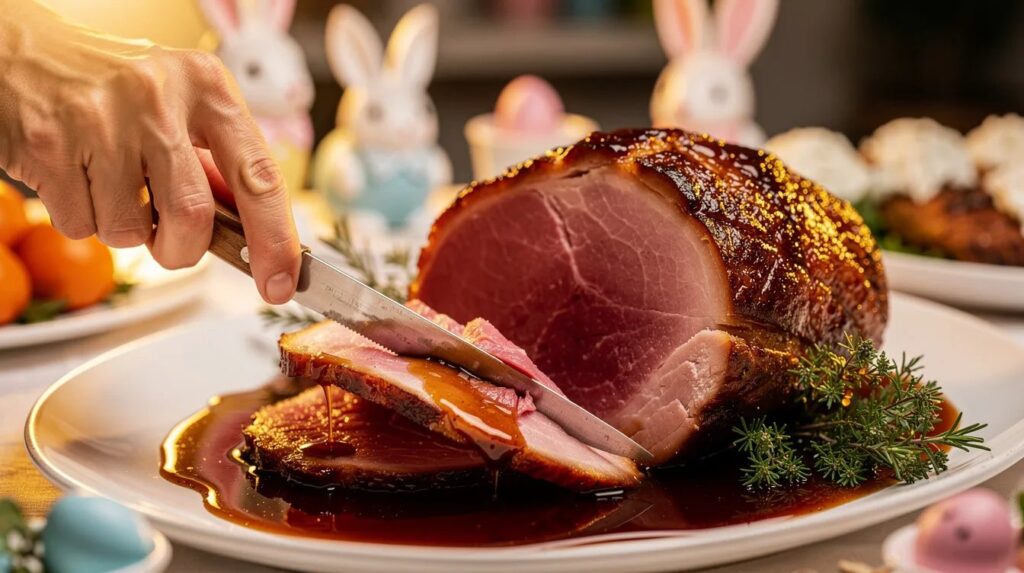
Autumn in Australia brings cooler evenings and golden light, and Easter remains one of the most generous gatherings of the year. A long weekend stretched across four days, tables laden with dishes that swing between tradition and improvisation, guests arriving with bottles of shiraz and boxes of hot cross buns. The question isn't whether you'll cook — it's what to cook when the options feel endless and the stakes feel personal.
This collection of 67 Easter dinner ideas covers the full arc of a holiday meal: centrepiece roasts, vibrant sides, bread worth tearing apart by hand, and desserts that justify a second plate. Whether you lean toward a classic glazed ham or want to fill the table with Mediterranean-inflected salads and slow-cooked lamb, there's a blueprint here. Some dishes suit make-ahead prep on Good Friday; others come together in under thirty minutes on Sunday afternoon. Consider this your working list — mark what appeals to you and build your menu from there.
Centrepiece roasts and mains
The main course sets the tone. A brown sugar and mustard glazed ham remains the most popular choice across Australian Easter tables — bone-in, scored in diamonds, studded with cloves, then basted until the glaze turns lacquered and dark. Roast it low at 160°C for roughly 10 minutes per kilogram, basting every 20 minutes during the final hour. The key is patience: let the sugars caramelise without burning, and rest the ham for at least 15 minutes before carving.
Lamb runs a close second. A slow-roasted leg of lamb rubbed with garlic, rosemary, and anchovy — the anchovy melts into the meat, leaving no fishy trace, only depth — is a technique borrowed from Italian cooking that suits the Australian palate well. For something faster, try lamb racks with a herb and macadamia crust, seared first in a hot pan, then finished in a 200°C oven for 12–15 minutes. They carve into elegant cutlets with almost no effort.
Beyond the classics, consider roast chicken stuffed with preserved lemon and olives, a whole roasted snapper with fennel and cherry tomatoes for a lighter spread, or beef eye fillet with a red wine jus. Vegetarian centrepieces deserve equal presence: a whole roasted cauliflower with tahini and pomegranate, or a layered vegetable tian — zucchini, eggplant, and tomato sliced thin and shingled in a baking dish with thyme and olive oil — holds its own alongside any meat.
Quick-list: 12 centrepiece ideas
- Brown sugar and mustard glazed ham
- Slow-roasted leg of lamb with garlic and rosemary
- Herb and macadamia crusted lamb racks
- Roast chicken with preserved lemon and olives
- Whole roasted snapper with fennel
- Beef eye fillet with red wine jus
- Honey and soy glazed pork belly
- Roast duck with orange and star anise
- Lamb shoulder braised in white wine and herbs
- Whole roasted cauliflower with tahini
- Layered vegetable tian with thyme
- Stuffed capsicums with rice, pine nuts, and currants
Sides that carry their weight
A side dish at Easter shouldn't feel like an afterthought. Roasted baby potatoes with duck fat and flaky salt take 40 minutes and require almost no attention. Gratin dauphinois — thinly sliced potatoes layered with cream, garlic, and a whisper of nutmeg — can be assembled the night before and baked while the roast rests. For something green and sharp, a charred broccolini salad with lemon zest, chilli flakes, and toasted almonds cuts through the richness of ham or lamb.
Autumn produce in Australia offers beautiful options: roasted pumpkin with sage and brown butter, beetroot and walnut salad dressed with sherry vinegar, or braised leeks finished with a crumble of parmesan. A classic coleslaw — crunchy, tangy, made with a buttermilk dressing rather than heavy mayonnaise — pairs remarkably well with glazed ham. And don't overlook a simple cos lettuce salad with a mustardy vinaigrette: sometimes the plainest dish is the most welcome.
Quick-list: 15 side dishes
- Duck fat roasted baby potatoes
- Gratin dauphinois
- Charred broccolini with lemon and almonds
- Roasted pumpkin with sage and brown butter
- Beetroot and walnut salad
- Braised leeks with parmesan crumble
- Buttermilk coleslaw
- Cos lettuce salad with mustard vinaigrette
- Honey-glazed carrots with cumin
- Green beans with shallots and hazelnuts
- Roasted sweet potato with chimichurri
- Pea, mint, and feta smash
- Corn and zucchini fritters
- Warm grain salad with roasted vegetables
- Creamed spinach with nutmeg
Breads, rolls, and starters
A basket of warm bread on the table transforms a meal into an occasion. Hot cross buns are the obvious Easter choice, and homemade versions — spiced with cinnamon, allspice, and nutmeg, studded with currants or dried cranberries — are worth the rise time. Shape the dough on Saturday evening, prove overnight in the fridge, and bake on Sunday morning. The whole house smells like a bakery before anyone's poured coffee.
For savoury starters, whipped ricotta crostini topped with honey and thyme take five minutes. A smoked salmon platter with capers, dill, and lemon needs no cooking at all. Devilled eggs — the filling spiked with a touch of Dijon and smoked paprika — are retro in the best possible way. And a pumpkin soup served in small cups makes an elegant first course when the evening turns cool.
Quick-list: 10 starters and breads
- Homemade hot cross buns
- Rosemary and sea salt focaccia
- Pull-apart garlic rolls
- Whipped ricotta crostini with honey
- Smoked salmon platter
- Devilled eggs with Dijon and paprika
- Roasted pumpkin soup in cups
- Bruschetta with cherry tomatoes and basil
- Olive and herb damper
- Prawn cocktail with Marie Rose sauce
Heavenly desserts
Easter desserts should feel abundant without overwhelming. A Simnel cake — the traditional English fruitcake topped with eleven marzipan balls representing the apostles (minus Judas) — connects the meal to centuries of Easter baking. It's dense, fragrant with mixed spice, and improves over several days, which makes it a perfect make-ahead option.
For chocolate lovers (and Easter is nothing without chocolate), a flourless chocolate cake made with 200g of dark chocolate (70% cocoa), butter, eggs, and a pinch of espresso powder delivers an intense, fudgy centre with a crackled top. Serve it barely warm with double cream. A pavlova — crisp shell, marshmallow core — piled with autumn passionfruit and cream is always a crowd-pleaser in Australia. Whip the meringue to stiff, glossy peaks and bake at 120°C for 90 minutes, then let it cool completely in the oven with the door ajar.
Lighter options include lemon posset — cream, sugar, lemon juice, nothing else — set in small glasses, or poached pears in spiced red wine, which look spectacular and taste of cinnamon and clove. A tiramisu made a day ahead firms up beautifully and feeds a crowd from a single dish. And for the children, or anyone who still feels like one, chocolate Easter egg nests made from melted chocolate, shredded wheat, and mini eggs take ten minutes and disappear faster.
Quick-list: 15 desserts
- Simnel cake
- Flourless chocolate cake
- Classic pavlova with passionfruit
- Lemon posset
- Poached pears in spiced red wine
- Tiramisu
- Chocolate Easter egg nests
- Hot cross bun bread and butter pudding
- Apple and rhubarb crumble
- Carrot cake with cream cheese frosting
- Chocolate mousse
- Sticky date pudding with butterscotch sauce
- Lemon tart with Italian meringue
- Raspberry and almond frangipane tart
- Affogato with vanilla bean ice cream
Building your Easter menu
Sixty-seven ideas is a starting point, not a shopping list. The best Easter menus follow a simple structure: one centrepiece, three to four sides, one bread, and two desserts — one rich, one light. Choose dishes that span different temperatures and textures. If the main is hot and heavy (glazed ham, roast lamb), balance with a cold, crisp salad and a fruit-forward dessert. If you're going lighter with fish, make the dessert the indulgence.
Prep matters more than ambition. A gratin assembled on Saturday, a cake baked on Friday, a ham glazed early Sunday morning — spreading the work across the long weekend turns cooking from a marathon into something enjoyable. Set the table early. Open the wine before anyone arrives. Easter dinner should feel generous, warm, and plentiful, so everyone lingers at the table longer than they planned.
Questions frequently asked
How far in advance can I glaze and cook the ham?
You can cook and glaze the ham on Saturday and refrigerate it overnight. Bring it back to room temperature for about an hour before serving, or reheat gently at 140°C for 20–30 minutes. The glaze actually firms up and intensifies in flavour after resting overnight, so make-ahead preparation is a great option.
What's the best way to cater for vegetarian and vegan guests?
Instead of preparing a separate "vegetarian option" that feels like an afterthought, create two or three sides that are naturally plant-based and satisfying — the roasted cauliflower with tahini, a warm grain salad, and the vegetable tian all work as mains for vegetarian guests and as sides for everyone else. For vegan guests, swap cream and butter for olive oil and coconut cream where needed, and offer a fruit-based dessert like the poached pears.
Can I substitute lamb for the ham as the centrepiece?
Lamb is a traditional Easter protein in many cultures and is a perfect substitute as the centrepiece. A slow-roasted leg feeds 8–10 people, carves easily, and pairs with most of the same sides recommended for ham. If you want variety without cooking two large roasts, serve lamb racks alongside a simple roast chicken — two proteins, less pressure on either.
How do I keep everything warm when serving a large spread?
Set your oven to 80°C and use it as a holding station for roasted vegetables, gratins, and resting meats wrapped loosely in foil. Sides like salads and coleslaws should stay at room temperature; they taste better that way. Serve bread in a basket lined with a clean tea towel, which traps warmth surprisingly well. Desserts that are meant to be cold can sit on the bench for 10–15 minutes before serving to soften slightly.
What wines pair well with an Easter spread?
For glazed ham, look for a medium-bodied pinot noir from the Yarra Valley or Mornington Peninsula — the fruit and acidity cut through the sweetness of the glaze. Lamb pairs with shiraz or a Barossa grenache. If you're serving fish, a crisp Clare Valley riesling or Adelaide Hills chardonnay works well. For those who prefer something sparkling, a dry Australian prosecco-style or a Tasmanian méthode traditionnelle works well from starters to dessert.