


Sweet potatoes roasted until their edges caramelise and their flesh turns almost jammy — that's the flavour most of us chase at the dinner table. Yet when it comes to mashing them, the reflex is to chop, boil and drain, washing away the very sugars and depth we love. The result is often a pale, watery mash that needs butter and brown sugar to do the heavy lifting. There's a better path, and it starts with keeping those sweet potatoes away from the pot of water altogether.
Roasting or steaming sweet potatoes before mashing concentrates their natural sweetness through gentle caramelisation, giving you a base so rich it barely needs seasoning. The texture shifts too — drier, denser, silkier once whipped — because you haven't logged extra moisture that then has to be cooked back out. The following method respects the ingredient, keeps things simple, and delivers a side dish that genuinely holds its own next to a Sunday roast or a midweek barbecue. Time to line a baking tray and let the oven do the real work.
| Preparation | 10 min |
| Cooking | 55 min |
| Portions | 4–6 people |
| Difficulty | Easy |
| Cost | $ |
| Season | Gold and orange sweet potatoes are at their peak through the Australian autumn harvest |
Suitable for: Vegetarian · Gluten-free · Vegan (with plant-based butter) · Dairy-free (with plant-based butter)
Ingredients
- 1 kg orange sweet potatoes (roughly uniform in size for even cooking)
- 60 g unsalted butter, cut into cubes (or extra-virgin olive oil for a dairy-free version)
- 80 ml full-cream milk, warmed (or oat milk)
- 1 tablespoon extra-virgin olive oil
- 1 teaspoon fine sea salt, plus more to taste
- ½ teaspoon freshly ground white pepper
- ¼ teaspoon ground nutmeg, freshly grated if possible
- 1 tablespoon pure maple syrup (optional, for a subtle glaze of sweetness)
- 1 small sprig fresh rosemary (optional, for infusing the butter)
Utensils
- Large baking tray lined with baking paper
- Fork or sharp knife for piercing
- Potato ricer, food mill or sturdy masher
- Medium saucepan
- Large mixing bowl
Preparation
1. Roast the sweet potatoes whole
Preheat the oven to 200 °C (fan-forced 180 °C). Wash the sweet potatoes under cool water and dry them well. Rub the skins with a thin coat of olive oil and prick each potato four or five times with a fork — this lets steam escape so the flesh steams inside its own skin rather than bursting through. Place them directly on the lined tray, spacing them a few centimetres apart so hot air circulates freely. Roast for 45–55 minutes, turning once at the halfway mark. You'll know they're done when a knife slides through the centre with no resistance at all and the skin has started to wrinkle and pull away from the flesh. A few dark, sticky spots on the tray are a good sign — that's caramelised sugar, exactly the flavour you're after.
2. Scoop and press while hot
Remove the tray from the oven and let the sweet potatoes sit just long enough to handle — about 5 minutes. Halve each one lengthways with a sharp knife. Using a spoon, scoop the flesh directly into a potato ricer (a press that forces cooked potato through small holes, producing a lump-free result). Press the flesh into a large bowl. If you don't own a ricer, a food mill on its finest disc works just as well. A standard masher is fine too, though the texture will be slightly more rustic. Avoid a food processor or stick blender — overworking the starches turns the mash gummy and gluey, a texture no amount of butter can rescue.
3. Build the flavour base
While the sweet potatoes roast, warm the butter in a small saucepan over medium-low heat. If you're using the rosemary sprig, drop it in now. Let the butter melt, then continue heating until it begins to foam and the milk solids at the bottom turn a light golden amber — this is beurre noisette, or brown butter, and it carries deep, nutty notes that amplify the roasted sweetness of the potato. The whole process takes roughly 4–5 minutes. Watch closely: the window between nutty and burnt is narrow. Remove the rosemary sprig and set the pan aside. Warm the milk separately in the microwave or a small pot until it's steaming but not boiling — cold milk would cool the mash and tighten the starches.
4. Bring it together
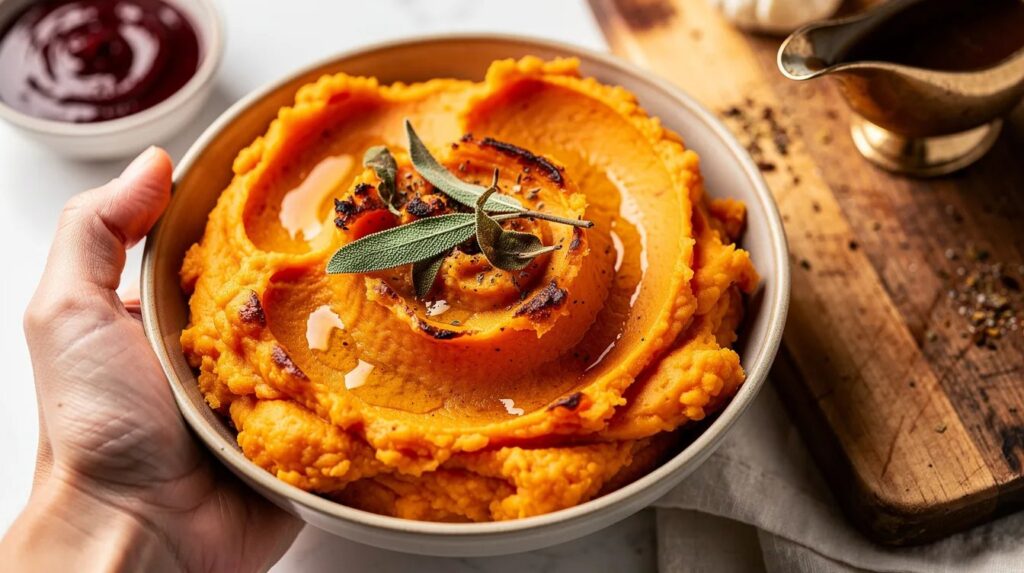
Pour the brown butter over the riced sweet potato and fold gently with a spatula or large spoon. Add the warm milk in two additions, folding after each, until the mash reaches the consistency you prefer — some like it thick enough to hold a peak, others prefer it looser and more spoonable. Season with salt, white pepper and nutmeg. Taste carefully. If the potatoes were particularly starchy rather than sweet, a tablespoon of maple syrup balances things out without making the dish taste like dessert. The mash should be vibrant orange, glossy from the butter, and aromatic from the nutmeg and rosemary.
5. Serve immediately
Transfer the mash to a warmed serving bowl. Run the back of a spoon across the surface to create a shallow well, then drop a final knob of butter into it — it will melt into a small golden pool. A scattering of flaky sea salt on top adds crunch and contrast. Serve alongside roast lamb, grilled chicken, pan-seared salmon or a simple green salad dressed with lemon and olive oil. The mash sits happily for 15–20 minutes in a warm oven (80 °C) covered with foil if you need to stagger serving.
My chef's tip
The single biggest difference between a good mash and a great one is dryness of the cooked potato. Roasting drives off moisture that boiling adds. If you're short on time, try steaming the sweet potatoes in large chunks over a rolling boil for 20–25 minutes instead of roasting — you'll skip the caramelisation but still avoid waterlogging. For an autumn twist, stir through a teaspoon of miso paste (white or shiro) right at the end: it deepens the umami without anyone being able to name the ingredient. And if you spot beauregard or gold sweet potatoes at the market — the dense, dry-fleshed varieties — grab them. They mash with far less moisture than the softer, stringier types.
Food and wine pairings
The roasted sweetness and nutmeg warmth of this mash call for wines with enough body to match but enough acidity to cut through the butter. A medium-bodied Australian chardonnay from the Adelaide Hills, with its stone-fruit notes and gentle oak, sits right in the sweet spot.
If you prefer red, a cool-climate pinot noir from the Yarra Valley — light tannins, bright cherry, earthy undertone — pairs without overwhelming the dish. For a lighter option, a dry off-dry riesling from the Clare Valley brings citrus tension that lifts the richness. A non-alcoholic pairing worth trying: sparkling apple cider or a cold-pressed pear juice with a squeeze of lemon.
More about this dish
Mashed sweet potato has roots across many cuisines, from the candied yam casseroles of the American South to the simple steamed kumara mash served across New Zealand and Australia. The orange sweet potato — technically a cultivar of Ipomoea batatas — only became widely cultivated in Australia from the mid-twentieth century, with Queensland still producing the bulk of the country's crop. Unlike floury white potatoes, sweet potatoes contain more moisture and sugar, which is precisely why boiling is so counterproductive: the sugars leach into the cooking water and the flesh absorbs liquid it doesn't need.
The roast-then-mash technique has gained traction through restaurant kitchens where chefs treat sweet potato less like a starch and more like a vegetable to be concentrated. Some split them and slow-roast at lower temperatures (150 °C) for up to two hours, coaxing out an almost toffee-like intensity. At home, the higher-heat method above strikes the balance between flavour development and a weeknight-friendly timeline. As the Australian autumn settles in and the evenings cool, a bowl of this alongside a simple braise or roast is one of the quieter pleasures of the season.
Nutritional values (per portion, approximate values)
| Nutrient | Amount |
|---|---|
| Calories | ~220 kcal |
| Protein | ~3 g |
| Carbohydrates | ~34 g |
| of which sugars | ~11 g |
| Fat | ~9 g |
| Fibre | ~4 g |
Frequently asked questions
Can i prepare this mash ahead of time?
You can roast the sweet potatoes up to two days in advance and refrigerate them whole in their skins. When ready to serve, scoop, rice and reheat gently in a saucepan over low heat, adding the warm butter and milk at that stage. The mash won't be quite as silky as when made fresh, but the flavour will still be far superior to a boiled version.
How should i store leftovers?
Transfer any leftover mash to an airtight container and refrigerate for up to 3 days. Reheat in a saucepan over low heat with a splash of milk to loosen, stirring frequently. You can also freeze it in portions for up to 2 months — thaw overnight in the fridge before reheating. Frozen mash may release a little extra moisture; just stir it back in over gentle heat.
What substitutions or variations work well?
Swap the butter for coconut oil to lean into the sweetness with a tropical edge — particularly good if you're adding a pinch of curry powder. For a richer mash, replace half the milk with cream or coconut cream. During winter, fold through a tablespoon of harissa paste for warmth and colour. In spring and summer, finish with a handful of chopped chives or spring onion greens for freshness.
Why shouldn't i use a food processor or stick blender?
Sweet potatoes contain a fair amount of starch. High-speed blending ruptures the starch granules and releases a sticky, gluey paste that no amount of additional fat or liquid will smooth out. A ricer or food mill presses the flesh through without overworking it, giving you a light, airy texture. If all you have is a masher, work in short, gentle strokes rather than aggressive pounding.
Can i use purple or white sweet potatoes instead?
Absolutely. Purple sweet potatoes produce a striking violet mash with a slightly drier, more starchy texture — you may need a touch more butter or milk. White sweet potatoes are less sweet and more savoury, which works beautifully with brown butter and sage. Cooking times remain roughly the same, though smaller tubers may finish 5–10 minutes earlier, so check with a knife.