



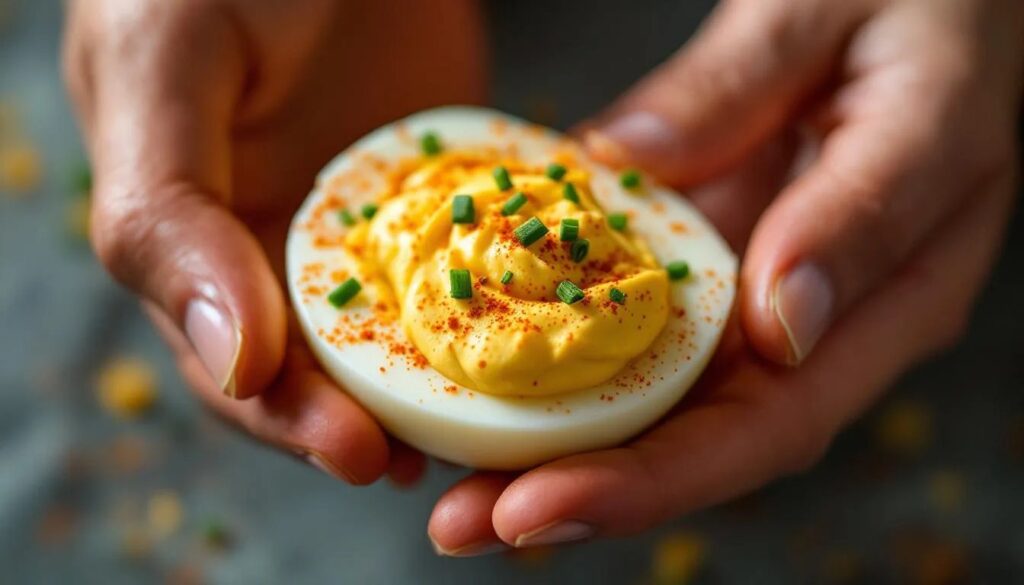
Easter weekend rarely passes without a platter of deviled eggs making its way to the table. Creamy, slightly tangy, pleasantly rich — the classic version has earned its place at spring gatherings for generations. But somewhere between the twelfth variation you've seen and the third time you've been asked "did you follow a recipe?", the question shifts: what actually makes a deviled egg memorable? The answer, more often than not, comes down to a single, unexpected addition that lifts the filling from familiar to quietly stunning.
This recipe builds on the traditional foundation — hard-boiled eggs, mayonnaise, a touch of mustard, a whisper of vinegar — and folds in one ingredient that changes everything: white miso paste. It sounds unconventional, but the result is a filling with extraordinary depth, a subtle umami undertow that guests can't quite identify but absolutely cannot stop eating. Spring is already the season of fresh beginnings and lighter flavours; miso, fermented and complex, anchors the richness without weighing it down. Here's how to make them, step by step, with the kind of detail that makes the difference between good and unforgettable.
| Preparation | 20 min |
| Cooking | 12 min |
| Resting | 15 min |
| Servings | 12 deviled egg halves (6 people as a starter) |
| Difficulty | Easy |
| Cost | $ |
| Season | Spring — fresh chives, radishes, watercress |
Suitable for: Vegetarian · Gluten-free · High in protein
Ingredients
- 6 large eggs, free-range if possible
- 3 tablespoons good-quality mayonnaise
- 1 tablespoon white miso paste (also sold as shiro miso)
- 1 teaspoon Dijon mustard
- 1 teaspoon apple cider vinegar
- ¼ teaspoon fine sea salt, plus more to taste
- A pinch of white pepper
- Smoked paprika, for dusting
- Fresh chives, finely snipped, to finish
- Optional: thin slices of breakfast radish or a few leaves of watercress, for garnish
Equipment
- Medium saucepan
- Bowl of ice water
- Sharp paring knife
- Fine-mesh sieve or food processor
- Piping bag with a star tip (or a sturdy zip-lock bag)
- Serving platter or deviled egg tray
Preparation
1. Cook the eggs to the exact right moment
Place the eggs in a single layer in a saucepan and cover with cold water by at least an inch. Bring to a full rolling boil over medium-high heat. The moment the water boils, reduce the heat slightly, set a timer for 11 minutes, and keep the water at a gentle but active simmer. This timing — not 10, not 12 — produces a yolk that is fully set, chalky-free, and a vivid, sunny yellow. A yolk that's gone grey-green around the edges is overcooked; it will taste sulfurous and look dull in the filling. While the eggs cook, prepare a bowl of heavily iced water large enough to hold all six eggs. When the timer goes off, transfer the eggs immediately with a slotted spoon. The ice bath stops the cooking in seconds and contracts the whites slightly, making peeling considerably easier.
2. Peel and halve with care
Let the eggs rest in the ice bath for a full 15 minutes. Peeling too early, while the white is still warm, often tears the surface. Gently tap each egg all over on the counter — not a single hard crack, but a series of light taps that create a fine web across the shell. Begin peeling from the wider end where the air pocket sits; the shell tends to release cleanly from that point. Rinse under cool running water to remove any shell fragments. Dry each egg on a clean kitchen towel. Using a sharp paring knife, cut each egg in half lengthwise with a single, decisive stroke. Wiggle the yolks free with a small spoon and collect them in a mixing bowl. Arrange the whites on your serving platter, hollow-side up.
3. Build the miso filling
Press the yolks through a fine-mesh sieve — the technique of pushing them through a sieve rather than simply mashing creates a filling of exceptional smoothness, without any lumps or granules. Add the mayonnaise, white miso paste, Dijon mustard, and apple cider vinegar. White miso is mild, slightly sweet, and faintly nutty — very different from the darker red or brown varieties, which would overwhelm the delicate balance here. Mix with a spatula until completely homogeneous. Taste carefully: the miso already contributes salt, so add the fine sea salt sparingly. Finish with the pinch of white pepper, which adds warmth without the visual speckling of black pepper. The filling should hold its shape when scooped — soft enough to pipe cleanly, firm enough to mound slightly above the rim of the white.
4. Fill and finish
Transfer the filling to a piping bag fitted with a medium star tip. If you don't own a piping bag, a zip-lock bag with one corner snipped works well. Pipe a generous, slightly domed swirl into each egg white half, applying even pressure and lifting the bag cleanly at the end to avoid a trailing point. Dust each egg lightly with smoked paprika — the smokiness plays beautifully against the miso's fermented sweetness. Snip fresh chives directly over the top with scissors; the clean, onion-forward freshness of spring chives cuts through the richness. Add a thin half-moon of breakfast radish or a single watercress leaf to each egg if you want both colour and a mild peppery counterpoint.
5. Rest and serve
Deviled eggs benefit from at least 20 minutes in the refrigerator before serving — the filling firms up slightly, the flavours knit together, and the miso's complexity deepens. Serve cold or at cool room temperature. If transporting to an Easter gathering, keep the whites and filling separate and pipe on-site; the eggs hold their shape far better and the presentation stays sharp.
My chef's tip
The single most common reason deviled eggs taste flat is using eggs straight from the refrigerator into boiling water, which can crack the shell and cool the cooking too dramatically. Start them in cold water always. For Easter specifically, consider using eggs that are a week or so old rather than the freshest from the market — slightly older eggs peel with far less frustration, since the air pocket between the white and shell has had time to expand. On the miso: start with three-quarters of the amount called for, taste, then add the rest if you want more depth. The goal is a filling that makes people say "there's something in here I can't place" — not one that reads as explicitly Japanese.
Food & drink pairings
The filling is rich, saline, and subtly fermented — it calls for something crisp and acidic to keep the palate refreshed between bites. Effervescence is a natural ally here.
A glass of Blanc de Blancs Champagne or a well-made Crémant d'Alsace cuts through the fat of the mayonnaise with bright citrus and mineral notes. A dry, unoaked Chenin Blanc from the Loire Valley — think Savennières or a good Vouvray sec — works equally well, with its characteristic tension between honey and green apple. For a non-alcoholic option, a sparkling water with a squeeze of yuzu or Meyer lemon mirrors the acidity of the vinegar in the filling and makes an unexpectedly elegant match.
About deviled eggs
The term "deviled" in culinary language dates to 18th-century England, where it described foods prepared with sharp or fiery condiments — mustard, cayenne, hot sauces — that were said to evoke the heat of the underworld. Deviled eggs as a distinct dish appear in American cookbooks from the mid-1800s, though stuffed egg preparations go back much further in European cuisine, with versions documented in medieval Andalusian manuscripts featuring eggs filled with herbs, pepper, and coriander. The association with Easter is partly practical: the holiday follows a long period of fasting in many Christian traditions, and eggs, forbidden during Lent, were eaten in abundance to celebrate the end of abstinence.
Regionally, the American South has perhaps the deepest devotion to deviled eggs, with family recipes passed down with the kind of seriousness usually reserved for pie crust. Variations abound: some cooks swear by sweet pickle relish for crunch and a hint of sweetness; others add crispy bacon, hot sauce, or even a trace of sriracha. The miso version sits firmly in the contemporary tradition of borrowing umami-rich ingredients from Japanese pantries and applying them to Western comfort food — a technique that has proven, time and again, to be one of the more reliably brilliant moves in modern home cooking.
Nutrition facts (per serving — 2 deviled egg halves, approximate values)
| Nutrient | Amount |
|---|---|
| Calories | ~145 kcal |
| Protein | ~7 g |
| Carbohydrates | ~2 g |
| of which sugars | ~0.5 g |
| Fat | ~12 g |
| Fiber | ~0 g |
| Sodium | ~280 mg |
Frequently asked questions
Can these be made ahead of time?
Yes — and in fact they are better for it. The filling can be prepared up to 24 hours in advance and stored in an airtight piping bag or covered bowl in the refrigerator. The egg white halves keep separately, covered with plastic wrap, for the same period. Pipe just before serving, or up to two hours ahead if the eggs will be kept cold. The miso flavour deepens noticeably overnight, which is a bonus rather than a drawback.
How should leftover deviled eggs be stored?
Arrange leftover deviled eggs in a single layer in an airtight container and refrigerate immediately. They keep well for up to 2 days. Beyond that, the whites begin to weep slightly and the filling can develop a stronger eggy smell. Do not freeze deviled eggs — the whites turn rubbery and the emulsion in the filling breaks down entirely.
What substitutions work if miso is unavailable?
If white miso is genuinely out of reach, the closest substitute is a small amount of Worcestershire sauce (about half a teaspoon) combined with a pinch of nutritional yeast — together they approximate the savoury, fermented depth without replicating it exactly. A scrape of anchovy paste achieves similar umami intensity for those who eat fish. In spring, a tablespoon of finely grated sharp aged cheddar folded into the filling is a more straightforward but entirely satisfying alternative.
Why do my egg whites look grey or rubbery after cooking?
Grey whites are a sign of overcooking or, more commonly, of leaving the eggs in hot water without an ice bath after the timer ends. The ice bath is not optional — it arrests carryover cooking immediately. Rubbery whites usually result from eggs that were boiled at a rapid, violent boil rather than a controlled simmer. 11 minutes at a gentle simmer, followed by an immediate ice bath: that is the formula that consistently produces clean, tender whites and bright yellow yolks.
Is white miso gluten-free?
It's worth noting that not always is white miso gluten-free. Traditional Japanese miso is fermented from soybeans, salt, and a koji culture (usually rice or barley). White miso (shiro miso) is most commonly made with rice koji, which is gluten-free, but some brands use barley, which contains gluten. Always check the label if you are cooking for someone with coeliac disease or a gluten intolerance — certified gluten-free white miso is widely available in health food stores and online.