



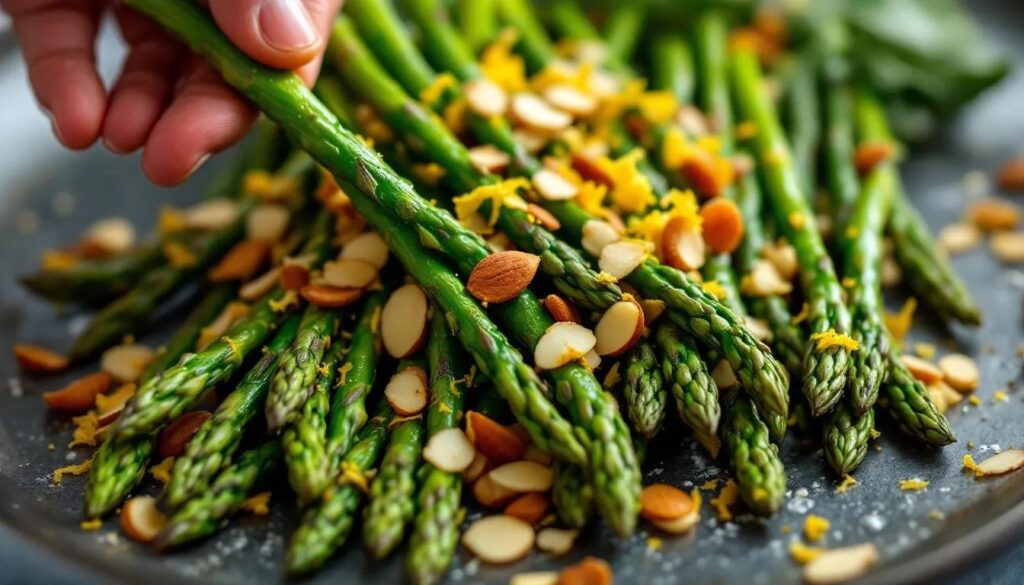
Late March brings one of the most anticipated moments in the produce aisle: the first bundles of spring asparagus, their tips tightly closed, their stalks firm and bright green. For years, roasting them in the oven meant preheating for 15 minutes, waiting another 20, and inevitably watching the tips turn papery before the bases had time to soften. The air fryer changes all of that. Eight minutes at high heat, no preheating fuss, and you get spears that are tender at the core with just enough char on the outside to make them worth eating on their own.
This recipe strips asparagus back to what it actually is: one of spring's most naturally flavorful vegetables, needing almost nothing to shine. A little oil, a little salt, a finishing touch of lemon — and a method that circulates hot air around every inch of the spear rather than letting it steam against a flat baking sheet. Whether you're serving it alongside grilled fish, folding it into a spring pasta, or eating it straight from the basket, this is the approach that makes roasting feel like a thing of the past.
| Preparation | 5 min |
| Cooking | 8 min |
| Servings | 2–3 people |
| Difficulty | Easy |
| Cost | $ |
| Season | Spring asparagus (March–May) |
Suitable for: Vegan · Vegetarian · Gluten-free · Dairy-free · Low-calorie
Ingredients
- 1 lb (450 g) fresh asparagus, medium thickness
- 1 tbsp extra-virgin olive oil
- ½ tsp fine sea salt
- ¼ tsp freshly ground black pepper
- ½ tsp garlic powder (optional)
- ½ lemon, for zesting and juicing at the end
- 1 tbsp finely grated Parmesan or nutritional yeast (optional, for finishing)
Equipment
- Air fryer (basket-style or oven-style, at least 4-quart capacity)
- Large mixing bowl
- Tongs
- Vegetable peeler (optional, for thick stalks)
- Microplane or fine grater (for lemon zest)
- Cutting board and chef's knife
Preparation
1. Selecting and trimming the asparagus
Start with the asparagus itself. At this time of year, good spears should feel firm when you bend them — not rubbery, not brittle. Medium-thickness stalks work best here: thin ones cook too fast and turn limp, while very thick ones can remain woody at the base before the tips are done. To remove the tough, fibrous ends, hold a single spear between both hands and bend gently — it will snap naturally at the point where tenderness begins, usually about an inch from the base. Repeat with a few spears, then use that break point as a visual guide to trim the rest with a knife on the cutting board. This saves time without sacrificing precision. If your stalks are particularly thick (more than ¾ inch in diameter), use a vegetable peeler to shave the bottom third of each spear: this ensures even cooking from base to tip.
2. Seasoning for maximum contact
Place the trimmed spears in a large mixing bowl. Drizzle over the olive oil and turn the asparagus with your hands or tongs until every surface is lightly coated — this is important. The air fryer works by circulating dry heat at high speed, and any part of the spear left uncoated will dry out rather than caramelise. Sprinkle over the sea salt, black pepper, and garlic powder if using. Toss again. The asparagus should glisten faintly but not be dripping: too much oil and the basket will smoke; too little and the exterior will desiccate rather than develop colour.
3. Arranging in the air fryer basket
This step matters more than most recipes admit. Lay the asparagus in the air fryer basket in a single layer, with the spears running parallel. Avoid stacking or crossing them — overlapping creates pockets of steam that make the spears soft and dull rather than lightly charred and vibrant. If your basket is on the smaller side, cook in two batches. A crowded basket is the single most common reason air fryer vegetables disappoint. Set the air fryer to 400°F (200°C). No preheating is necessary with most modern basket models, though if your unit runs cool, a 2-minute preheat helps.
4. Cooking and monitoring
Slide in the basket and cook for 6 to 8 minutes, shaking the basket or turning the spears with tongs at the halfway point. The exact timing depends on thickness: thin spears will be done at 6 minutes, medium at 7 to 8, and particularly thick ones may need a full 9. Look for the tips to turn slightly dark at the edges — they should look blistered rather than burned, with a dry, almost papery texture at the very top that gives way to tender flesh underneath. The stalks should bend slightly under their own weight when lifted with tongs but not collapse. A faint sizzling sound throughout cooking is a good sign; silence means the temperature has dropped, likely from overcrowding.
5. Finishing and serving
Transfer the hot asparagus immediately to a serving plate or platter — leaving them in the basket causes residual heat to keep cooking and soften the texture further. While still steaming, grate lemon zest directly over the spears using a Microplane, then squeeze over a few drops of juice. The heat opens up the aromatics in the zest immediately, and the acid from the juice cuts through the oil and amplifies the asparagus's natural mineral quality. If you're finishing with Parmesan, scatter it on now and let it melt slightly against the hot spears. Serve within five minutes.
Chef's tip
The most underrated variable in this recipe is the moisture content of the asparagus going into the basket. If you've washed the spears — which you should — dry them thoroughly with a clean kitchen towel before seasoning. Even a small amount of surface water will generate steam the moment it hits the hot air fryer, and steam is the enemy of caramelisation. Pat them down, lay them flat, let them air for a minute if you have the time. In mid-spring, when asparagus is at its sweetest and most abundant, this extra step makes all the difference between spears that taste roasted and ones that taste boiled.
Pairing suggestions
Air fryer asparagus carries a lightly smoky, grassy character with a hint of acidity from the lemon finish. It pairs best with wines that share that same tension between freshness and body.
A dry, unoaked Sauvignon Blanc from the Loire Valley — a Sancerre or Pouilly-Fumé — is a natural match: its herbaceous notes and bright citrus acidity echo the asparagus without competing with it. An Albariño from Galicia works equally well, especially if the dish is served alongside seafood. For a non-alcoholic option, a sparkling water with a slice of cucumber and a squeeze of lime mimics the same cleansing freshness on the palate.
About asparagus in spring
Asparagus has marked the arrival of spring in European and North American kitchens for centuries. The Romans cultivated it with considerable seriousness — Emperor Augustus reportedly had a standing order for fresh asparagus that couldn't wait, and the expression velocius quam asparagi coquuntur, meaning "faster than asparagus can be cooked," entered Latin as a phrase for speed. In France, the white asparagus of the Landes and the Vaucluse still carries Indication Géographique Protégée status. In Germany, the annual Spargelzeit, or asparagus season, is observed with something close to national reverence from late April through June 24th.
The air fryer approach is, of course, entirely modern — but it solves a problem that has existed since asparagus first appeared on dinner tables: how to cook it quickly, with dry heat, without an oven. In professional kitchens, asparagus is often blanched briefly and then finished in a very hot pan with butter. The air fryer compresses those two steps into one, achieving a similar result — tender inside, coloured outside — with less fat and less time. It also makes the dish accessible on a weeknight without any of the commitment that oven roasting implies.
Nutritional values (per serving, approximate values)
| Nutrient | Amount |
|---|---|
| Calories | ~80 kcal |
| Protein | ~4 g |
| Carbohydrates | ~7 g |
| of which sugars | ~3 g |
| Fat | ~5 g |
| Fiber | ~3 g |
Frequently asked questions
Can i use frozen asparagus in the air fryer?
Frozen asparagus can be used, but the result will be noticeably different. Frozen spears release a significant amount of water as they thaw under heat, which generates steam and prevents the exterior from browning properly. If you do use frozen asparagus, cook it straight from frozen without thawing — going into the basket cold and dry gives the hot air a better chance of evaporating surface moisture before it pools. Add 2 to 3 extra minutes to the cooking time and shake the basket more frequently. The texture will be softer than fresh, but the flavour holds reasonably well.
How do i store and reheat leftovers?
Cooked asparagus keeps in an airtight container in the refrigerator for up to 2 days, though it softens considerably as it sits. To reheat, return it to the air fryer at 375°F (190°C) for 2 to 3 minutes — this revives some of the texture without drying it out further. Avoid the microwave, which turns the spears uniformly limp. Cold leftover asparagus also works well chopped into a grain salad, stirred into scrambled eggs, or laid over a slice of toast with ricotta.
What variations work well with this method?
The base method adapts easily depending on what you're serving it with. For an Asian-leaning version, swap the olive oil for toasted sesame oil, skip the lemon, and finish with a few drops of soy sauce and a scatter of sesame seeds. For something richer, drizzle the finished spears with tahini thinned with lemon juice. In late spring when English peas appear at the market alongside asparagus, toss a handful of peas into the basket for the final 2 minutes — they blister beautifully and need almost no time. A few shavings of pecorino instead of Parmesan gives the finishing touch a sharper, saltier edge.
Does the thickness of asparagus really matter?
It matters more in an air fryer than in an oven. Because cooking time is short, there's very little margin between undercooked and overdone. Thin spears (under ½ inch) cook in 5 to 6 minutes and can turn papery if left a minute too long. Thick spears (over ¾ inch) need the full 8 to 9 minutes to soften through to the centre. The most reliable approach is to buy a bundle that's as uniform in thickness as possible, or to sort your spears before cooking and adjust timing accordingly.
Can i make this without oil?
Technically yes, but the result is less interesting. Oil does more than prevent sticking — it conducts heat to the surface of the spear, accelerates browning, and carries fat-soluble flavour compounds from the garlic and pepper into the asparagus itself. Without it, the spears dry out quickly and the exterior develops an unpleasant chalky texture rather than a lightly caramelised one. If you're reducing fat for dietary reasons, even half a teaspoon of oil, applied with a brush or a quick spray, makes a meaningful difference compared to none at all.