
Spring mornings call for something simple done brilliantly. Scrambled eggs sit at the crossroads of everyday breakfast and high-level technique — a dish so familiar it almost feels unworthy of attention, until you eat a version that stops you mid-bite. Gordon Ramsay's method does exactly that: slow, deliberate, almost obsessive heat control produces eggs with a texture closer to soft custard than anything you've had from a diner griddle. The secret isn't an exotic ingredient or a professional kitchen. It is a single, repeatable gesture: pulling the pan off the heat every 30 seconds.
Understanding why that gesture matters changes the way you cook eggs permanently. This recipe walks through the full technique — the science behind the movement, the exact moments to act, the finishing touches that turn three eggs into something genuinely worth slowing down for. Pick up a pan and let's get into it.
| Preparation | 3 min |
| Cooking | 8–10 min |
| Portions | 1 person |
| Difficulty | Medium |
| Cost | $ |
| Season | Year-round · Spring eggs at peak freshness |
Suitable for: Vegetarian · Gluten-free · High-protein
Ingredients
- 3 large eggs, the freshest available
- 1 tablespoon unsalted butter, cold, cut into small cubes
- 1 tablespoon crème fraîche or sour cream
- Salt, to finish only
- Freshly ground black pepper, to finish
- Fresh chives, finely snipped, to serve
- Buttered toast or sourdough, to serve
Equipment
- Small, heavy-based non-stick saucepan or skillet
- Rubber spatula or silicone spatula
- Mixing bowl
- Kitchen timer (optional but useful for the first attempt)
Preparation
1. Crack the eggs directly into the pan — don't whisk first
This is the first departure from the standard approach. Ramsay cracks all three eggs straight into the cold, unheated pan along with the cold butter cubes. No whisking, no seasoning yet. Dropping eggs into a cold pan before any heat is applied means the temperature will rise gradually and evenly once the burner turns on, giving you far more control over the cooking curve. The cold butter serves a double purpose: it lubricates the pan and, as it melts slowly into the eggs, it emulsifies with the proteins, contributing to that glossy, creamy finish. Begin stirring gently with the spatula immediately, even before the pan goes on the heat.
2. Place over medium heat and stir constantly — but not frantically
Set the pan over medium heat and keep the spatula moving in slow, deliberate figure-eight passes across the entire base of the pan. You are not scrambling in the aggressive, chopping sense — you are gently folding and pushing curds as they form, preventing any part of the egg from sitting in one place long enough to firm up or dry out. The goal is to build large, soft curds — the loosely set clusters that form when egg proteins coagulate slowly — rather than the small, rubbery fragments that come from high heat. Watch the texture closely: you are looking for the mixture to start thickening and turning from fully liquid to something with faint, cloud-like structure.
3. Pull the pan off the heat every 30 seconds — and keep stirring
The moment the eggs begin to show any sign of movement on the base — a slight thickening, the first wisps of set protein — lift the pan completely off the burner. Keep stirring. The residual heat stored in the pan's base continues cooking the eggs even off the flame, so the stirring must continue uninterrupted. After roughly 20–30 seconds off the heat, return the pan to the burner. Repeat this on–off cycle throughout the entire cooking process: on the heat, stir, watch, off the heat, stir, return. Most cooks perform this cycle four to six times over eight to ten minutes. This technique is sometimes called intermittent cooking or carry-over management, and it is the single most effective way to prevent eggs from overcooking. Eggs are protein networks that tighten irreversibly with excess heat — once they weep liquid or turn rubbery, there is no recovery.
4. Remove from heat while the eggs still look underdone
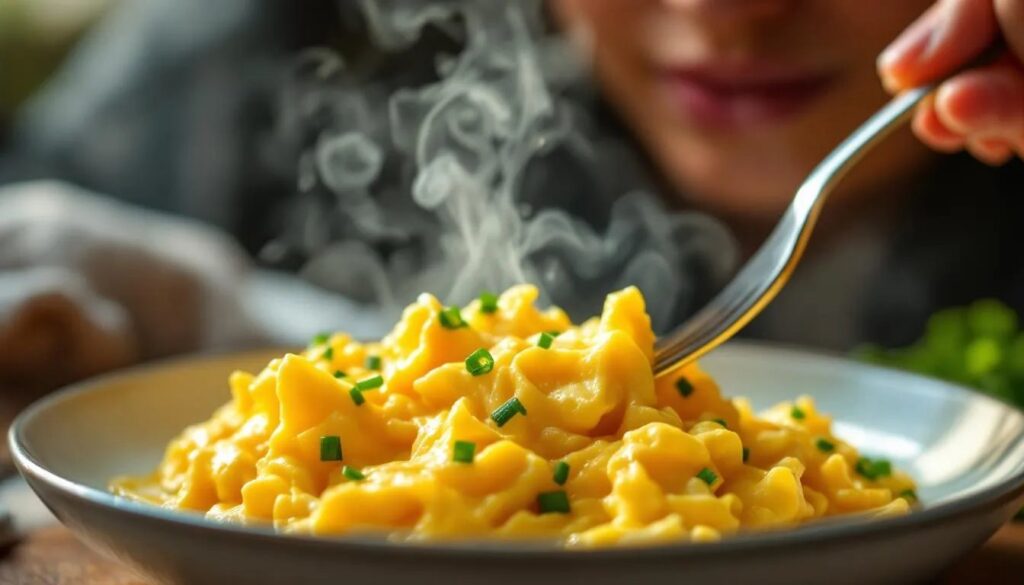
This step is the one that trips up most first-timers. When the eggs reach a consistency that looks just slightly too wet — a flowing, thick, barely-set mass with large, glossy curds that hold their shape loosely — take the pan off the heat for the final time. The carry-over heat in the pan will finish the job. If you wait until they look exactly right in the pan, they will be overcooked on the plate. Trust the process: pull early, let the heat do its quiet work.
5. Stir in the crème fraîche and season at the very end
Off the heat, add the tablespoon of crème fraîche or sour cream and fold it gently into the curds. This does two things simultaneously: it halts the cooking instantly by introducing cold dairy fat, and it adds a faint, clean acidity that lifts the richness of the butter and egg. Season now — never before. Salt draws moisture out of eggs and, if added early, can tighten the proteins prematurely and produce a watery, less cohesive result. A pinch of flaky salt and a few turns of black pepper are all that is needed. Spoon immediately onto buttered toast and finish with snipped chives.
Chef's tip
Egg quality matters more in this recipe than in almost any other preparation. At the end of March, spring hens are at their most active, and the eggs they produce tend to have deeper-coloured, more flavourful yolks. Seek out pasture-raised or free-range eggs from a local farm stall if you can — the difference in colour and richness is visible the moment you crack them open. And resist every temptation to add milk: it dilutes the flavour and works against the custard-like texture the entire technique is built around.
What to drink alongside
Rich, buttery scrambled eggs ask for something with enough brightness to cut through the fat without overwhelming the delicacy of the dish.
A lightly sparkling water with a squeeze of lemon works beautifully for a morning setting. If the occasion calls for something more celebratory — think a late spring brunch — a glass of dry, unoaked Chardonnay from Burgundy or a crisp English sparkling wine brings the acidity and fine bubbles that echo the crème fraîche in the eggs. For a non-alcoholic option, a cold-pressed apple and ginger juice holds its own against the butter's richness.
The story behind the technique
Gordon Ramsay first demonstrated this method publicly in a video that circulated widely online and became one of the most-watched cooking demonstrations on the internet. The approach is not an invention — slow, low-heat egg cookery appears in classical French technique, notably in preparations like œufs brouillés, which have always been cooked in a bain-marie or over very gentle, indirect heat. Ramsay made the method accessible and dramatic: the on-off rhythm is visual, teachable, and produces results so different from the standard that it converts almost everyone who tries it.
The crème fraîche finish is a modern touch, borrowed loosely from the Escoffier-era tradition of finishing egg dishes with cream or butter at the very last moment. Some chefs substitute mascarpone, labne, or even a small spoonful of good olive oil. Each fat source changes the final texture slightly — mascarpone gives a denser, richer result; olive oil keeps things lighter and more fluid. The underlying logic — stop the heat, add cold fat, serve immediately — stays constant across all variations.
Nutritional values (per serving, approximate values)
| Nutrient | Amount |
|---|---|
| Calories | ~320 kcal |
| Protein | ~19 g |
| Carbohydrates | ~1 g |
| of which sugars | ~0.5 g |
| Fat | ~27 g |
| of which saturates | ~13 g |
| Fibre | ~0 g |
Frequently asked questions
Can I scale this recipe up for more people?
You can, but with caution. The technique becomes harder to control as the volume of egg increases — a larger mass retains more heat, which makes the on-off cycle less forgiving. For two people, use six eggs and a slightly larger pan, but keep the heat at medium rather than increasing it. For four or more people, it is more reliable to cook in two separate batches and serve them in quick succession than to attempt one large batch.
Why shouldn't I season the eggs before cooking?
Salt is hygroscopic — it draws moisture out of whatever it contacts. When added to raw eggs before cooking, it begins breaking down the protein structure and releasing water, which leads to a looser, sometimes watery result and a less cohesive curd. Seasoning at the very end, after the pan is off the heat, gives you full control and preserves the silky texture the method is designed to produce.
What if I don't have crème fraîche?
Full-fat sour cream is the closest substitute and works almost identically — same acidity, similar fat content. A small spoonful of Greek yogurt will also halt the cooking and add brightness, though the texture will be slightly less rich. In the absence of any of these, a cold cube of unsalted butter stirred in at the end achieves the heat-stopping function, even if it skips the tangy note the dairy brings.
Can I prepare scrambled eggs in advance?
Not with this method. The entire technique is built around immediate serving — the eggs continue cooking in their own heat for a few seconds after plating, so timing is part of the result. Reheated scrambled eggs, regardless of how well they were cooked, lose the soft curd structure and turn tight and dry. Make them fresh, serve them straight from the pan, and eat them while the toast is still warm.
Does the type of pan matter?
Yes, meaningfully so. A small, heavy-based non-stick pan is the right tool here: the weight ensures even heat distribution, and the non-stick surface means you can stir freely without the curds catching or tearing. A thin stainless steel or aluminium pan creates hot spots and heats too aggressively, making the 30-second cycles harder to time correctly. If you only own a large pan, use the smallest ring on your hob and keep the flame low.