



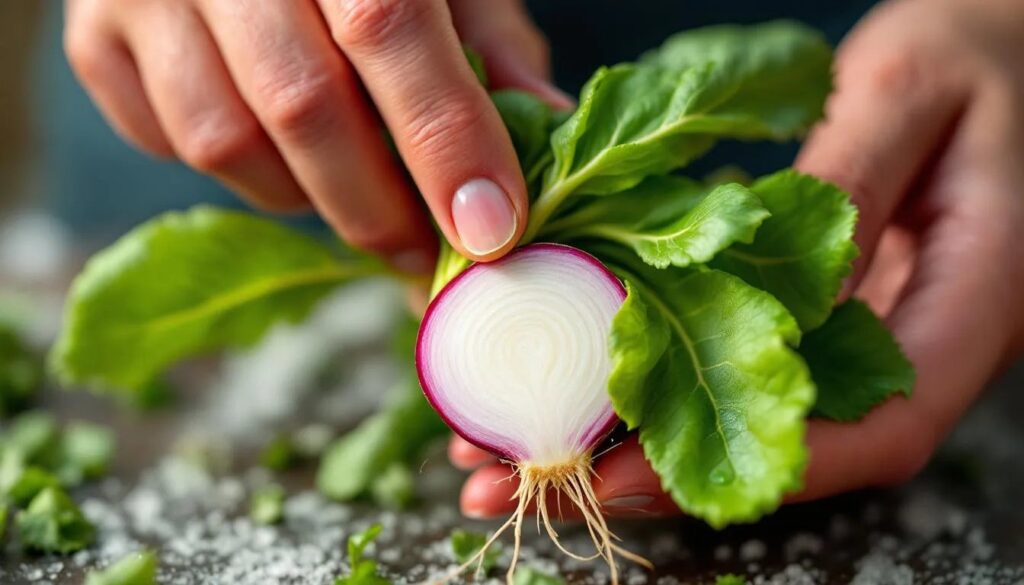
Every spring, for a few fleeting weeks, farmers' markets across the Northeast and Appalachia transform. Tucked between the early radishes and the first bunches of asparagus, ramps appear — wild, pungent, unmistakable, their broad green leaves fanning out over slim burgundy stems. They smell of garlic and onion at once, with a raw earthiness that announces the end of winter more convincingly than any calendar date. Ramp season is notoriously short: from late March through early May, depending on elevation and latitude, and then they're gone.
This guide covers everything worth knowing before you head to the market or the woods: how to select ramps at their peak, store them so they last the week, cook them in ways that honour their complexity, and preserve them through pickling so that their brightness carries into summer. Whether this is your first encounter with Allium tricoccum or your tenth spring ritual, there's something here to sharpen your approach.
What ramps actually are
Ramps — also called wild leeks, wood leeks, or ail des bois in Québec — are a native North American allium that grows wild across hardwood forests, preferring moist, shaded slopes and the company of maples and beeches. Unlike cultivated alliums, they cannot be farmed at industrial scale. They spread slowly by seed and bulb division, growing in dense colonies that take years to establish. This biological reality is what makes them precious and, increasingly, politically charged: overharvesting threatens wild populations, particularly in parts of Canada where ramps are now a protected species.
Responsible foragers and vendors harvest no more than a third of any given patch, and many chefs now specify that they purchase from growers who cultivate ramps on private woodland rather than wild-harvest them. When buying, it's worth asking your vendor how the ramps were sourced. The question is not merely ethical — sustainably harvested ramps tend to be younger, more tender, and more aromatic.
How to choose ramps at the market
Good ramps announce themselves. The leaves should be a vivid, saturated green — not yellowing at the edges, not wilted or slimy at the base. The stems should be firm, ranging from pale white to deep magenta depending on variety and growing conditions, with the colour being a marker of environment rather than quality. Smaller bulbs tend to be milder and suit raw preparations; larger ones carry more intensity and hold up better to heat.
Avoid any bunch where the leaves have begun to separate from the stem at the base — a sign of age. A fresh bunch, held near the nose, should deliver an immediate, clean garlicky-onion hit with a grassy undertone. If the smell is faint, the ramps are past their moment.
How to store ramps
Ramps are perishable, but handled correctly they will keep for up to a week in the refrigerator. Wrap the unwashed bunch loosely in a slightly damp paper towel, then place it in an open zip-lock bag or a breathable produce bag. Store it in the coldest part of the refrigerator — the crisper drawer, ideally. Washing ramps before storage accelerates decay, so hold off until you're ready to cook.
If you have more ramps than you can use in a week, the leaves freeze well after blanching: plunge them into boiling salted water for thirty seconds, transfer immediately to an ice bath, pat dry, and freeze flat on a sheet tray before transferring to a bag. The texture softens on thawing, making them suitable for soups, sauces, and compound butters rather than salads. The bulbs can be refrigerated in a jar of cold water, changed every two days, for up to ten days.
How to cook ramps
The key to cooking ramps well is understanding that the leaves and the bulbs behave differently. The bulbs, like scallion whites or young garlic, benefit from direct heat — a quick sear in a cast-iron pan with butter and a pinch of salt produces edges that caramelise to a deep amber, while the interior softens to a sweet, yielding texture. The leaves, by contrast, wilt almost instantly: thirty seconds in a hot pan, or folded into a hot dish off the heat, is all they need.
Raw ramps in a vinaigrette or a salsa verde retain their full, aggressive character — they pair particularly well with fatty proteins like lamb, duck, or a thick-cut pork chop, where their sharpness cuts through richness. Folded into a soft scramble of eggs with a knob of butter, they mellow to a quieter and more refined flavour. Blended into a pistou or a pesto with good olive oil, toasted walnuts, and Parmesan, they produce a sauce with remarkable depth — use it on pasta, as a spread for grilled bread, or stirred into warm white beans.
For the bulbs specifically: a brief blanch followed by a sear, or a slow braise in stock, renders them silky. They work as a side vegetable in their own right, dressed simply with lemon and good salt, alongside roasted chicken or grilled fish.
Ramp compound butter
One of the most efficient ways to extend ramp season is compound butter. Soften 250 g of unsalted butter at room temperature. Finely mince the leaves of one bunch of ramps — roughly 60 g of leaves — and fold them into the butter along with a generous pinch of flaky salt, a few drops of lemon juice, and optionally a small amount of finely grated lemon zest. Roll the mixture into a log in parchment paper, twist the ends tight, and refrigerate for use within a week or freeze for up to three months. Sliced directly onto a hot steak, grilled corn, or poached fish, it delivers an immediate, vivid ramp flavour well into summer.
How to pickle ramps
Pickling is the best strategy for preserving ramps across their entire season. The bulbs hold their structure exceptionally well in brine; the leaves are more fragile and better preserved through the compound butter or pesto route described above.
Quick-pickled ramp bulbs
Trim the ramp bulbs from their leaves, leaving about 2 cm of stem attached. Blanch them briefly — 60 seconds in boiling salted water — then transfer to an ice bath and drain thoroughly. Pack them into sterilised glass jars.
For the brine, combine 240 ml of white wine vinegar, 240 ml of water, 2 tablespoons of sugar, and 1½ teaspoons of kosher salt in a small saucepan. Add any aromatics that suit your palate: a few black peppercorns, a dried chilli, a small bay leaf, a strip of lemon peel, or a pinch of coriander seed. Bring to a simmer, stir until the sugar and salt dissolve, then pour the hot brine over the ramp bulbs, ensuring they are fully submerged. Seal the jars and refrigerate once cool. They will be ready to eat within 48 hours and will keep refrigerated for up to six weeks.
The result is something acidic and faintly sweet, with the ramp's allium sharpness mellowed but not erased. Use pickled ramp bulbs as you would cornichons: alongside a cheese board, chopped into a tartare, scattered over a devilled egg, or rested on a smash burger with good mustard.
A note on fermented ramps
For a longer shelf life and a more complex flavour profile, ramp bulbs can be lacto-fermented rather than vinegar-pickled. Pack the blanched bulbs into a jar with a 2% salt brine — that is, 20 g of non-iodised salt per litre of water — keeping them submerged below the brine with a weight. Leave at room temperature for three to five days, tasting daily, then transfer to the refrigerator to slow fermentation. The resulting bulbs are funky, pleasantly sour, and deeply savoury — closer in character to kimchi than to a French cornichon, and outstanding alongside grilled meats or folded into fried rice.
On foraging responsibly
If you forage your own ramps rather than buying them, the principle is straightforward: take only what you will use, harvest from a colony only every two to three years, and take leaves rather than whole plants when possible, since a ramp can regrow its leaves but cannot regrow from a harvested bulb. Some foragers cut single leaves from multiple plants rather than pulling whole bunches — a slower approach that leaves the colony intact. In the long run, it is the only approach that makes sense.
| Part of ramp | Best use | Heat tolerance |
|---|---|---|
| Leaves | Raw salads, pesto, compound butter, quick sauté | Low — 30 seconds maximum |
| Stems | Sautéed, grilled, braised | Medium — 2–4 minutes |
| Bulbs | Seared, pickled, fermented, braised | High — withstands extended cooking |
Ramp season as a practice
There is something instructive about a wild ingredient that cannot be rushed, scaled, or sourced out of season. Ramps arrive when the forest floor is still cold, when the light is still thin, and they leave before summer properly begins. Appreciating them involves buying them selectively, storing them carefully, and cooking or preserving them with intention. All of which comprise a simple exercise of acknowledging where food originates and its environmental cost to produce. That's not a bad way to start the Spring cooking season.
Questions about ramps
Can i substitute ramps with other alliums if i can't find them?
The closest substitute is a combination of young garlic (or garlic scapes) for the bulb and baby spinach or arugula for the leaf — neither replicates ramps exactly, but together they approximate the dual character. Scallions with a small amount of minced fresh garlic work in cooked preparations. For pickling, spring onion bulbs respond well to the same brine and technique.
Are ramps safe to eat raw?
Yes, ramps are entirely safe raw. They are pungent — more so than scallions — so most people prefer to use raw leaves in moderation, balanced by acid (citrus, vinegar) or fat (olive oil, butter). The bulbs raw are quite sharp; a brief maceration in lemon juice mellows them considerably before using in salads or dressings.
Why do ramps smell so strongly, and will the odour linger?
Ramps contain the same sulfur-based compounds responsible for garlic's pungency — notably allicin and related molecules — but in a particularly volatile form. The odour can linger on breath and skin for several hours after eating, more so than with cooked garlic. Cooking reduces the intensity significantly. Pairing ramps with acid — lemon juice, wine vinegar — also helps mitigate the effect by breaking down some of the volatile compounds before consumption.
How do i know if my pickled ramps have gone bad?
Properly refrigerated pickled ramp bulbs in a vinegar brine are shelf-stable for up to six weeks. Signs of spoilage include cloudiness in a vinegar pickle (fermented brine will be naturally cloudy, but vinegar pickles should remain relatively clear), off odours beyond the expected sourness and allium sharpness, and any visible mould at the surface. When in doubt, discard — the ingredient is seasonal enough that it's worth starting fresh next year rather than risking a compromised jar.
Can i grow ramps at home?
Ramps can be grown, but patience is required — seeds take up to eighteen months to germinate and plants take five to seven years to form a harvestable colony. They require a shaded woodland environment with rich, moist, well-drained soil and a cold winter dormancy period. Some specialty nurseries sell ramp bulbs for transplanting in the fall, which is faster than starting from seed. For most home gardeners, buying from a responsible vendor remains the more practical option.