
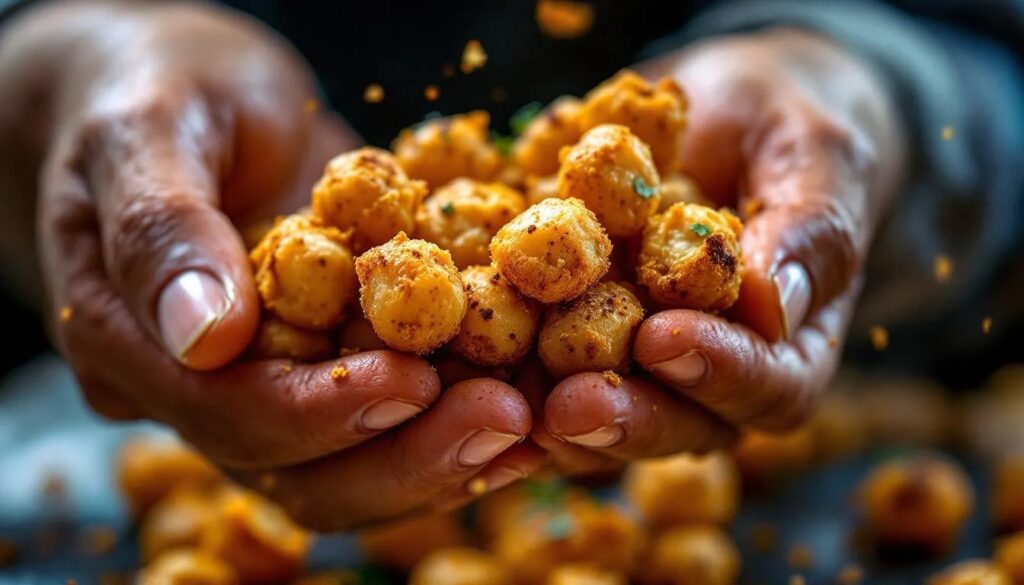
Spring is officially here, and with it comes that familiar urge to snack smarter. When the afternoons stretch a little longer and the appetite for heavy, greasy bites starts to wane, a small bowl of golden, crackling chickpeas hits differently. The air fryer — that countertop workhorse — transforms a humble can of legumes into something that genuinely crackles between the teeth, with a depth of flavour that store-bought snacks rarely manage. No oven preheating, no oil-splattered stovetop, no waiting around: just 12 minutes from pantry to bowl.
This recipe strips the process back to what matters. The technique focuses on one non-negotiable step that most home cooks skip — and that single detail is what separates truly crispy chickpeas from the sad, chewy ones. You'll also find seasoning combinations that go beyond plain salt, drawing on spice-rack staples that feel right for the season: smoked paprika, cumin, a whisper of cayenne. Whether you're snacking straight from the bowl, scattering them over a spring salad of shaved fennel and peas, or packing them into a lunchbox, the method is the same. Tie your apron, open your cupboard, and let's get started.
| Preparation | 5 min |
| Cooking | 12 min |
| Servings | 2–3 people |
| Difficulty | Easy |
| Cost | $ |
| Season | Year-round · especially good alongside spring salads |
Suitable for: Vegan · Vegetarian · Gluten-free · High-protein · Dairy-free
Ingredients
- 1 can (15 oz / 425 g) chickpeas, drained and rinsed
- 1 tbsp olive oil or avocado oil
- ¾ tsp smoked paprika
- ½ tsp ground cumin
- ¼ tsp garlic powder
- ¼ tsp cayenne pepper (adjust to taste)
- ½ tsp fine sea salt
- Freshly ground black pepper, to taste
Equipment
- Air fryer (basket-style or oven-style)
- Clean kitchen towel or paper towels
- Large mixing bowl
- Colander
- Measuring spoons
Preparation
1. Dry the chickpeas — the step that changes everything
Drain the chickpeas through a colander and rinse them under cold running water. Tip them out onto a clean kitchen towel — not paper towels, which tear — and pat them vigorously with a second towel, rolling them back and forth until they are completely dry to the touch. At this point, any skins that have loosened and peeled away on their own should be discarded. This matters more than any spice blend: residual moisture is the enemy of crispness. Steam trapped between the chickpea and the hot circulating air of the fryer will prevent the exterior from setting into a proper crust. Give them at least 2 full minutes of active drying — it is not a step to rush. The chickpeas should feel almost chalky on the surface before they go anywhere near oil.
2. Season in the bowl, not in the basket
Transfer the dried chickpeas to a large mixing bowl. Drizzle the olive oil over them and toss until every chickpea glistens with a thin, even coat. Add the smoked paprika, cumin, garlic powder, cayenne, salt, and a few cracks of black pepper. Toss again — use your hands if needed — until the spices cling uniformly to each chickpea. Avoid adding the salt too far in advance: salt draws moisture, and adding it in the bowl just before cooking (rather than letting it sit) keeps the surface as dry as possible. The colour of the coated chickpeas should be a deep, rust-brick red, mottled with gold.
3. Arrange in a single layer — no crowding
Preheat your air fryer to 400°F (200°C) for 2 minutes if your model requires it; many do not, but a hot basket from the start helps initiate the crust faster. Tip the chickpeas into the basket and shake them into a single, even layer — meaning no chickpea sits directly on top of another. Overcrowding forces the machine to steam rather than fry, undoing all the drying work from step one. If your air fryer basket is small, cook in two batches rather than compromising the result.
4. Cook, shake once, and listen
Set the timer for 12 minutes. At the halfway mark — around 6 minutes — pull out the basket and give it a firm shake to turn the chickpeas, ensuring they colour evenly on all sides. Return the basket and let the final 6 minutes run. By the end, you should hear a faint rattling when the basket moves: that is the sound of chickpeas that have lost most of their internal moisture and are rolling loose and light, the way a roasted nut does. Their colour will have deepened to a dark amber-gold, with wrinkled, papery exteriors. They will firm up further as they cool — which takes roughly 3 minutes out of the basket — so avoid the temptation to add extra time if they feel slightly soft when first removed.
Chef's tip
Add the salt only after cooking if you want maximum crunch — and yes, it makes a measurable difference. Season at the bowl stage for flavour that clings deeply to the spice layer, or hold all the salt until after they come out of the air fryer for the crispiest possible shell. For a spring-market twist, try swapping the cumin for dried lemon zest and fresh thyme: crush the thyme between your fingers before adding it to release its oils, and toss the warm chickpeas in the zest the moment they leave the basket. The residual heat blooms the citrus immediately. A light shower of flaky sea salt at the end — Maldon or fleur de sel — gives a clean, sharp finish that fine salt simply cannot replicate.
Pairing suggestions
Crispy chickpeas carry enough spice and smoke to hold their own, but they also work as a textural element in composed dishes. A cold glass of sparkling water with cucumber and mint is the most natural companion when eating them as a standalone snack — the cool brightness cuts through the paprika heat without competing.
For a more substantial pairing, serve them alongside a spring grain bowl: farro or freekeh, shaved raw asparagus, a soft-boiled egg, and a lemon-tahini dressing. If you want something to drink, a dry, low-tannin white wine — a Picpoul de Pinet or a crisp Vermentino — echoes the smoky, savoury edge without overpowering the chickpeas' delicate crunch. An alcohol-free option worth considering is a lightly sparkling kombucha with ginger notes, which plays well against the cumin and cayenne.
A little background on the chickpea
The chickpea — Cicer arietinum — is one of the oldest cultivated legumes on the planet, with evidence of its use in the Fertile Crescent dating back roughly 10,000 years. It sits at the foundation of cuisines as distinct as those of India, Morocco, Lebanon, Spain, and Ethiopia, appearing in forms as varied as a creamy hummus, a fermented pancake batter, a slow-simmered stew, or roasted whole as a street snack. In Spain, garbanzos fritos — fried chickpeas seasoned with pimentón — have appeared on tapas boards for centuries. The air fryer version is simply the most recent iteration of an idea that has been circling kitchens for millennia.
What makes the chickpea particularly interesting from a culinary standpoint is its starch structure: cooked chickpeas contain a mixture of digestible and resistant starch, the latter of which behaves more like dietary fibre in the body. When the chickpea is dried and roasted — whether in an oven, a skillet, or an air fryer — this starch transforms further, developing the characteristic mealy-then-crunchy texture that sets it apart from other roasted legumes. Canned chickpeas work perfectly here: they are already fully cooked and hydrostatically stable, meaning they hold their shape under high heat without turning to mush, provided they are dry before cooking.
Nutritional values (per serving, approximate values)
| Nutrient | Amount |
|---|---|
| Calories | ~180 kcal |
| Protein | ~9 g |
| Carbohydrates | ~22 g |
| of which sugars | ~3 g |
| Fat | ~6 g |
| Fiber | ~6 g |
Frequently asked questions
Can I make these ahead of time?
Crispy chickpeas are best eaten within 2 hours of cooking, when the crust is at its most pronounced. That said, you can prepare them up to 24 hours in advance and store them in an open bowl at room temperature — never in a sealed container, which traps moisture and accelerates softening. If they lose their snap, a quick 3-minute blast in the air fryer at 375°F (190°C) brings them most of the way back.
Why are my chickpeas soft instead of crunchy?
The two most common culprits are insufficient drying before cooking and overcrowding in the basket. Both cause the chickpeas to steam rather than roast. Make sure each chickpea is genuinely dry to the touch — not just blotted — and that they sit in a single layer with a little space between them. Also check that your air fryer is actually reaching the set temperature; older or lower-wattage models sometimes run 15–20°F (8–10°C) cooler than indicated.
What other seasonings work well?
The base formula — oil, a warm spice, something savoury, salt — adapts to almost any flavour profile. For a spring-forward option, try lemon zest, dried thyme, and white pepper. For something more umami-forward, use nutritional yeast, onion powder, and a pinch of turmeric. Za'atar blended with olive oil is another direction that works particularly well if you're scattering the chickpeas over a yogurt dip or a grain salad. Avoid fresh herbs in the air fryer at this temperature — they burn quickly; add them after cooking instead.
Can I use dried chickpeas instead of canned?
Yes, but the preparation time increases significantly. Soak 1 cup (185 g) of dried chickpeas in cold water for at least 8 hours, then simmer them for 45–60 minutes until fully tender but not mushy. Drain, dry, and proceed with the recipe exactly as written. The result is often slightly firmer and nuttier than the canned version, which can be a worthwhile trade-off if you're planning a larger batch.
Are air fryer chickpeas healthier than deep-fried snacks?
Compared to a comparable portion of deep-fried chips or pork rinds, air fryer chickpeas use significantly less oil while delivering considerably more protein and dietary fibre. They are not a zero-fat food — the tablespoon of olive oil coats every chickpea — but the total fat content per serving (~6 g) is moderate, and the fat used is predominantly monounsaturated. The fibre content (~6 g per serving) also makes them more satiating than most ultra-processed snacks of equivalent caloric density.