
Every baker has been there: you follow a recipe to the letter, slide the pan into the oven with confidence, and pull out something dense, gummy, or flat. The recipe isn't broken. The technique isn't wrong. In most cases, the culprit is the very first step — measuring flour. Alton Brown, the food scientist and television host behind Good Eats, has spent years making this case with the kind of methodical precision that changes the way home bakers think about their kitchens.
This article isn't about following a celebrity's preference. It's about understanding why a single measurement method — the kitchen scale — has the power to fix the most common source of failure in baking, and how adopting it transforms everything from sandwich loaves to delicate spring layer cakes.
The problem with scooping
When you dip a measuring cup directly into a bag of all-purpose flour, you compact it. The grains compress against each other, and what fills that cup weighs significantly more than the recipe intends. A single cup of flour measured by scooping typically weighs between 140 g and 160 g. The same cup measured by weight — what professional bakers and most recipe developers actually mean — weighs closer to 120 g to 125 g. That gap of 15 to 35 grams per cup sounds modest. Across a recipe calling for three cups of flour, you may be adding nearly 100 g of extra flour without realising it.
That excess flour absorbs more liquid, tightens the gluten network, and leaves less room for leavening gases to expand. The result is a crumb that's tight, dry, and heavy — not because something went wrong in the oven, but because the ratio was off from the start.
What Alton Brown actually says — and why it holds up
Alton Brown's approach is rooted in a straightforward position: baking is applied chemistry, and chemistry requires accurate measurements. He consistently advocates for the kitchen scale over volumetric measuring cups, arguing that a recipe developed using weights is reproducible — meaning every baker, regardless of how they store their flour or where they live, gets the same result.
The science supports this. Flour density varies based on how it has been stored, whether it has been sifted, the ambient humidity in the kitchen, and even the altitude. A measuring cup is, by definition, a volume measurement. A gram is a gram. This is why professional pastry chefs worldwide have used weight-based recipes for generations, and why the shift toward weight measurements in home recipes — especially in the United States — has accelerated noticeably in recent years.
The compaction problem, demonstrated
To understand the scale of the problem, consider a simple test: take a bag of all-purpose flour, scoop a cup directly from the bag five times, and weigh each cup. The readings will vary by as much as 20 to 25 g between attempts, depending on how packed the flour was at that particular moment. Now spoon the flour into the cup, level it off, and weigh it — the reading will be lower and, crucially, more consistent. Now weigh 120 g of flour directly into a bowl: the reading is identical every single time.
This variability is not unique to flour. Brown sugar, cocoa powder, almond flour, and powdered sugar all compact differently under different conditions. But flour is the ingredient that appears in the largest quantities in most baking recipes, which makes its measurement error the most consequential.
How to switch to weighing flour
The transition requires only a digital kitchen scale — an investment that typically ranges from $10 to $30 for a reliable model — and a small adjustment in habit. Place your mixing bowl on the scale, press the tare button to zero out the weight, and add flour directly until you reach the specified gram or ounce amount. No cups to wash. No levelling off. No residue left on the counter.
For recipes that still list volumes rather than weights, a working conversion table helps: 1 cup of all-purpose flour ≈ 120–125 g, 1 cup of cake flour ≈ 100–105 g, 1 cup of whole wheat flour ≈ 130 g. These are approximations — the exact weight depends on the brand and how the flour is milled — which is precisely why recipe developers who care about reproducibility write in grams.
What changes in the final bake
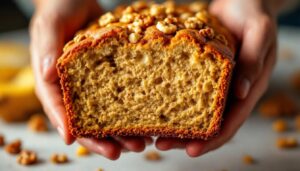
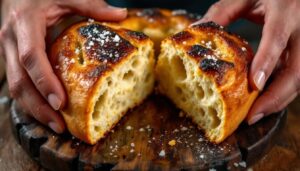
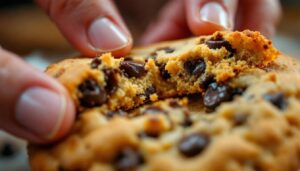
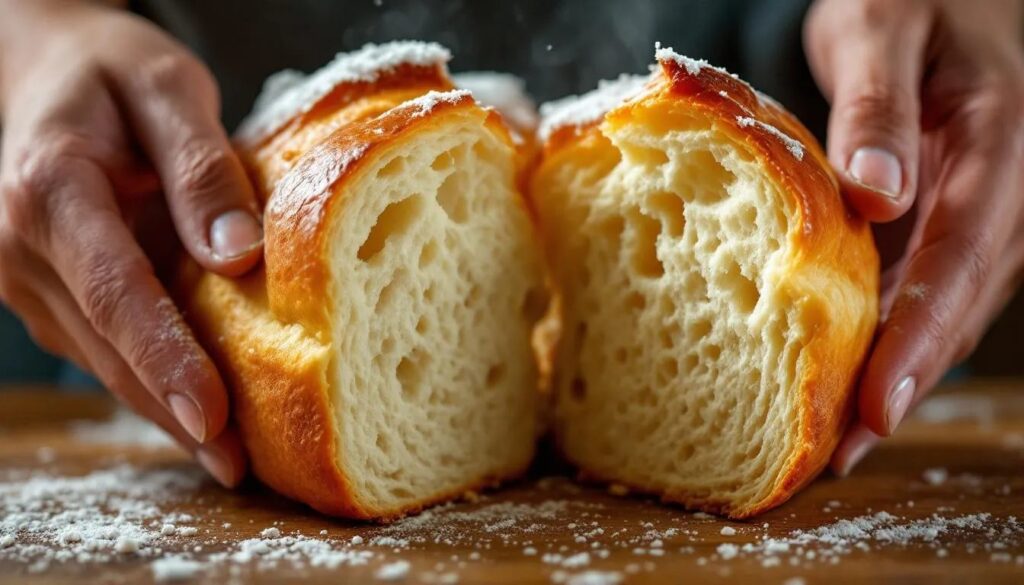
The most immediate difference appears in crumb structure. Cakes baked with accurately weighed flour rise more evenly, with a softer, more open crumb. Bread loaves develop better oven spring — that dramatic surge in volume during the first minutes of baking — because the hydration ratio is correct and the dough has the extensibility to expand. Muffins hold moisture through cooling rather than drying out within hours. Cookies spread at the right rate instead of staying thick and underbaked at the centre.
These are not marginal improvements. For bakers who have struggled with consistently dense results despite following recipes carefully, switching to weight measurements often produces an immediate and visible difference in the very next batch.
A note on spring baking
Late March is the moment when lighter bakes start to feel right — lemon pound cakes, carrot layer cakes for Easter, tender tea breads with dried fruit. These are recipes where a precise crumb matters enormously, where the balance between structure and tenderness is exactly what makes the difference between a cake that tastes seasonal and one that tastes like effort. Weighing flour costs nothing extra, changes nothing about the recipe, and removes one of the most stubborn variables standing between intention and result.
A kitchen scale does not replace skill. It removes the noise that prevents skill from showing up on the plate.
Common objections — and honest answers
My recipes only list cups and spoons. Can I still use a scale?
Yes. Use the standard conversion of ~120 g per cup of all-purpose flour as your working figure, and adjust based on results over time. Many home bakers keep a conversion reference card near their scale. The longer-term solution is to seek out recipes written in grams, which are increasingly common in baking books and food publications produced in the last decade.
Is the difference really noticeable, or is this a marginal gain?
For recipes with high flour-to-liquid ratios — dense cakes, enriched breads, thick cookie doughs — the difference is pronounced and visible. For recipes where flour plays a minor role, such as a light crêpe batter, the impact is smaller. The gain is most dramatic in any bake where texture is the primary measure of success, which describes the majority of home baking projects.
What scale should I buy?
A scale that reads in increments of 1 g, has a tare function (to zero out the weight of the bowl), and can handle up to 5 kg covers the full range of home baking. Battery-powered digital models in this range are widely available and do not require a significant investment. Avoid scales that only read in 5 g increments — the precision loss matters in small-batch baking and pastry work.
Does this apply to other dry ingredients, or just flour?
It applies to any dry ingredient that compacts or aerates: cocoa powder, powdered sugar, almond flour, oat flour, cornstarch, and dried spices used in large quantities. Salt and baking powder are typically used in small enough quantities that volumetric measuring is reliable for most home applications, though professional kitchens weigh those too. The principle is the same: weight eliminates the human variable.
Why don't all recipe writers use grams?
In the United States, volumetric measurements remain the dominant convention in consumer-facing recipes, largely because of historical publishing standards and the assumption that home kitchens lack scales. That convention is shifting — notably in the work of baking-focused authors and in recipes designed for professional or technically oriented home bakers. Alton Brown's advocacy for weight measurements is part of a broader movement to bring recipe writing in line with the reproducibility standards that professional kitchens take for granted.