


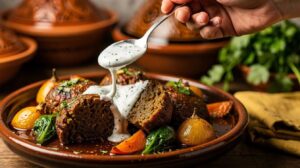
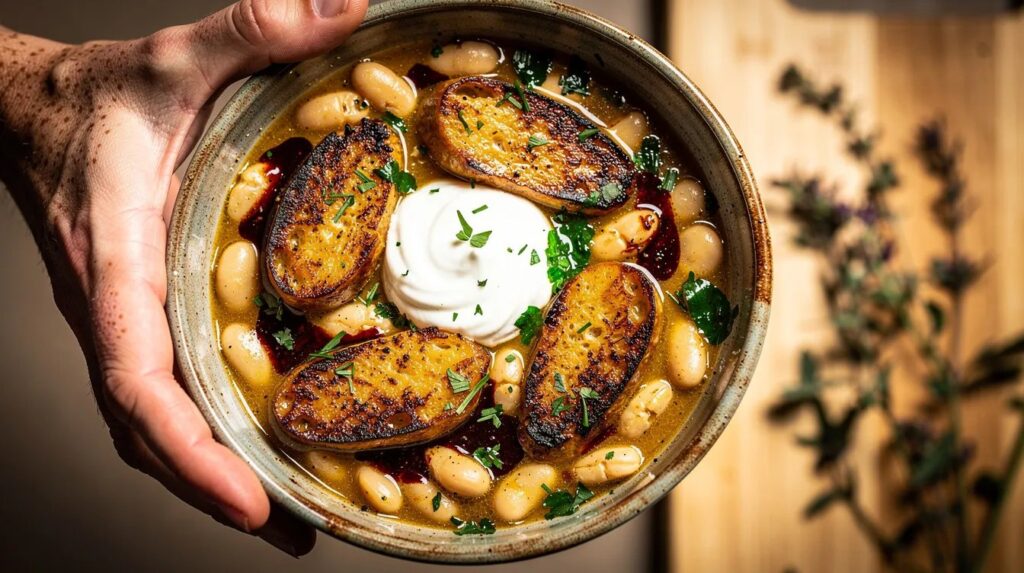
As the last cool evenings of the Australian autumn settle in, a thick, fragrant stew is exactly the kind of cooking that feels right. This creamy white bean and sausage stew brings together plump cannellini beans, smoky pork sausages, and a broth enriched with garlic, herbs, and a generous splash of chicken stock. The beans break down just enough to thicken everything into a velvety, spoonable bowl, while chunks of browned sausage add salt and depth to every mouthful.
The simplicity of this version is what makes it stand out — one pot, a handful of pantry staples, and a little patience while it simmers. The sausages are seared first, building a golden fond on the base of the pot that flavours the entire stew. Leafy greens stirred through at the end lift the richness with a slight mineral bite. This is the kind of meal that fills the kitchen with the smell of slow-cooked comfort long before it reaches the table. Time to roll up your sleeves and let the pot do the work.
| Preparation | 15 min |
| Cooking | 60 min |
| Portions | 4–6 servings |
| Difficulty | Easy |
| Cost | $ |
| Season | Autumn staples — hearty greens, root vegetables, dried beans |
Suitable for: Dairy-free · High in protein · High in fibre
Ingredients
For the stew
- 6 thick pork sausages (~600 g), Italian-style or plain with fennel
- 2 tablespoons olive oil
- 1 large brown onion, finely diced
- 4 cloves garlic, thinly sliced
- 2 stalks celery, diced
- 1 large carrot, diced
- 1 tablespoon tomato paste
- 1 teaspoon smoked paprika
- ½ teaspoon dried chilli flakes (adjust to taste)
- 2 × 400 g tins cannellini beans, drained and rinsed
- 1 × 400 g tin diced tomatoes
- 750 ml chicken stock (or vegetable stock)
- 2 sprigs fresh rosemary
- 2 bay leaves
- Fine sea salt and cracked black pepper
To finish
- 2 large handfuls cavolo nero or silverbeet, stems removed, leaves roughly torn
- 1 tablespoon red wine vinegar
- Extra virgin olive oil, for drizzling
- Crusty sourdough bread, for serving
- Grated Parmesan (optional)
Utensils
- Large heavy-based pot or Dutch oven (5 L minimum)
- Wooden spoon
- Sharp knife and chopping board
- Tongs
- Ladle
Preparation
1. Brown the sausages
Heat 1 tablespoon of olive oil in the pot over medium-high heat until it shimmers. Add the sausages in a single layer — do not crowd them, or they will steam rather than sear. Cook for 3–4 minutes per side, turning with tongs, until the casings are deeply golden and blistered in places. The sausages do not need to be cooked through at this stage; they will finish in the stew. Transfer them to a plate and set aside. Leave the rendered fat in the pot — this is the flavour base for everything that follows.
2. Build the aromatic base
Reduce the heat to medium and add the remaining tablespoon of olive oil. Tip in the diced onion, celery, and carrot. Stir well, scraping the base of the pot with a wooden spoon to lift any caramelised bits left by the sausages — this is the fond, concentrated flavour that would otherwise be wasted. Cook the vegetables for 6–8 minutes, stirring occasionally, until the onion turns translucent and the edges of the carrot begin to soften. Add the sliced garlic and cook for 1 minute more, just until fragrant. The garlic should not take on colour; if it browns, it will turn bitter.
3. Add the paste and spices
Push the vegetables to one side of the pot and drop the tomato paste into the cleared space. Let it fry directly on the hot surface for 30–45 seconds, stirring it into the oil. This step caramelises the sugars in the paste and deepens its flavour from sharp and tinny to rich and sweet. Sprinkle in the smoked paprika and chilli flakes, then stir everything together quickly so the spices bloom in the heat without burning.
4. Combine the beans, tomatoes, and stock
Pour in the diced tomatoes and stir to deglaze any remaining residue on the base. Add the drained cannellini beans and the chicken stock. Drop in the rosemary sprigs and bay leaves — keeping the rosemary on the stem makes it easy to fish out later. Slice the browned sausages into 2–3 cm chunks and return them to the pot along with any juices that have collected on the plate. Stir gently to combine. The liquid should just cover the beans and sausage; if it doesn't, add a splash more stock or water.
5. Simmer low and slow
Bring the stew to a gentle boil, then immediately reduce to a low simmer. You want lazy bubbles breaking the surface, not a rolling boil — too much heat will toughen the sausage and make the beans mealy. Cover the pot with the lid slightly ajar to allow some steam to escape. Cook for 40–45 minutes, stirring every 10 minutes or so to prevent sticking. During this time, some of the beans will begin to break apart and dissolve into the broth, creating a naturally creamy, thick consistency without any dairy. If the stew looks too thick at any point, add a little stock. If it looks too thin, remove the lid entirely for the final 10 minutes.
6. Wilt the greens and finish
Remove and discard the rosemary sprigs and bay leaves. Stir in the torn cavolo nero or silverbeet leaves, pressing them gently into the liquid. They will seem like too much at first, but they wilt dramatically within 3–4 minutes. Once the leaves are tender but still have a slight bite, remove the pot from the heat. Add the red wine vinegar and stir through — it cuts the richness and sharpens every other flavour in the bowl. Taste and adjust the seasoning with salt and pepper. The stew should be thick enough to mound slightly on a spoon, savoury, smoky, and just barely tangy at the edges.
7. Serve
Ladle the stew into deep bowls. Drizzle each serving with a thread of extra virgin olive oil and scatter with grated Parmesan if using. Serve with thick slices of crusty sourdough — the kind with enough structure to drag through the broth and scoop up a bean or two. This stew is better five minutes after resting off the heat than straight from the flame; the flavours settle and the broth thickens a fraction more as it sits.
Chef's Tip
If you can find it, swap one tin of cannellini beans for butter beans (lima beans). Their larger size gives the stew more textural contrast — pillowy and creamy against the smaller, firmer cannellini. For a deeper autumn flavour, stir a teaspoon of Dijon mustard into the finished stew along with the vinegar. And if your sausages are very lean, add an extra tablespoon of olive oil when building the base — the stew needs a good amount of fat to develop its characteristic silkiness.
Food and wine pairing
This stew has a smoky, savoury profile with gentle acidity from the tomatoes and vinegar. The pairing should complement that warmth without overwhelming the beans' subtle, earthy sweetness.
A medium-bodied Sangiovese from the King Valley or a Victorian Nebbiolo with bright cherry notes and fine tannins works well here — the acidity in the wine mirrors the tomato in the broth. For something more approachable, a chilled Grenache rosé with enough body to stand up to the sausage is an excellent match in warmer weather. A non-alcoholic option: sparkling water with a squeeze of lemon and a sprig of rosemary — simple, clean, and refreshing against the richness.
More about this dish
Bean and sausage stews appear in nearly every European peasant-cooking tradition, from the French cassoulet to the Italian ribollita and the Spanish fabada asturiana. The common thread is practical: dried beans were cheap, sausages preserved meat through winter, and a long simmer turned humble ingredients into something deeply satisfying. Cannellini beans — white kidney beans native to Tuscany — became the bean of choice in Italian-American cooking and eventually in Australian kitchens through waves of postwar migration.
The "creamy" texture here owes nothing to cream or butter. It comes entirely from the starch released by the beans as they cook, a technique that Italian cooks have relied on for centuries. Modern versions often add kale or cavolo nero, a nod to Tuscan zuppa traditions where dark leafy greens were always simmered into brothy, beany pots. The dish sits comfortably between a thick soup and a braise — spoonable, substantial, and better the next day.
Nutritional information (per serving, approximate values)
| Nutrient | Amount |
|---|---|
| Calories | ~480 kcal |
| Protein | ~28 g |
| Carbohydrates | ~34 g |
| of which sugars | ~6 g |
| Fat | ~24 g |
| Fibre | ~10 g |
Frequently asked questions
Can this stew be made ahead of time?
Yes, it can, and it improves overnight. The beans absorb more of the broth and the flavours meld together. Prepare the stew up to two days in advance, cool it completely, and refrigerate in a sealed container. Reheat gently on the stovetop, adding a splash of stock or water as the beans will have soaked up liquid. Add the greens fresh when reheating if you prefer them with more bite.
How should I store leftovers?
Transfer cooled stew to an airtight container and refrigerate for up to 4 days. It also freezes well for up to 3 months — portion it into freezer-safe containers for easy midweek meals. Defrost overnight in the fridge and reheat on the stovetop over low heat, stirring occasionally. The texture may be thicker after freezing; thin it with a little stock as you warm it through.
What substitutions work well?
Swap the pork sausages for chicken or lamb sausages — merguez adds a North African warmth that pairs beautifully with the beans. For a vegetarian version, replace the sausages with thick slices of halloumi, seared until golden, and use vegetable stock. Borlotti beans or butter beans can stand in for cannellini. Spinach or regular kale works if cavolo nero is hard to find, though it wilts faster, so add it at the very last moment.
Can I use dried beans instead of tinned?
Yes, and the stew will be even silkier. Soak 300 g dried cannellini beans overnight in plenty of cold water. Drain and add them to the pot at the same stage as the tinned beans, but increase the stock to 1 litre and extend the simmering time to 1 hour 15 minutes, or until the beans are completely tender. Check the liquid level regularly and top up as needed.
What bread goes best with this stew?
A rustic sourdough with a thick, crunchy crust and open crumb is ideal — it holds up to the broth without disintegrating. A wood-fired ciabatta or even a warmed Turkish pide also works well. Toast the slices lightly and rub them with a halved garlic clove for an extra layer of flavour before dunking.