



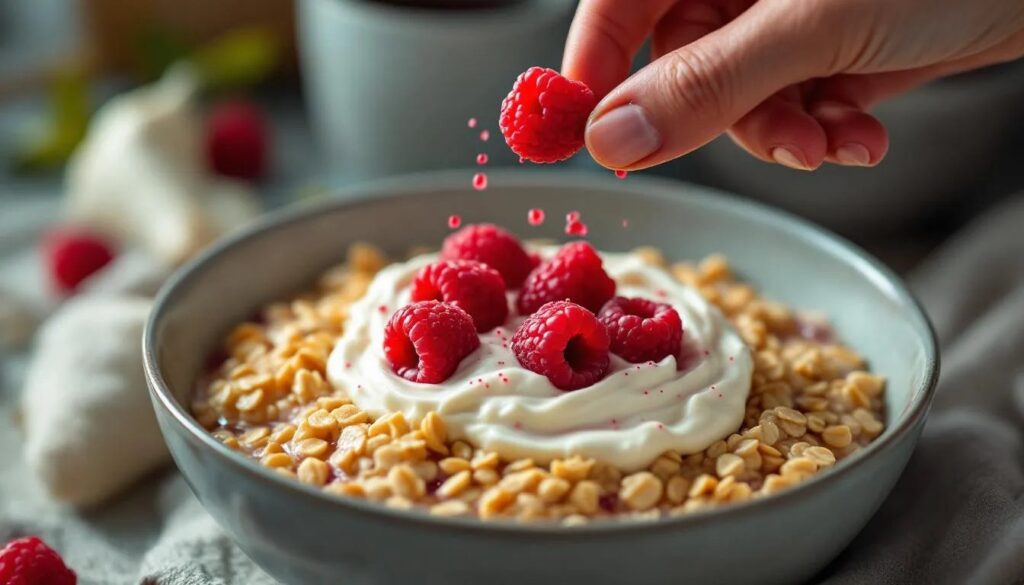
Spring mornings arrive with a particular kind of hunger – one that asks for something cold, ready, and genuinely sustaining. Overnight oats have earned their place in the breakfast hall of fame for good reason, but the standard recipe, built on oats and milk alone, rarely delivers the protein hit that carries you through a full morning of work or training. The cottage cheese method changes that entirely. By blending full-fat cottage cheese directly into the oat base, you create a texture that is thick, almost creamy, and protein-dense in a way that plain yoghurt versions never quite achieve.
This approach yields roughly 30 grams of protein per serving without relying on powders, supplements, or ingredients that feel more like a lab than a pantry. The technique is straightforward, the prep time is under ten minutes the night before, and the result waits quietly in your fridge until morning. What follows is the full method – ratios, technique, and the small decisions that separate a genuinely good jar from a merely functional one.
| Preparation | 10 min |
| Rest | 8 hours (overnight) |
| Servings | 1 person |
| Difficulty | Easy |
| Cost | $ |
| Season | Spring – fresh berries, kiwi, rhubarb |
Suitable for: Vegetarian · High-protein · Gluten-free (with certified GF oats)
Ingredients
- ½ cup (45 g) rolled oats – not instant, not steel-cut
- ½ cup (120 g) full-fat cottage cheese, small curd preferred
- ½ cup (120 ml) whole milk or unsweetened oat milk
- ¼ cup (60 g) plain Greek yoghurt, full-fat
- 1 tbsp chia seeds
- 1 tbsp natural almond butter or peanut butter
- 1 tsp pure vanilla extract
- 1 tsp raw honey or maple syrup
- 1 pinch fine sea salt
- ½ cup fresh seasonal fruit for topping – strawberries, blueberries, or sliced kiwi
Equipment
- Immersion blender or standard blender
- Wide-mouth mason jar (16 oz / 500 ml minimum)
- Kitchen scale
- Measuring spoons
- Small spatula
Preparation
1. Blend the cottage cheese base
Pour the cottage cheese into a blender or a tall cup suitable for an immersion blender. Add the milk and vanilla extract. Blend on medium speed for approximately 20 to 30 seconds, until the mixture is completely smooth and no curd texture remains. This step is not optional – it is the structural key to the entire recipe. Unblended cottage cheese produces a grainy, visually unappealing texture that most people find off-putting when cold. The blended version, by contrast, behaves almost like a thick cream: it coats the oats evenly and sets into a dense, uniform base overnight. If you are working with large-curd cottage cheese, extend the blending time slightly. The finished base should pour in a slow, steady ribbon when tilted – thicker than milk, thinner than yoghurt.
2. Combine the dry and wet layers
Place the rolled oats and chia seeds at the bottom of your mason jar. Add the pinch of sea salt directly onto the oats – salt is not there for flavour alone; it subtly strengthens the perceived sweetness of the finished jar and keeps the oat flavour grounded rather than flat. Spoon in the Greek yoghurt, then pour the blended cottage cheese mixture over the top. Stir the contents thoroughly with a long spoon or spatula, making sure the chia seeds are fully distributed and not clustered at the bottom, where they would form a dense, gel-like plug rather than integrating evenly throughout the base. The ratio of liquid to oats should feel slightly wetter than you expect – hydration, the absorption of liquid by the oat starches during the rest period, will tighten the texture considerably overnight.
3. Add the nut butter and sweetener
Drop the almond butter or peanut butter onto the surface of the mixture. Drizzle the honey or maple syrup directly over it. Do not stir these in at this stage. Leaving them on top allows the fat from the nut butter to stratify – settling through the base gradually during the rest – which creates a more complex, layered flavour in the finished jar rather than a uniform sweetness throughout. If you are preparing multiple jars for the week, this is the moment to adjust sweetness per jar to individual preference before sealing.
4. Seal and refrigerate overnight
Screw the lid tightly onto the mason jar and place it in the coldest part of your fridge – typically the middle shelf rather than the door. The minimum rest time is 6 hours, though 8 to 10 hours produces the best texture. During this period, the oat starches absorb the liquid, the chia seeds swell and thicken the base, and the cottage cheese proteins continue to set the structure. The result in the morning will be noticeably firmer and more cohesive than the looser mixture you placed in the fridge the night before.
5. Finish and top before serving
Remove the jar from the fridge and give the contents a firm stir to reintegrate any separation that may have occurred overnight. If the texture feels denser than you prefer, loosen it with a splash of cold milk – 2 to 3 tablespoons is usually sufficient – and stir again. Taste for sweetness at this point and adjust with an additional small drizzle of honey if needed. Top with fresh seasonal fruit. In late March, early strawberries from the first spring harvests work particularly well: their slight tartness contrasts cleanly with the creamy, mildly tangy base. Blueberries hold their shape and add bursts of acidity. Sliced kiwi brings brightness and a vivid colour that makes the jar feel finished rather than merely assembled.
Chef's note
The single variable that most affects the final texture is the fat content of your cottage cheese. Full-fat cottage cheese blends into a significantly creamier, more stable base than low-fat versions, which can separate overnight and leave a slightly watery layer on top. If protein maximisation is the priority, a higher-protein brand of cottage cheese – some now carry upwards of 14 g per half-cup – can push the total serving past 30 g without changing any other element of the recipe. In spring, consider folding a tablespoon of lemon zest into the base before refrigerating: it lifts the entire flavour profile and makes the jar taste considerably lighter than its macros suggest.
Pairing suggestions
Overnight oats at this protein level function as a complete meal, so the pairing question is really about what accompanies breakfast rather than what completes it. The base carries a mild tang from the cottage cheese and Greek yoghurt – a flavour profile that pairs cleanly with anything acidic or herbaceous rather than richly sweet.
A cold-brew coffee, served black or with a small amount of oat milk, cuts through the creaminess without competing with it. A freshly pressed apple and ginger juice works well for those avoiding caffeine – the ginger's heat creates an interesting contrast with the cold jar. If the occasion is weekend brunch rather than a weekday grab-and-go, a small glass of chilled Chenin Blanc, with its characteristic tension between fruit and minerality, is a surprisingly considered match for a breakfast bowl built on fermented dairy and spring fruit.
Background
Overnight oats as a preparation trace back to Bircher Müesli, the dish developed by Swiss physician Maximilian Bircher-Brenner in the early twentieth century. His original recipe soaked oats overnight in water or lemon juice and combined them the following morning with grated apple, condensed milk, and nuts. The philosophy behind it was as much medical as culinary – Bircher-Brenner was convinced that raw, minimally processed food supported recovery and sustained energy in ways that cooked meals did not. Contemporary overnight oat culture, driven largely by meal-prep communities and endurance athletes, has retained that core idea while adapting the method to modern nutritional priorities.
The cottage cheese addition is a more recent development, gaining traction as high-protein breakfast formats moved from gym-adjacent social media channels into mainstream food culture. Cottage cheese itself has an older history in American kitchens – it was one of the dominant breakfast and lunch proteins of mid-twentieth-century domestic cooking before being largely displaced by yoghurt in the 1980s and 1990s. Its current resurgence is partly nostalgic, partly practical: it delivers a strong amino acid profile, particularly high in casein protein, which digests slowly and provides a more sustained satiety signal than whey-based alternatives.
Nutritional values (per serving, approximate values)
| Nutrient | Amount |
|---|---|
| Calories | ~480 kcal |
| Protein | ~30 g |
| Carbohydrates | ~42 g |
| of which sugars | ~14 g |
| Fat | ~18 g |
| Fiber | ~7 g |
Frequently asked questions
Can these oats be prepared several days in advance?
Yes, and batch preparation is one of the strongest practical arguments for this recipe. The base – oats, cottage cheese, milk, Greek yoghurt, chia seeds, and vanilla – keeps well in sealed mason jars for up to four days in the fridge. Hold the fresh fruit toppings separately and add them each morning, as most fruit releases moisture that softens the texture further and can affect the overall freshness of the jar. Nut butter and honey can be added either during prep or each morning according to preference.
What if the texture is too thick or too thin in the morning?
Both situations are easily remedied. If the jar is too thick – which can happen with larger chia seed quantities or a particularly dense cottage cheese – stir in cold milk one tablespoon at a time until the texture relaxes to your preference. If the jar is too loose, the most common cause is insufficient rest time or a low-fat cottage cheese that released excess liquid overnight. Stirring from the bottom up usually reintegrates the separation, and allowing the jar to sit uncovered in the fridge for a further hour firms it up noticeably.
Is it necessary to blend the cottage cheese?
Technically no – but practically, yes, if texture matters to you. Unblended cottage cheese produces visible curds throughout the jar that many people find unappealing, particularly when eaten cold. The blended version is indistinguishable in texture from a thick cream or a loose yoghurt base. For those who genuinely do not mind the curd texture or prefer the additional visual protein cue, skipping the blender saves one piece of equipment and about two minutes. The protein content and nutritional profile remain identical either way.
What fruit works best in spring?
Late March through April brings the first reliable strawberries of the year – look for smaller, darker fruits with a strong aroma rather than the large, pale varieties that prioritise shelf life over flavour. Blueberries are available year-round and hold up particularly well overnight if added to the jar before refrigerating rather than on top in the morning. Rhubarb, quickly stewed with a small amount of honey and cooled, makes an excellent seasonal compote that adds tartness and complexity. Kiwi, sliced thinly, adds acidity and a vivid visual element without releasing excessive moisture.
Can the recipe be made dairy-free?
The cottage cheese and Greek yoghurt are load-bearing ingredients for both protein content and texture, so substituting them meaningfully changes the nature of the recipe. A dairy-free version using silken tofu blended with a small amount of lemon juice and nutritional yeast can approximate the texture of the blended cottage cheese base – and silken tofu carries a comparable protein content per gram. Replace the Greek yoghurt with a high-protein coconut or soy yoghurt. The total protein per serving will vary depending on the specific brands used, so checking labels before shopping is worthwhile if the 30 g target is non-negotiable.