



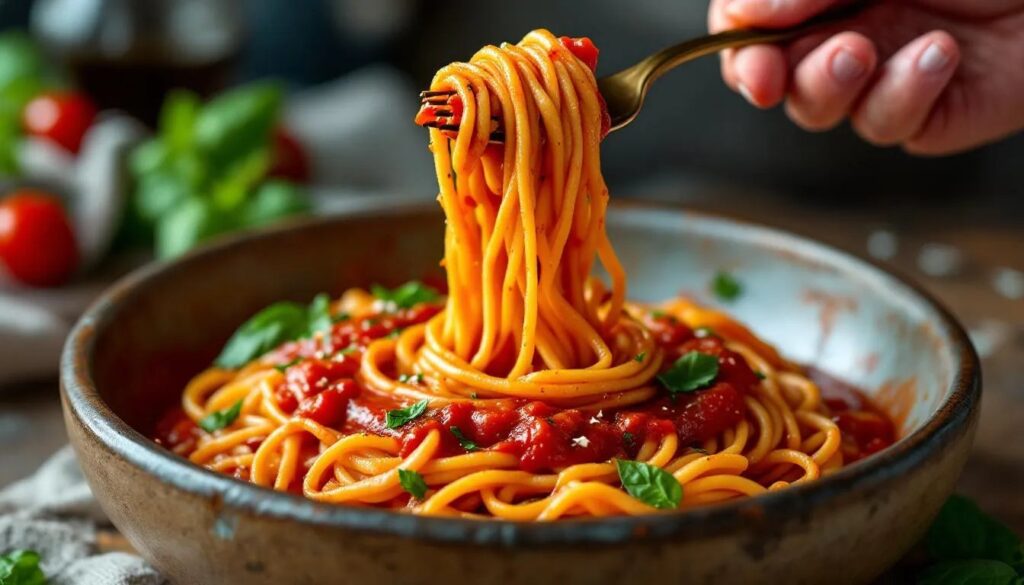
Late March is when the Italian kitchen starts breathing again. The chill hasn't fully lifted, the markets are still caught between winter roots and the first tentative bunches of spring asparagus, and there's that particular afternoon light that makes you want to stay indoors and cook something with your hands. Fresh pasta fits this moment exactly. Not the kind that requires a gleaming chrome machine bolted to the counter, not the kind that demands a culinary school diploma — just flour, eggs, a rolling pin, and a technique passed from grandmother to grandchild across generations of Italian kitchens.
This recipe strips everything back to the method Italian grandmothers — le nonne — have used long before pasta machines became a kitchen staple. You'll learn how to read the dough by touch rather than by timer, how to roll a sheet thin enough to almost see through it using nothing but a wooden dowel, and how to cut shapes that hold sauce in all the right places. The whole process, from flour to boiling water, takes around ten minutes of active work. Grab your rolling pin.
| Preparation | 10 min |
| Rest | 20 min |
| Cook | 3–4 min |
| Portions | 4 people |
| Difficulty | Medium |
| Cost | $ |
| Season | Year-round · pairs beautifully with spring asparagus, peas, and ricotta |
Suitable for: Vegetarian
Ingredients
- 2 cups (250 g) 00 flour (or all-purpose flour if unavailable), plus extra for dusting
- 2 large eggs, at room temperature
- 1 egg yolk, at room temperature
- 1 tsp fine sea salt
- 1–2 tsp cold water (only if the dough feels dry)
- A drizzle of extra-virgin olive oil (optional, for a silkier dough)
Equipment
- Large clean work surface (wood or marble preferred)
- Long wooden rolling pin (mattarello) — at least 50 cm / 20 inches
- Fork
- Sharp chef's knife or bench scraper
- Clean kitchen towels
- Large pot for boiling
Preparation
1. Build the flour well
Pour the flour directly onto your work surface and form it into a mound. Using your fingers, create a wide, deep well in the centre — wide enough to hold the eggs without any risk of them spilling over the sides. Think of it as a shallow volcanic crater: the walls need to be thick and even, roughly 2–3 cm high all the way around. This structure is the foundation of the entire dough, and if the walls are too thin, the eggs will break through and run across the counter before you can catch them. Sprinkle the salt evenly over the flour at this stage.
2. Crack in the eggs and begin mixing
Crack both eggs and the extra yolk directly into the well. The additional yolk is the nonne's quiet trick: it adds fat and richness that a machine-rolled dough doesn't need but a hand-rolled one does, giving the pasta that characteristic golden hue and a supple, almost elastic consistency. Using a fork, beat the eggs gently inside the well, then begin drawing in flour from the inner edges of the wall, working in a slow circular motion. Take your time. You're not rushing toward a dough yet — you're building a thick, shaggy batter first. Keep adding flour gradually from the edges until the fork becomes useless and the mixture looks rough and barely cohesive.
3. Knead until smooth and elastic
Push the remaining flour over the egg mixture and begin kneading with the heel of your hand. Press forward firmly, fold the dough back over itself, rotate a quarter turn, and repeat. This is the moment the dough resists you, and that resistance is precisely what you're working through. Gluten development — the formation of protein networks that give pasta its characteristic chew — happens here, and it requires pressure and time. Knead for 8 full minutes without stopping. The dough should transition from rough and sticky to smooth, satiny, and slightly springy: when you press a finger into it and release, it should spring back slowly, like pressing into a firm pillow. If it tears rather than stretches, knead for two more minutes.
4. Rest the dough
Wrap the dough tightly in plastic wrap or cover it with an inverted bowl and let it rest for 20 minutes at room temperature. This step is not optional. During the rest, the gluten strands relax, the flour fully hydrates, and the dough becomes significantly easier to roll. A rested dough yields a thinner, more even sheet; a dough rolled immediately will spring back and fight the rolling pin at every pass.
5. Roll the sheet by hand
Lightly flour your surface and place the rested dough at its centre. Flatten it slightly with your palm into a thick disc. Begin rolling from the centre outward, rotating the dough a quarter turn after every two or three passes. The Italian grandmother's technique differs here from what most recipes teach: rather than pressing straight down, you roll and simultaneously stretch — letting the rolling pin extend slightly past the edge of the dough on each stroke, gently pulling the sheet wider. This is why the mattarello must be long: you can drape the dough over it and roll it back, expanding the sheet in all directions. Work until the sheet is roughly 2 mm thick — thin enough to see the shadow of your hand underneath it when held up to the light, but still holding together without tearing.
6. Cut into shape
Lightly flour the surface of the sheet to prevent sticking. Fold it loosely — not creased, just folded — into a flat roll about 8 cm wide. Using a sharp knife, cut across the roll at your desired width: 6–7 mm for tagliatelle, 2–3 mm for tagliolini, or wider for pappardelle. Unfurl each nest immediately after cutting and dust with a little more flour, then arrange in loose nests on a floured kitchen towel. The pasta can sit here for up to 30 minutes before cooking, or be dried completely for storage.
7. Cook and serve
Bring a large pot of water to a rolling boil and salt it generously — it should taste like the sea, which means roughly 10 g of salt per litre of water. Drop the fresh pasta in and stir immediately to prevent sticking. Fresh hand-rolled pasta cooks far faster than dried: 2–3 minutes for tagliatelle, slightly less for thinner cuts. Taste after 90 seconds. The pasta is ready when it has lost its raw flour taste but still offers a slight resistance at the centre — al dente, meaning "to the tooth," that precise point between cooked and tender without any softness. Reserve a ladleful of the starchy cooking water before draining; it is liquid gold for binding any sauce.
My chef's tip
The single most common mistake with hand-rolled pasta is rolling it cold. Always let your dough reach room temperature before unwrapping it — especially in late winter or early spring when kitchens are still cool. A cold dough resists the rolling pin and tears before it stretches. If you're making this in warmer months, the opposite applies: keep your surface cool and work quickly, as the heat will make the dough slightly sticky. For a spring version, press a handful of blanched peas or a few leaves of fresh mint into the dough during the final minute of kneading — it turns the pasta pale green and adds a freshness that pairs perfectly with a ricotta and lemon sauce.
Wine and sauce pairings
Fresh egg pasta has a richness and softness that calls for sauces with some body — delicate enough not to overpower the pasta itself, but with enough personality to stand alongside it. The same logic applies to the wine: you want brightness and acidity to cut through the egg richness.
For a classic pairing, a Verdicchio dei Castelli di Jesi from the Marche region works beautifully — citrus and almond on the nose, crisp acidity, and a slightly bitter finish that cleanses the palate between bites. A lighter-bodied Barbera d'Asti does equally well if you're serving the pasta with a meat-based or tomato ragù. For a non-alcoholic option, a sparkling water with a slice of lemon pressed in mirrors the acidity and keeps the palate fresh throughout the meal.
The story behind the dough
Fresh egg pasta in Italy is not a single tradition but dozens of them, varying by region, altitude, and what the land provides. In Emilia-Romagna — Bologna, Modena, Parma — the dough is made exclusively with egg yolks and 00 flour, rolled to near-transparency and cut into the silk-fine tagliatelle that locals will tell you, with complete seriousness, must measure exactly 8 mm wide when cooked (the width, according to a 1972 decree by the Bologna Chamber of Commerce, of a particular strand of Rapunzel's hair). In neighbouring Tuscany, the egg ratio drops and the dough is rolled thicker, cut wider into pappardelle and served with wild boar ragù. Further south, in Puglia and Calabria, semolina replaces soft wheat entirely and water replaces the egg.
The pasta machine arrived in Italian kitchens in significant numbers only in the mid-twentieth century, and even then, many grandmothers refused it — not out of stubbornness, but because the hand-rolled sheet has a rougher, more textured surface than one pressed through steel rollers. That texture grips sauce differently. The machine-rolled pasta is uniform; the hand-rolled pasta is alive. The ten-minute method here is not a shortcut — it is simply the original.
Nutrition facts (per portion, approximate values)
| Nutrient | Amount |
|---|---|
| Calories | ~310 kcal |
| Protein | ~11 g |
| Carbohydrates | ~54 g |
| of which sugars | ~1 g |
| Fat | ~6 g |
| Fiber | ~2 g |
Frequently asked questions
Can i prepare the dough in advance?
Yes. The wrapped dough keeps well in the refrigerator for up to 24 hours. Remove it at least 30 minutes before rolling to allow it to return to room temperature — cold dough is significantly harder to roll thin and will tear rather than stretch. If you want to prepare the cut pasta itself in advance, let the nests dry completely on a floured towel (about 1–2 hours at room temperature), then store in an airtight container in the fridge for up to 48 hours.
How do i store leftover fresh pasta?
Uncooked fresh pasta can be frozen: arrange the nests in a single layer on a tray, freeze until firm (about 1 hour), then transfer to a freezer bag. It keeps for up to one month. Cook directly from frozen, adding an extra minute or two to the cooking time. Cooked pasta should be dressed with a little oil to prevent sticking, stored in an airtight container in the fridge, and consumed within 2 days.
What substitutions or variations work well?
If 00 flour is unavailable, all-purpose flour produces a perfectly good result — the pasta will be slightly less silky but still far better than any dried alternative. For a more rustic, nutty flavour, replace 20% of the flour with fine semolina. Whole egg can replace the egg yolk with no major issue, though the colour will be paler and the texture marginally less rich. For a spring variation, blend 30 g of blanched spinach or nettles into the eggs before mixing — you'll get a vibrant green pasta that pairs naturally with fresh cheeses and herbs from this time of year.
Why is my dough tearing when i roll it?
Three possible causes: the dough hasn't rested long enough (gluten is still too tight), it's too dry (add half a teaspoon of water and knead again for two minutes), or you're pressing down with the rolling pin rather than stretching forward and outward. Try draping the sheet over the rolling pin and unrolling it gently — this redistributes the tension and often resolves tears without needing to re-knead.
Is a long rolling pin really necessary?
For this method, yes. A standard short rolling pin can produce a good dough, but the Italian grandmother technique — draping the sheet over the pin and rolling outward to stretch it — only works with a dowel of at least 50 cm. A long French rolling pin (the handle-free cylinder type) is a perfectly good substitute. If you only have a short pin, simply work in multiple passes from the centre outward, rotating the dough frequently, and accept that reaching near-transparent thinness will take a little longer.