



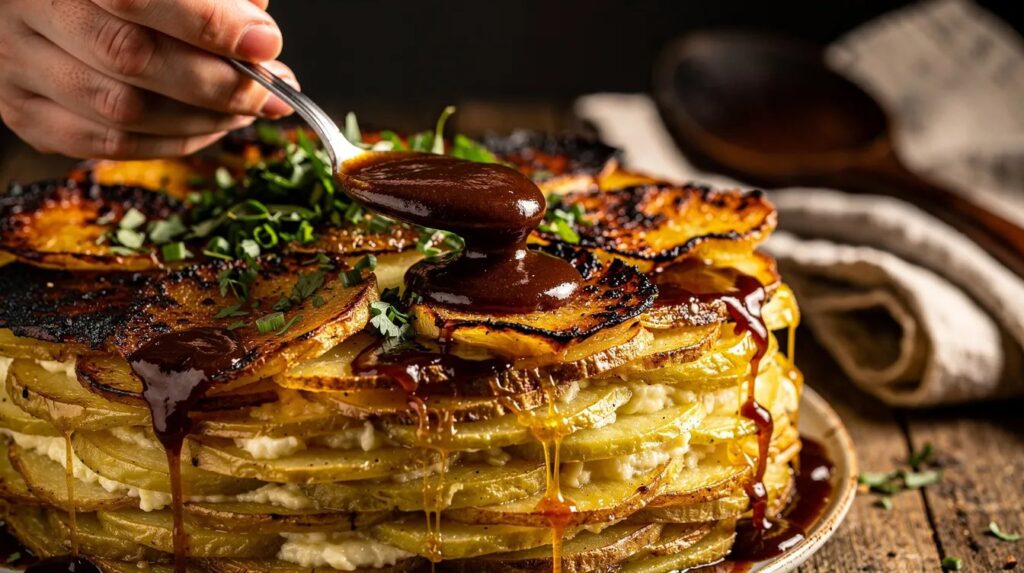
There's something about a dish of scalloped potatoes, pulled from the oven with its edges bubbling and its golden crust barely holding back a tide of cream, that feels like an act of generosity. When those potatoes carry an Irish accent — built on buttery Yukon Golds, sharp aged cheddar, and a hint of whole-grain mustard — they become the centrepiece of a St. Patrick's Day table that needs no gimmicks, no green food dye, no novelty. Just honest cooking rooted in a tradition that has always understood the quiet power of the potato.
This version of scalloped potatoes draws on the Irish love of dairy and root vegetables, layering thinly sliced potatoes with a mustard-spiked cheese sauce enriched by leeks — a seasonal allium at its sweetest in early spring. The result is a gratin that holds its shape when sliced but collapses into silk on the tongue. Whether you're feeding a crowd on 17 March or simply craving something warm as autumn settles in across Australia, this is the kind of dish that earns its place at the centre of the table. Time to roll up your sleeves and reach for the mandoline.
| Preparation | 25 min |
| Cooking | 55 min |
| Portions | 6 people |
| Difficulty | Easy |
| Cost | $ |
| Season | Leeks, fresh thyme, Yukon Gold potatoes |
Suitable for: Vegetarian
Ingredients
For the potatoes
- 1.2 kg Yukon Gold potatoes (or Kipfler), peeled
- 2 medium leeks, white and pale-green parts only, thinly sliced
- 30 g unsalted butter
- 2 cloves garlic, finely minced
- 1 tbsp fresh thyme leaves
- Fine sea salt and freshly cracked black pepper
For the cheese sauce
- 40 g unsalted butter
- 40 g plain flour
- 500 ml full-cream milk, warmed
- 200 ml thickened cream
- 180 g aged Irish cheddar (or a sharp Australian cheddar), grated
- 1 tbsp whole-grain mustard
- Pinch of nutmeg, freshly grated
Utensils
- Mandoline or sharp chef's knife
- Large heavy-based saucepan
- Medium frying pan
- 30 × 20 cm baking dish
- Whisk
Preparation
1. Soften the leeks
Melt the 30 g of butter in a medium frying pan over a gentle heat. Add the sliced leeks and a pinch of salt, then stir to coat. Cook for 8–10 minutes, stirring occasionally, until the leeks are soft and translucent but carry no colour at all. You want sweetness, not caramelisation. In the final minute, add the minced garlic and thyme leaves, letting them bloom in the residual heat. The kitchen should smell green and buttery — a sure sign you're on the right path. Set aside.
2. Slice the potatoes
While the leeks cook, slice the peeled potatoes into rounds roughly 3 mm thick. A mandoline makes this effortless and uniform; if using a knife, take your time and aim for consistency so every layer cooks at the same rate. Place the slices in a large bowl of cold water to prevent browning, then drain and pat dry thoroughly with a clean tea towel just before assembling. Excess moisture is the enemy of a crisp gratin top.
3. Build the cheese sauce
In a heavy-based saucepan, melt the 40 g of butter over medium heat. Add the flour and stir constantly with a whisk for 1–2 minutes to form a roux — a paste of fat and flour that will thicken your sauce without lumps. The roux should smell biscuity and turn a pale straw colour. Gradually pour in the warm milk, whisking vigorously after each addition. Once all the milk is incorporated, add the cream and continue to cook, stirring, for 3–4 minutes until the sauce coats the back of a spoon. Remove from the heat and fold in two-thirds of the grated cheddar, the whole-grain mustard, and the nutmeg. Season with salt and pepper. The sauce should taste bold — the potatoes will absorb and mellow it.
4. Assemble the gratin
Preheat your oven to 180°C (fan-forced). Lightly butter the baking dish. Arrange a single layer of potato slices, overlapping slightly like fallen tiles. Spoon over a thin layer of cheese sauce, then scatter a third of the softened leeks across the top. Repeat this layering — potato, sauce, leeks — until all components are used, finishing with a final layer of potatoes. Pour any remaining sauce evenly over the top, then gently press down with your palm so the liquid rises to meet the surface. Scatter the reserved cheddar over the top.
5. Bake until golden and tender
Cover the dish tightly with aluminium foil and bake for 35 minutes. The foil traps steam, ensuring the potatoes cook through without the top drying out. Remove the foil and bake for a further 15–20 minutes until the surface is deeply golden and the sauce bubbles lazily around the edges. A small knife inserted into the centre should slide through without resistance. Rest the gratin on a wire rack for 10 minutes before serving — this brief pause lets the layers set, making clean portions possible.
My chef's tip
For an extra layer of flavour that tips its hat to Irish cooking, stir a tablespoon of Dijon mustard into the sauce alongside the whole-grain mustard, or add 50 g of crumbled Cashel Blue (or any good Australian blue cheese) between the layers. If leeks aren't available, spring onions work beautifully — slice them on the bias and barely wilt them in butter. If you're planning to make this in advance for a St. Patrick's Day gathering, you can assemble the gratin up to a day ahead, cover it, and refrigerate it. Simply add an extra 10 minutes to the covered baking time to allow for the cold start.
Food and wine pairing
The richness of this gratin — butter, cream, aged cheddar — calls for a wine with enough acidity to cut through without competing. The key is contrast, not echo.
A cool-climate Australian Chardonnay from the Yarra Valley or Mornington Peninsula, lightly oaked with citrus and stone-fruit notes, makes a natural match. Its acidity lifts the cream while its weight stands up to the cheddar. For those drawn to reds, a lighter Pinot Noir from Tasmania brings earthy elegance that complements the leeks and mustard. And for those who prefer non-alcoholic options, a sparkling apple cider — dry, not sweet — mirrors the sharpness that makes this pairing so effective.
More about this dish
Scalloped potatoes, in one form or another, appear in kitchens across Europe, from the French gratin dauphinois to the Swedish Janssons frestelse. The Irish version is less a codified recipe and more a philosophy: take what the land provides generously — potatoes, butter, milk — and transform it with patience and heat. The potato arrived in Ireland in the late 16th century and within a hundred years had become the staple food for much of the population, a dominance that led to devastating consequences during the Great Famine of the 1840s. A culture that reveres the potato, not as a humble side but as something worthy of care, survived.
Adding cheddar and mustard reflects the influence of Ireland's thriving dairy industry, particularly the farmhouse cheesemakers of County Cork and Tipperary who have driven a renaissance in artisan Irish cheese over the past four decades. Celebrating this gratin on St. Patrick's Day feels fitting. Its appeal lies not in being flashy, but in honouring exactly what Irish food does best: making the ordinary extraordinary with skill, good ingredients, and no pretence.
Nutritional values (per portion, approximate values)
| Nutrient | Amount |
|---|---|
| Calories | ~480 kcal |
| Protein | ~16 g |
| Carbohydrates | ~42 g |
| of which sugars | ~6 g |
| Fat | ~28 g |
| Fibre | ~4 g |
Frequently asked questions
Can I prepare this dish in advance?
You can assemble the gratin up to 24 hours ahead, cover it with cling film, and refrigerate it. When ready to bake, remove the cling film, cover with foil, and add roughly 10 minutes to the initial covered baking time since it will be cold from the fridge. The flavours actually benefit from resting overnight as the sauce permeates deeper into the potato layers.
How should I store leftovers?
Allow the gratin to cool to room temperature, then cover and refrigerate for up to 3 days. Reheat individual portions in a 170°C oven for 15–20 minutes, or in the microwave with a splash of milk to restore creaminess. The potatoes firm up when cold, which makes reheated portions slice even more neatly.
What substitutions work well?
Swap the Yukon Gold potatoes for Kipfler or Dutch Cream — any waxy-to-medium starch variety works well. For a dairy-free version, use a good oat-based cream and a plant-based cheddar, though the flavour will differ noticeably. The leeks can be replaced with thinly sliced brown onion or fennel. If you can't find whole-grain mustard, Dijon works, though the texture will be smoother.
Can I use a different cheese?
Gruyère or Comté bring a nuttier, more alpine character. Smoked cheddar adds depth without extra work. For a truly Irish touch, try layering thin slices of Cashel Blue or a young Coolea between the potato layers alongside the cheddar — the blue gives a savoury punch that works wonderfully with the mustard and leek.
How do I get the crispiest top?
Ensure you remove the foil for the final 15–20 minutes and position the dish in the top third of your oven. If the top hasn't browned to your liking after 20 minutes uncovered, switch to the grill (broiler) for 2–3 minutes, watching closely. A scattering of fine breadcrumbs mixed with a little melted butter over the final cheese layer before baking adds an extra crunch to each bite.