
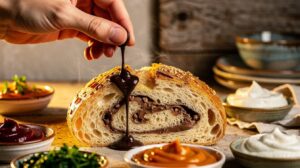


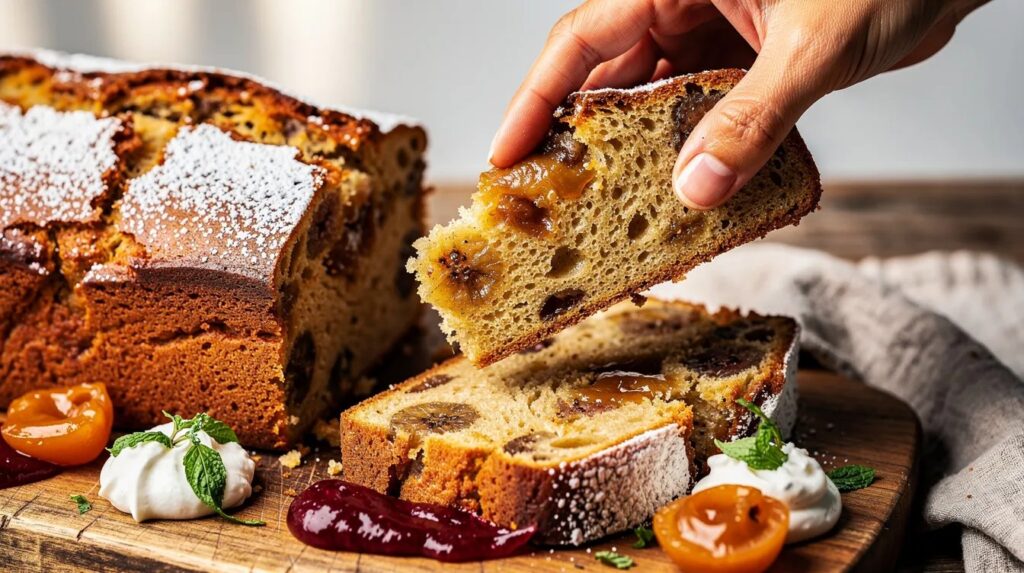
There's something about banana bread that cuts through the noise of modern baking. No fancy techniques, no obscure ingredients, no social media theatrics — just overripe bananas, a mixing bowl, and the kind of warmth that fills a kitchen long after the loaf has cooled. When Maggie and Jake Gyllenhaal revealed their family's banana bread recipe, it landed with a quiet thud of recognition. This wasn't a celebrity vanity project or a cookbook promotion. It was the kind of recipe passed between generations on a stained index card, the kind that survives because it works.
The Gyllenhaal version leans into simplicity — a one-bowl method with a tender, moist crumb and a deep caramel sweetness from bananas pushed well past their prime. What sets it apart is restraint: no chocolate chips, no cream cheese swirl, no espresso powder. Just banana, butter, sugar, and flour doing exactly what they're meant to do. The result is a loaf that tastes like someone's actual childhood, not a styled photograph. If your kitchen counter is home to a few blackened bananas right now, this is their highest calling.
| Preparation | 15 min |
| Baking | 55 min |
| Portions | 8 slices |
| Difficulty | Easy |
| Cost | $ |
| Season | Year-round (autumn and winter favourite) |
Suitable for: Vegetarian · Easily adapted dairy-free
Ingredients
- 3 large very ripe bananas (skins should be heavily spotted or fully black)
- 115 g unsalted butter, melted and slightly cooled
- 150 g caster sugar
- 1 large egg, lightly beaten
- 1 tsp pure vanilla extract
- 1 tsp bicarbonate of soda
- Pinch of fine sea salt
- 190 g plain flour
- ½ tsp ground cinnamon (optional, but traditional in the Gyllenhaal version)
Utensils
- 1 standard loaf tin (approx. 23 × 13 cm)
- 1 large mixing bowl
- Fork or potato masher
- Spatula or wooden spoon
- Baking paper or butter for greasing
- Wire cooling rack
Preparation
1. Preheat and prepare the tin
Set your oven to 175°C (350°F) conventional, or 160°C fan-forced. Line your loaf tin with baking paper, leaving an overhang on the long sides — this acts as a handle later, making it far easier to lift the bread out cleanly. Alternatively, grease the tin generously with butter and dust lightly with flour, tapping out the excess. Place the tin on your benchtop near the bowl so it's ready the moment the batter comes together. Banana bread batter doesn't benefit from sitting around; the bicarb starts working as soon as it hits the wet ingredients, and you want that lift happening inside the oven, not on your counter.
2. Mash the bananas
Peel the bananas into your large mixing bowl and mash them with a fork or potato masher. The texture you're after is mostly smooth with a few small lumps remaining — those pockets of unmashed banana will create little bursts of concentrated sweetness in the finished loaf. The riper the bananas, the better. Ideally, the skins should be almost entirely black and the flesh soft enough to collapse under minimal pressure. Green-tinged or merely yellow bananas lack the sugar development and moisture content that make banana bread worth baking. If your bananas aren't ripe enough, place them unpeeled on a lined baking tray in a 150°C oven for 15–20 minutes until the skins blacken and the flesh turns jammy — a useful shortcut that concentrates their flavour through caramelisation.
3. Combine the wet ingredients
Pour the melted butter into the mashed banana and stir with a spatula or wooden spoon until combined. The butter should be warm but not hot — if it's too hot, it will begin to cook the egg in the next step, creating scrambled streaks through your batter. Add the caster sugar and stir until the mixture looks glossy and slightly thickened. Beat the egg lightly in a small cup before adding it to the bowl, followed by the vanilla extract. Stir everything together with slow, deliberate strokes. You'll notice the batter turn a pale gold with a faint sheen — that's the sugar beginning to dissolve, which will contribute to the loaf's characteristically moist, almost sticky crumb.
4. Add the dry ingredients
Sprinkle the bicarbonate of soda and salt directly over the wet mixture and stir briefly. The bicarb may fizz slightly on contact with the acidic banana — this is exactly what you want. Now add the flour and cinnamon, if using. Fold gently with your spatula, using a motion that cuts down through the centre of the bowl, scoops along the bottom, and turns the batter over on itself. Count roughly 15 to 20 folds. Stop the moment you no longer see dry pockets of flour. Overmixing at this stage develops the gluten — the protein network in wheat flour — which will make the bread tough and chewy rather than tender. A few small streaks of flour are perfectly fine; they'll hydrate fully in the oven.
5. Bake
Pour the batter into your prepared tin and smooth the top gently with the back of the spatula. For an even rise and that classic split down the centre, drag a butter knife or offset spatula in a shallow line lengthways down the middle of the batter. Place the tin on the centre rack of the oven and bake for 55 to 65 minutes. The bread is ready when the top is a deep golden brown, the loaf has pulled slightly away from the sides of the tin, and a skewer inserted into the centre comes out clean or with just a few moist crumbs clinging to it. Wet batter on the skewer means it needs more time — check again at five-minute intervals. Every oven runs differently, so trust your senses over the clock. The kitchen should smell of toasted butter and caramelised banana.
6. Cool and slice
Allow the loaf to sit in the tin for 10 minutes before lifting it out using the baking paper overhang. Transfer to a wire rack and cool for at least 20 minutes before slicing. Cutting too early releases steam that would otherwise be reabsorbed into the crumb, leaving you with a drier loaf. Use a serrated knife and a gentle sawing motion to get clean slices without compressing the bread. The first slice, still faintly warm, with a smear of salted butter — that's the baker's reward.
Chef's Tip
Freeze your overripe bananas whole, skins on, in a zip-lock bag. When you've collected three or four, thaw them in a bowl at room temperature for about an hour. They'll release an extraordinary amount of sweet liquid — don't discard it. Pour that syrupy juice directly into the batter along with the mashed flesh. It's concentrated banana flavour and natural sugar, and it's the single easiest way to push a good banana bread into something genuinely memorable. The Gyllenhaals reportedly keep a running stash of frozen bananas for exactly this purpose.
Drink Pairings
Banana bread sits comfortably in the space between cake and bread, which makes pairing it more interesting than you might expect. The dominant notes are caramel, brown butter, and ripe tropical fruit with a whisper of cinnamon warmth.
A strong flat white or long black is the classic Australian match — the bitterness of espresso cuts through the sweetness and amplifies the toasted butter notes. For an afternoon tea approach, try a Ceylon black tea or English Breakfast brewed strong with a splash of milk. If you're serving it as dessert with ice cream, a small glass of Pedro Ximénez sherry or a Rutherglen Muscat from northeast Victoria brings out the caramel and dried fruit character beautifully. For a non-alcoholic option, a chai latte made with real spices echoes the cinnamon in the bread and adds a layer of warmth.
The Story Behind the Loaf
Banana bread has one of the most practical origin stories in baking. It rose to popularity in 1930s America, during the Great Depression, when thrift was a kitchen virtue and throwing away overripe fruit felt unconscionable. The widespread adoption of baking soda and baking powder — relatively modern leavening agents that replaced yeast for quick breads — made it possible to turn mashed banana into a risen loaf without any proving time. Cookbooks of the era are filled with "use it up" recipes, and banana bread was the star among them.
The Gyllenhaal family recipe reportedly comes from their mother, screenwriter and film producer Naomi Foner, and carries the hallmarks of a mid-century American home recipe: minimal ingredients, no electric mixer required, forgiving enough that children can make it. Maggie has spoken about baking it with her own children, and Jake has mentioned it in interviews as a comfort touchstone — proof that food memory doesn't require Michelin stars, just repetition and love. In Australia, where banana bread became something of a café staple during the 2010s and surged again during lockdowns in 2020, a recipe this unfussy feels right at home. It belongs to a tradition of baking that values reliability over spectacle.
Nutritional Values (per slice, approximate values)
| Nutrient | Amount |
|---|---|
| Calories | ~245 kcal |
| Protein | ~3 g |
| Carbohydrates | ~38 g |
| of which sugars | ~22 g |
| Fat | ~10 g |
| Fibre | ~1.5 g |
Frequently Asked Questions
Can this banana bread be made ahead of time?
It keeps beautifully. Wrap the cooled loaf tightly in cling film or beeswax wrap and store at room temperature for up to 3 days. The texture actually improves on the second day as the moisture redistributes, making the crumb denser and stickier. For longer storage, wrap in cling film then foil and freeze for up to 3 months. Thaw at room temperature or slice before freezing so you can toast individual pieces straight from the freezer.
Can I substitute the butter for a dairy-free alternative?
Yes. Use the same weight of melted coconut oil (refined, if you don't want coconut flavour) or a quality dairy-free margarine. Coconut oil produces a slightly firmer crumb once cooled but tastes excellent. The banana provides so much moisture and fat that the swap is nearly undetectable. Olive oil also works but adds a savoury note that not everyone enjoys in sweet baking.
Why did my banana bread sink in the middle?
The most common cause is opening the oven door too early, before the structure has set — avoid checking before the 45-minute mark. Another culprit is too much bicarb, which causes the loaf to rise rapidly then collapse as the gas escapes. Measure carefully: 1 level teaspoon, not heaped. An oven that runs too cool can also prevent the proteins from setting quickly enough to hold the rise. If it happens regularly, test your oven temperature with a separate thermometer.
What variations work well with this base recipe?
The beauty of this recipe is its simplicity, but it takes well to additions. Fold in 80 g of roughly chopped walnuts or pecans for crunch, or 60 g of dark chocolate chips for richness. A tablespoon of peanut butter or tahini swirled through the batter before baking creates a marbled effect and a nutty depth. For an autumn twist, replace the cinnamon with mixed spice or add a teaspoon of freshly grated ginger. In summer, fold through a handful of fresh blueberries or passionfruit pulp for tartness.
Can I use wholemeal flour instead of plain flour?
You can replace up to half the plain flour with wholemeal without dramatically altering the texture. Going fully wholemeal will produce a heavier, denser loaf — still tasty, but a different experience. If you do use wholemeal, add an extra tablespoon of melted butter or a splash of milk to compensate for the extra absorption. Spelt flour is another option that adds a slightly nutty flavour while keeping the crumb relatively light.