


Autumn has arrived across Australia, bringing with it that unmistakable pull towards the table. The cooler evenings, golden light through kitchen windows, and the kind of hunger that only a generous spread can satisfy are here. The markets are full of butternut pumpkin, earthy mushrooms, crisp fennel, and we see the first quinces of the season, each one begging to be folded into something warm and shared. This is the time of year when cooking for a group feels less like a chore and more like an act of love.
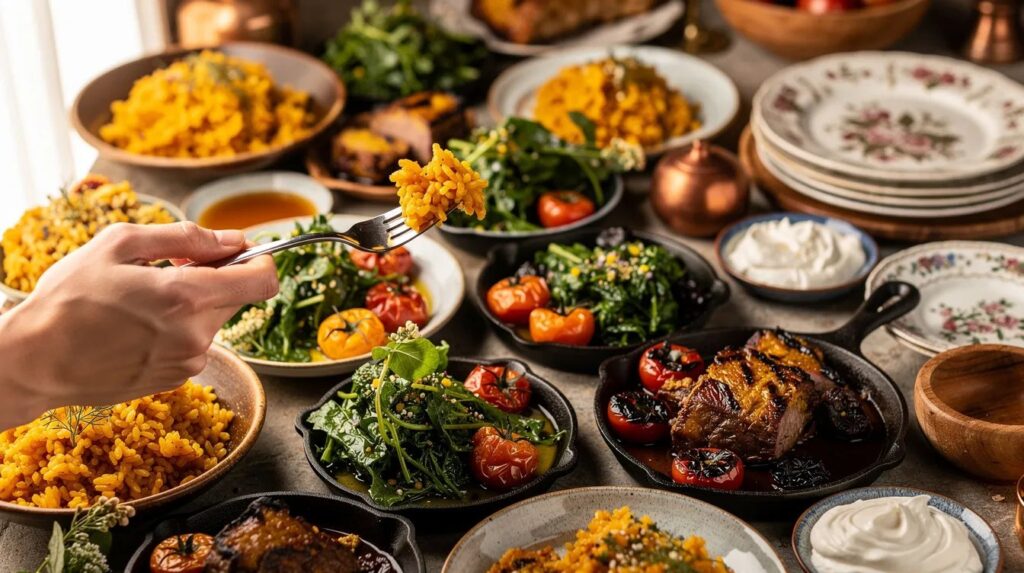
The idea is simple: rather than one centrepiece dish that demands hours at the stove, you build a feast from several stunning plates. These can be mixed and matched according to your guests, your mood, and what looks best at the greengrocer. A slow-roasted lamb shoulder sits alongside a bright, grain-based salad, while a rich mushroom tart pairs with a bowl of roasted roots. Everything complements each other, and you can spend the evening at the table instead of behind the bench. What follows is a collection of dishes designed to do exactly that – pick three, pick five, pile them high, and let everyone serve themselves.
The anchor: slow-roasted lamb shoulder with garlic and rosemary
Every shared table needs a centrepiece that fills the room with aroma long before it reaches the plate. A lamb shoulder, rubbed with crushed garlic, sea salt, chopped rosemary, and a generous splash of olive oil, then roasted low and slow at 160°C for around 4 hours, delivers that in full. The meat should pull apart with two forks – no carving required. Tuck whole heads of garlic and halved lemons around the joint for the last hour, letting them soften into something almost jam-like. Rest the shoulder for at least 20 minutes under foil before serving. The rendered juices in the pan, deglazed with a splash of red wine and a ladleful of stock, become a sauce that needs nothing else.
The green: freekeh salad with herbs, pomegranate, and toasted almonds
A feast without something green and textural feels incomplete. Freekeh – a roasted green wheat with a nutty, slightly smoky flavour – makes a salad that holds its own against rich meats without wilting on the table. Cook 200 g of freekeh in salted water for about 20 minutes until tender but still chewy, then drain and spread it on a tray to cool. Toss through a handful of flat-leaf parsley, mint, thinly sliced spring onions, and a scattering of pomegranate seeds. Dress with lemon juice, extra virgin olive oil, a pinch of ground cumin, and flaky salt. Scatter toasted almond flakes over the top just before serving so they stay crisp. This salad improves as it sits, which makes it the perfect dish to prepare hours ahead.
The showstopper: wild mushroom and gruyère tart
Autumn mushrooms – Swiss browns, king oysters, field mushrooms – deserve a stage, and a golden, buttery tart gives them one. Start with a shortcrust pastry shell, blind-baked until pale gold. For the filling, sauté a generous 500 g of mixed mushrooms in butter with a couple of minced garlic cloves and a few thyme sprigs until they release their liquid and begin to caramelise at the edges. Season firmly with salt and cracked black pepper. Spread the mushrooms across the pastry base, then pour over a mixture of 3 eggs, 200 ml cream, and 80 g grated Gruyère. Bake at 180°C for 25–30 minutes until just set with the faintest wobble in the centre. Serve warm or at room temperature – it works beautifully either way and feeds a crowd when cut into slim, elegant wedges.
The comfort: roasted pumpkin with brown butter, sage, and pepitas
Butternut pumpkin, available everywhere right now and at its sweetest, becomes something entirely different when roasted properly. Cut it into thick wedges – skin on – toss with olive oil and salt, and roast at 200°C for 35–40 minutes until deeply caramelised and soft through. While the pumpkin roasts, make beurre noisette – brown butter – by melting 60 g unsalted butter in a small saucepan over medium heat, swirling gently until it turns the colour of hazelnuts and smells toasty and warm. Drop in a dozen sage leaves; they will crackle and crisp within seconds. Arrange the pumpkin on a wide platter, spoon the brown butter and sage over the top, and finish with a handful of toasted pepitas and a crumble of sharp goat's cheese. The contrast of sweet, nutty, savoury, and tangy makes this a side dish people return to three or four times.
The unexpected: burrata with roasted grapes, walnuts, and honey
Not everything on a shared table needs to be cooked for hours. This dish takes 15 minutes and stops conversation when it arrives. Toss 300 g seedless red grapes – still on their small stems if possible – with a drizzle of olive oil and roast at 200°C for 12–15 minutes until they blister and start to burst. While warm, tumble them onto a platter around one or two balls of fresh burrata. Scatter over toasted walnut halves, a few torn basil leaves, and a drizzle of good honey – something robust like leatherwood or ironbark. Finish with flaky salt and cracked pepper. The warm grapes against the cool, creamy burrata create a textural contrast that feels far more sophisticated than the effort involved. Tear into it with crusty bread.
The sweet finish: quince and almond crumble
Quinces are at their peak right now, hard and perfumed and golden on the outside, turning a deep ruby-pink once cooked – a kind of kitchen alchemy that never gets old. Peel and core 4 large quinces, cut them into thick slices, and poach gently in a syrup of 200 g sugar, 500 ml water, a strip of lemon peel, and a vanilla bean, split and scraped. This takes patience: 60–90 minutes at a low simmer until the fruit is tender and blushing. Transfer the poached quince to a baking dish. For the crumble topping, rub together 120 g plain flour, 80 g cold butter, 60 g brown sugar, 50 g rolled oats, and 40 g flaked almonds until you have a mixture of rough, uneven clumps. Pile it over the fruit and bake at 180°C for 25–30 minutes until golden and bubbling at the edges. Serve with cold double cream poured from a jug – not whipped, just poured. The fruit's floral sweetness against the crunchy, buttery topping is the kind of dessert that makes people sit back and announce that the evening is perfect.
How to build your feast
The beauty of this approach lies in flexibility. For a group of 6–8, choose the lamb, two sides, and the crumble. For a larger gathering of 10–12, add the tart and the burrata plate. For a vegetarian table, omit the lamb entirely and let the mushroom tart take centre stage, flanked by the pumpkin, the freekeh salad, and the burrata. Nearly everything here can be made ahead. The freekeh salad improves with time, the pumpkin reheats well, the lamb rests happily under foil, and the crumble can be assembled and baked while the main courses are cleared. Set the dishes out on the table at once, pass plates, and let people choose their own combinations. A feast like this has no rules, only abundance.
Questions frequently asked
Can I prepare most of these dishes ahead of time?
Yes, absolutely. The freekeh salad benefits from sitting for several hours – just add the almonds at the last moment. The lamb shoulder can be roasted earlier in the day and rewarmed gently, covered, at 140°C for 20 minutes. The mushroom tart is designed to be served at room temperature, so it can come out of the oven well before guests arrive. The quince can be poached a full day ahead and kept in its syrup in the fridge.
How do I make this spread work for vegetarian guests?
Remove the lamb and let the mushroom and Gruyère tart become the anchor. The roasted pumpkin, freekeh salad, and burrata plate are all vegetarian naturally. For a vegan option, swap the burrata for a mound of marinated white beans dressed with good olive oil, and replace the cream and butter in the crumble with coconut oil and oat cream.
What wines pair well with a mixed spread like this?
A medium-bodied red with soft tannins works across the whole table. Look for a Yarra Valley Pinot Noir or a McLaren Vale Grenache – both have enough fruit and spice to complement the lamb while remaining light enough for the mushroom tart and roasted vegetables. For white, a textured Marsanne or Roussanne from the Rhône-style producers in Victoria handles the richness of the burrata and the sweetness of the pumpkin beautifully.
What if I can't find quinces for the crumble?
Pears make an excellent substitute in autumn. Use firm Beurre Bosc pears, peeled and halved, and poach them for a shorter time – around 25–30 minutes. They won't develop the same rosy colour, but the flavour alongside the almond crumble topping is gorgeous. Granny Smith apples, sliced thickly and tossed with a little lemon juice and cinnamon, also work well without any poaching at all.
How many dishes should I realistically attempt if I'm cooking solo?
Three is a good number for one cook: the lamb (which mostly looks after itself in the oven), one side salad or vegetable dish, and the crumble. If you want a fourth, choose the burrata plate – it takes barely 15 minutes and requires almost no cooking. The key is choosing dishes with different timelines so you're never juggling three hot pans at once.