



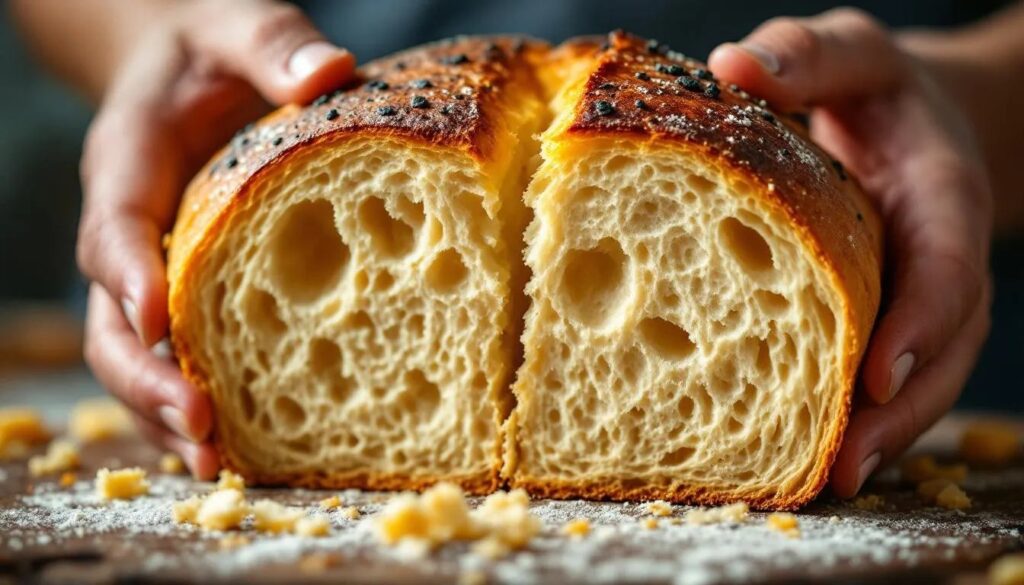
Spring is barely two days old, and the kitchen is already calling out for recipes that are as rewarding as they are simple. Enter no-knead bread: a loaf that develops its impeccable crust through patient waiting, not strenuous effort or complicated technique. Jim Lahey, the New York baker who brought this method to the masses via Sullivan Street Bakery in the early 2000s, created a 'less is more' baking philosophy, proving gluten can indeed organise itself with time and moisture, without you having to lift a finger. The result? A rustic, open-crumbed loaf with a crisp crust that rivals professional bakeries.
The following recipe closely follows Lahey's method: a high-moisture dough, an 18-hour period left to rest at room temperature, and a Dutch oven to turn steam into a perfectly crisp crust. Forget stand mixers, bread machines or fancy flours — all you need is a bowl, a spoon and the foresight to prep this the night before. So, roll up your sleeves, and measure out ingredients before settling in for the night.
| Preparation | 10 min (active) + 18 hours rest |
| Rest | 18 hours (bulk fermentation) + 2 hours (second rest) |
| Baking | 45 min |
| Portions | 1 loaf (8–10 slices) |
| Difficulty | Easy |
| Cost | $ |
| Season | Year-round — particularly comforting in early spring |
Suitable for: Vegan · Dairy-free
Ingredients
- 3 cups (375 g) all-purpose or bread flour, plus extra for shaping
- ¼ tsp (1 g) instant dry yeast
- 1¼ tsp (8 g) fine sea salt
- 1½ cups (345 ml) water, at room temperature (~70°F / 21°C)
Equipment
- Large mixing bowl (at least 4 quarts)
- Wooden spoon or silicone spatula
- Plastic wrap or a tight-fitting lid
- Cotton kitchen towel or parchment paper
- 4–6 quart Dutch oven with lid (cast iron preferred)
- Bench scraper (optional but helpful)
- Oven thermometer (strongly recommended)
Preparation
1. Mix the dough — 10 minutes, the night before
In a large bowl, whisk together the flour, salt, and yeast. The order is flexible, but make sure the yeast and salt are evenly distributed before adding water. Pour in the room-temperature water all at once and stir with a wooden spoon until no dry flour is visible. The dough will be shaggy, rough and very sticky, but don't worry! That's exactly what you want. Hydration, or the ratio of water to flour, should sit at roughly 76–78%, which is much higher than most sandwich bread recipes. Resist the urge to add more flour. Cover the bowl tightly with plastic wrap and leave it on your countertop at room temperature. Then, simply walk away.
2. The 18-hour fermentation — the science behind the method
This step replaces kneading, so it helps to understand what's actually happening. Kneading traditionally serves one purpose: aligning two proteins in wheat flour — glutenin and gliadin — into gluten. This network traps the carbon dioxide produced by yeast, giving bread its structure and chew. Lahey's genius was figuring out that with enough time and water, these proteins will align on their own (known as autolyse), no elbow grease required. The wet environment hydrates every flour particle, and the extended time allows sturdy gluten bonds to form. The limited amount of yeast (just ¼ teaspoon, instead of the usual 2¼ teaspoons) ensures the fermentation happens slowly enough, so it doesn't exhaust its food supply before structure is built. After 18 hours (between 12 and 20 hours is fine), the dough should have at least doubled in size and be slightly domed, covered in bubbles. A faintly sour, yeasty scent indicates successful fermentation.
3. Shape and second rest — 15 minutes, plus 2 hours
Generously flour your work surface. Scrape the dough out of the bowl in one motion — sticky is good. Using a bench scraper or floured hands, gently fold the dough onto itself, bringing the far edge toward you, then folding the right, left, and near edges inward, like closing an envelope. This coil fold technique tightens the dough's surface tension without letting out any of those air bubbles you've spent 18 hours cultivating. Flip the dough seam-side down. Dust a cotton kitchen towel with flour — use rice flour if you have it, as it's less likely to stick — and place the dough on it seam-side up. Loosely fold the towel over the top and let the dough rest for 2 hours. This second rest, or proof, allows the gluten to relax after shaping and lets the yeast produce a final burst of air before baking.
4. Preheat the Dutch oven — 30 minutes
Place your Dutch oven (with the lid on) inside your oven and preheat to 450°F (230°C) for 30 minutes. This step is vital. A cold Dutch oven won't generate the required bottom heat to quickly set the crust, and the bread will fan out instead of rising up. Use an oven thermometer: domestic ovens often run 15–25°F cooler than indicated, and this can negatively affect the crust. Make sure that cast iron is aggressively hot before adding the dough.
5. Bake — 45 minutes
When the Dutch oven is preheated, carefully remove it using heavy oven mitts. Flip the dough from the towel directly into the pot, seam-side up. Don't worry about perfection! The seam will naturally open up in the oven, creating a rustic ear along the top. Immediately cover with the lid and return to the oven. Bake covered for 30 minutes. The trapped steam replicates professional steam-injection ovens, keeping the crust soft and stretchy during the initial stage of baking while the loaf is still rising. After 30 minutes, remove the lid. The loaf should already be a pale golden colour. Continue baking uncovered for 15 minutes, until the crust is a burnished mahogany brown and the internal temperature reads 200–210°F (93–99°C) on an instant-read thermometer. Transfer to a wire rack and let the loaf cool for at least an hour before slicing. Slicing too early releases steam, which collapses the crust and makes the interior gummy. It also causes the crust to lose its crispness as it cools and reabsorbs moisture from the interior.
My Chef's Tip
Water temperature is the most overlooked factor in this recipe. In early spring, kitchens can still be cool, so room-temperature water might only be 60°F (15°C) instead of the ideal 70°F (21°C). Cold water significantly slows fermentation: at 60°F, your 18-hour dough might need 22 or even 24 hours to reach the same level of development. A quick fix? Use water that feels slightly warm to the inside of your wrist but not actually hot. You can also dissolve the yeast in the water and let it sit for 5 minutes: if it looks creamy and slightly foamy, your ferment is off to a good start. In summer, try putting it in the fridge 12 hours in, to slow it down.
Pairing Suggestions
This simple loaf asks for accompaniments that offer richness and contrast. Its open, chewy crumb with its slight tang pairs well with full-bodied but acidic foods.
Cultured butter and good flaky salt is a simple pairing, but very effective. Alternatively, early-spring radishes with good unsalted butter on an open slice use the bread as the foundation it should be. When serving the bread with a meal, pair it with light-bodied white wines such as Alsatian Riesling, Muscadet Sèvre-et-Maine sur lie, or a crisp Grüner Veltliner, which will complement the bread’s acidity. For a non-alcoholic option, try sparkling water with a slice of lemon or a lightly hopped kombucha to cut through the bread's density.
The Story Behind No-Knead Bread
Jim Lahey developed his no-knead method while working in professional bakeries, and it quickly became popular as soon as it reached home kitchens. In November 2006, food writer Mark Bittman published the recipe in The New York Times, and within days it was one of the most talked-about recipes the paper had ever published. First-time bakers found themselves creating bakery-quality loaves, and the shock was real! The technique wasn't new: European village bakers had long relied on slow, overnight fermentation due to time constraints, baking infrequently and using small amounts of levain or yeast to manage timing. Lahey streamlined that tradition, stripping away every intimidating variable.
The Dutch oven trick is also significant. Professional bread ovens inject steam during the first minutes of baking, which gelatinises the starch on the loaf's surface, allowing it to fully expand before the crust hardens. A covered Dutch oven traps steam from the dough itself, replicating this effect at home. This winning combination (long cold fermentation, high hydration, covered cast-iron baking) made artisan-style bread accessible to anyone with a bowl and an oven. Nearly two decades later, the recipe remains a reliable introduction to bread-making.
Nutritional Information (per slice, approximate values)
| Nutrient | Amount |
|---|---|
| Calories | ~140 kcal |
| Protein | ~4 g |
| Carbohydrates | ~28 g |
| of which sugars | ~0.5 g |
| Fat | ~0.5 g |
| Fiber | ~1 g |
| Sodium | ~290 mg |
Frequently Asked Questions
Can I prepare this bread in advance?
Yes, in fact, a slower fermentation improves it. After mixing the dough, cover the bowl and immediately refrigerate. The cold temperature will slow the yeast, allowing fermentation to proceed over 24 to 48 hours. Then, take the bowl out of the refrigerator and let the dough sit at room temperature for 1 to 2 hours before shaping, then continue.
How do I store the leftover loaf?
Store the loaf cut-side down on a wooden board at room temperature, loosely covered with a clean kitchen towel. Never use a plastic bag, as it traps moisture and softens the crust within hours. The bread tastes best the day it is baked, and remains perfectly good the following day. From day 2, slice and toast it. The airy interior and thin crust make it perfect for toasting, and the flavour deepens as the interior dries out. For longer storage, slice the entire loaf, freeze the slices in a zip-lock bag, and toast straight from frozen.
What variations or substitutions are possible?
The base recipe is very versatile. Replace up to one-third of the all-purpose flour with whole wheat flour for a nutty flavour and a denser, more textured interior. If you do, add 1 tablespoon of water to compensate for whole wheat's higher absorption. Similarly, rye flour produces a more assertive, earthy flavour, which goes well with smoked fish or aged cheese. You can also add herbs to suit the season. For spring, press two tablespoons of finely chopped fresh rosemary or thyme into the dough just before the coil fold — the long fermentation will mellow and distribute their aroma evenly. Olives, walnuts or sunflower seeds can also be added at this step.
Why is my bread flat rather than round and tall?
A flat loaf usually indicates one of three issues. The most common is underproofing. If your kitchen is cool and your dough hasn't visibly doubled in size and bubbled after 18 hours, give it more time. The second cause is insufficient Dutch oven heat. If the pot isn't fully preheated, the dough sets before it can rise, and spreads horizontally. Overproofing is the third possible cause. If dough is left too long at warm temperatures, it exhausts its gas production before baking, loses its structure and collapses in the oven. Well-proofed dough should show many small bubbles just beneath the skin — it should feel airy, not tight.
Can I make this without a Dutch oven?
A Dutch oven is recommended, but there are alternatives. A deep oven-safe pot with a tight lid (even a large ceramic casserole dish) will function similarly, as long as it can withstand 450°F (230°C). Another option: bake the dough on a preheated pizza stone or heavy baking sheet, and create steam by placing a separate shallow pan of boiling water on the oven's lower rack for the first 15 minutes of baking. Remove the water pan, then continue baking until the crust is deep brown. The crust won't be as shatteringly intense, but it will still be good.