
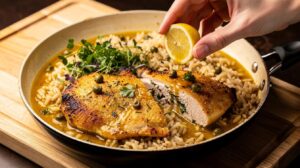

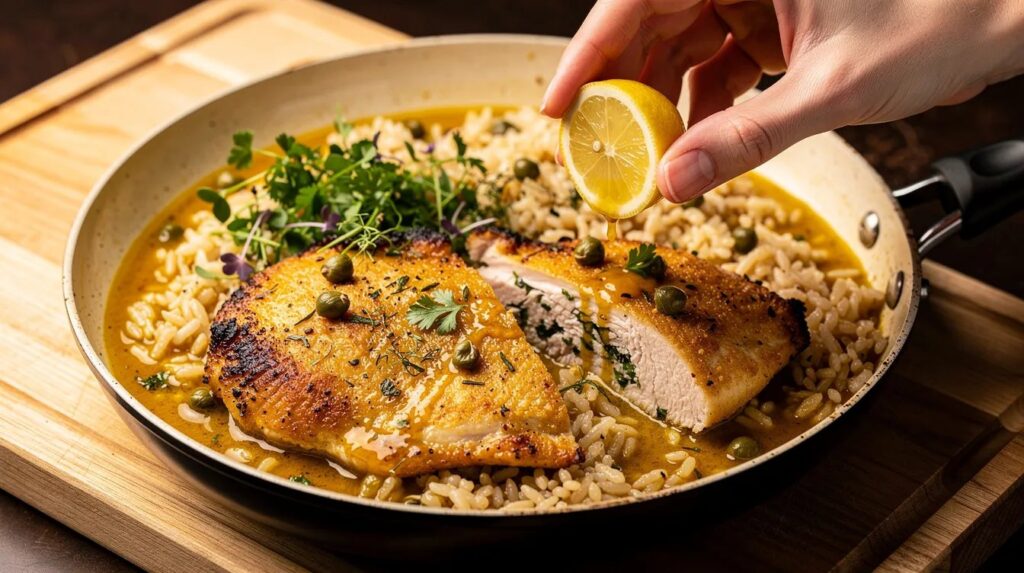
There's something deeply satisfying about a meal that comes together in a single pan — the chicken nestled into the rice, every grain soaked in a bright, lemony sauce with briny capers scattered throughout. Chicken piccata is one of those Italian-American classics that usually demands multiple pots, a separate pasta boil, and a pile of dishes. This version strips all that away without sacrificing the bold, tangy flavours that make the dish worth cooking in the first place.
Here, bone-in chicken thighs brown in the pan first, building a golden fond that flavours the rice as it cooks directly in the same skillet. The result is something between a risotto and a pilaf, infused with lemon, butter and chicken stock from edge to edge. It's a weeknight-friendly dish that feels far more considered than the effort involved. As autumn settles in across Australia and the evenings turn cooler, this is exactly the kind of warm, one-pan dinner you want waiting on the stovetop.
| Preparation | 15 min |
| Cooking | 45 min |
| Serves | 4 people |
| Difficulty | Easy |
| Cost | $$ |
| Season | Year-round; lemons peak in autumn/winter in Australia |
Suits: Gluten-free · High in protein
Ingredients
For the chicken
- 8 bone-in, skin-on chicken thighs (~1.2 kg total)
- 1 tsp fine sea salt
- ½ tsp freshly cracked black pepper
- 2 tbsp olive oil
For the rice and sauce
- 1 large brown onion, finely diced
- 4 cloves garlic, thinly sliced
- 1½ cups (300 g) long-grain white rice
- 3 cups (750 ml) chicken stock, preferably homemade
- ½ cup (125 ml) dry white wine (or extra stock)
- 3 tbsp brined capers, drained
- 3 tbsp unsalted butter, cold, cut into cubes
- Juice of 2 large lemons (~80 ml)
- Zest of 1 lemon
To finish
- ¼ cup fresh flat-leaf parsley, roughly chopped
- Extra lemon wedges for serving
Utensils
- Large oven-safe skillet or deep frying pan with a tight-fitting lid (30 cm / 12-inch)
- Tongs
- Wooden spoon
- Microplane or fine grater for zesting
Preparation
1. Season and sear the chicken
Pat the chicken thighs thoroughly dry with paper towel — this is non-negotiable for crisp skin. Season both sides with the salt and pepper, pressing the seasoning gently into the meat. Heat the olive oil in your skillet over medium-high heat until it shimmers and just barely begins to smoke. Place the thighs skin-side down and resist the urge to move them. Let them sear undisturbed for 7–8 minutes until the skin turns a deep, even golden colour and releases easily from the pan. You'll hear a steady sizzle — if it goes quiet, the heat is too low. Flip and sear the other side for 3 minutes, then transfer the thighs to a plate. They won't be cooked through yet, and that's deliberate; they'll finish later on top of the rice.
2. Build the flavour base
Pour off all but about 2 tablespoons of the rendered chicken fat, keeping every bit of the browned fond stuck to the bottom of the pan. Drop the heat to medium. Add the diced onion and cook, stirring often with a wooden spoon, for 4–5 minutes until soft and translucent. The onion will pick up colour from the fond — that's flavour building on flavour. Add the sliced garlic and stir for 30 seconds, just until fragrant. Garlic burns fast, so keep it moving. Pour in the white wine and scrape the bottom of the skillet vigorously with your spoon to deglaze — lifting all those caramelised bits into the liquid. Let the wine bubble and reduce by about half, roughly 1–2 minutes.
3. Toast the rice and add the liquid
Tip the rice into the pan and stir to coat every grain in the fat and aromatics. Let it toast for 1–2 minutes, stirring constantly. You'll notice the grains turn from opaque white to slightly translucent at the edges — this brief toasting step creates a subtle nuttiness and helps the rice hold its shape rather than turning to mush. Pour in the chicken stock, lemon juice and half the capers. Stir once to distribute everything evenly, then bring the liquid to a steady simmer.
4. Nestle the chicken and cook covered
Arrange the seared chicken thighs skin-side up on top of the rice in a single layer. Don't push them under the surface — keeping the skin above the liquid means it stays crisp rather than turning soggy. Scatter the remaining capers over and around the chicken. Reduce the heat to low, cover the pan tightly with the lid, and cook for 20–25 minutes without lifting the lid. The rice needs the trapped steam to cook through. After 20 minutes, check: the rice should be tender and the liquid fully absorbed. If the rice is still slightly firm, cover again for another 3–5 minutes.
5. Finish with butter, lemon and parsley
Remove the lid and take the pan off the heat. Lift the chicken thighs out temporarily and dot the cold butter cubes across the surface of the rice. Gently fold them through with a fork — the residual heat will melt the butter into a glossy, silky coating that clings to every grain. Scatter over the lemon zest and most of the parsley, then tuck the chicken back into the rice. Let everything rest uncovered for 5 minutes. This brief rest allows the rice to firm up slightly and the flavours to settle. Finish with the remaining parsley and serve straight from the pan with lemon wedges alongside.
My chef's tip
The single biggest variable here is your stock. Supermarket liquid stock works, but if you've got homemade chicken stock — or even a good-quality bone broth — the rice will taste noticeably richer and more rounded. Keep it warm in a small saucepan before adding it to the skillet; cold liquid hitting a hot pan drops the temperature and extends cooking time, which can lead to uneven rice. And if your lemons feel firm and unyielding, roll them hard against the bench under your palm before juicing. You'll get nearly twice the juice from the same fruit.
Food and wine pairing
Chicken piccata lives in the space between rich and bright — buttery chicken fat balanced by sharp lemon and salty capers. You want a wine that mirrors that push and pull without overwhelming either side.
A crisp, unoaked Australian Chardonnay from the Adelaide Hills or Mornington Peninsula works beautifully here, with enough citrus character to match the lemon and enough body to stand up to the chicken skin. A Vermentino from the McLaren Vale offers a lovely saline edge that echoes the capers. For something lighter, try a Pinot Grigio or even a dry Australian Riesling from the Clare Valley, where the acidity cuts through the butter-enriched rice. If you'd rather skip alcohol, sparkling water with a long strip of lemon peel does the job — the effervescence cleanses the palate between bites in much the same way a good wine would.
More about this dish
Chicken piccata traces its roots to Italian piccata, a technique of slicing, coating and pan-frying meat in a lemon-butter-caper sauce. The word itself likely comes from piccata meaning "larded" or "pricked," referring to the original method of studding veal with fat. Italian immigrants brought the dish to America, where it evolved — chicken replaced veal, the portions grew, and it became a staple of Italian-American red-sauce restaurants from the mid-twentieth century onward.
The one-pan rice version is a distinctly modern adaptation, borrowing from the logic of dishes like arroz con pollo and Middle Eastern chicken-and-rice bakes. By cooking the grain directly in the piccata sauce, nothing is wasted — the stock, the fond, the lemon juice and the rendered fat all end up flavouring the rice rather than sitting in a saucepan or being poured down the drain. It's a practical evolution of a classic, and one that actually improves on the original in at least one way: every component on the plate tastes like it belongs together, because it all came from the same pan.
Nutritional information (per serve, approximate values)
| Nutrient | Amount |
|---|---|
| Calories | ~620 kcal |
| Protein | ~38 g |
| Carbohydrates | ~52 g |
| of which sugars | ~2 g |
| Fat | ~28 g |
| Fibre | ~2 g |
Frequently asked questions
Can I use chicken breasts instead of thighs?
You can, but the result will be drier and less flavourful. Bone-in thighs render fat as they cook, which bastes the rice and adds richness. If you prefer breast meat, use bone-in, skin-on breasts and reduce the covered cooking time by about 5 minutes, checking the internal temperature reaches 74°C before serving.
Can this be made ahead and reheated?
It reheats well, though the rice will absorb more liquid as it sits. Store in an airtight container in the fridge for up to 3 days. Reheat gently in a covered pan over low heat with a splash of chicken stock to loosen the rice. The skin won't be crisp after reheating — if that matters to you, pop the thighs under a hot grill for 2–3 minutes while the rice warms through.
What can I substitute for the white wine?
Extra chicken stock works perfectly. For a closer flavour match, add a teaspoon of white wine vinegar or a splash of dry vermouth. Avoid cooking wines sold in the condiment aisle — they tend to be overly salty and one-dimensional.
Can I use brown rice or basmati?
Basmati is a straightforward swap; it may cook a few minutes faster, so check at the 18-minute mark. Brown rice needs significantly more liquid and a longer cooking time (around 40–45 minutes covered), so you'd need to increase the stock to about 4 cups and extend the simmer accordingly. The texture will be chewier and nuttier, which pairs well with the lemon and capers.
What sides go well with this dish?
Because the rice is built into the dish, you don't need a starch on the side. A simple green salad dressed with olive oil and a squeeze of lemon complements the richness. Steamed broccolini, roasted zucchini or a handful of rocket scattered over the top just before serving all work well, especially as we move into the cooler months and crave something green alongside hearty mains.