


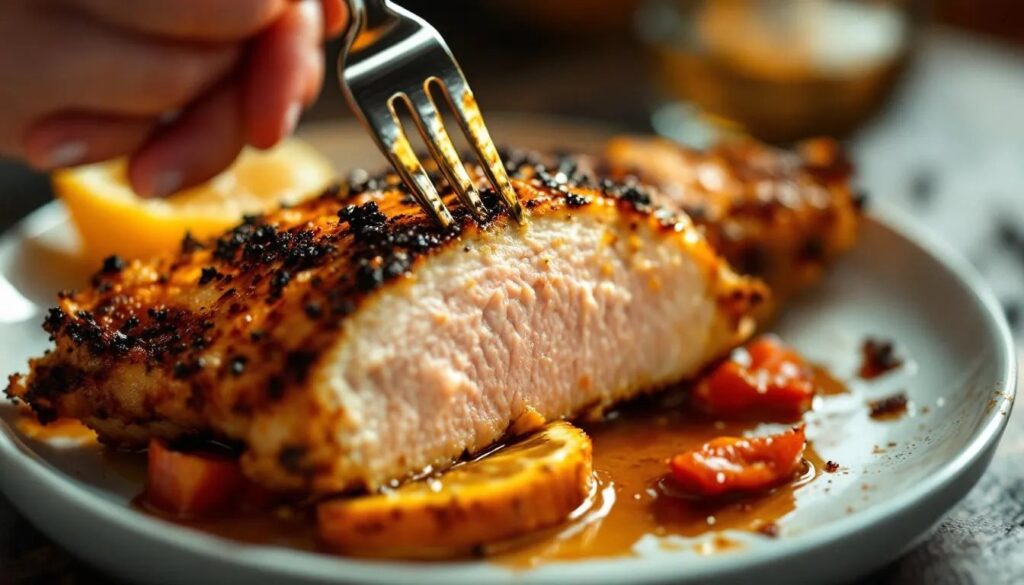
Late March marks a seasonal shift where kitchens feel brighter. Days lengthen, farmers' markets display fresh thyme and young garlic, and preparing dinner shouldn't involve hours of scrubbing. Sheet-pan chicken provides a perfect solution: cook everything on one pan, using pantry staples, to create crackling, golden skin typically found in restaurant rotisseries. The lemon isn't just a garnish; its juice and zest infuse the meat as it roasts, providing a bright acidity that balances the rendered fat without being overpowering.
This recipe stands out due to a pre-cooking technique. A brief dry-brine using salt and baking powder, applied for 20 minutes at room temperature while the oven heats, extracts surface moisture and elevates the skin's pH. This promotes faster, more thorough browning at high heat, resulting in shatteringly crisp skin, unlike the pale, rubbery alternative. This understanding changes how you roast chicken forever. So, let's get started.
| Prep time | 10 min |
| Dry-brine rest | 20 min |
| Cook time | 35 min |
| Servings | 4 people |
| Difficulty | Easy |
| Cost | $$ |
| Season | Spring — fresh thyme, young garlic, unwaxed lemons |
Suitable for: Gluten-free · High-protein · Dairy-free
Ingredients
- 4 bone-in, skin-on chicken thighs and drumsticks (approximately 1.3 kg / ~3 lbs total), patted completely dry
- 1½ tsp fine sea salt
- ½ tsp baking powder (aluminium-free)
- 1 tsp freshly ground black pepper
- 1 tsp sweet smoked paprika
- ½ tsp garlic powder
- 3 tbsp extra-virgin olive oil, divided
- 2 unwaxed lemons — zest of both, juice of one, the second sliced into rounds
- 4 garlic cloves, skin on, lightly crushed
- 6–8 sprigs of fresh thyme
- 1 medium red onion, cut into wedges
- 250 g / ~9 oz baby potatoes, halved
- Flaky sea salt, for finishing
Equipment
- Large rimmed sheet pan (at least 33 × 46 cm / 13 × 18 inches — a half-sheet pan)
- Wire rack that fits inside the sheet pan (strongly recommended)
- Microplane or fine zester
- Instant-read thermometer
- Paper towels
- Mixing bowl (large)
- Pastry brush or silicone brush
Preparation
1. Dry the chicken and apply the brine
Remove the chicken pieces from their packaging and press each one firmly with paper towels — top, underside, and every fold of skin. Any residual surface moisture will turn to steam in the oven and create a barrier between the skin and the dry heat, which delays browning significantly. Once each piece is genuinely dry to the touch, combine the fine sea salt and baking powder in a small bowl and mix well. The baking powder is alkaline, and when it interacts with the proteins and moisture in chicken skin under heat, it accelerates the Maillard reaction — the same chemical process responsible for the deep brown crust on a good steak. Sprinkle the mixture evenly over all surfaces of the chicken, including the underside. Place the pieces skin-side up on the wire rack set over your sheet pan and leave them uncovered at room temperature for 20 minutes. You will notice the surface of the skin beginning to look slightly dry and taut — that is exactly what you want.
2. Preheat the oven and prepare the aromatics
Set your oven to 220°C / 425°F (fan/convection: 200°C / 400°F) and give it a full 20 minutes to come to temperature — the same 20 minutes the chicken is resting, so there is no wasted time. A hot oven is non-negotiable here: roasting at a lower temperature means the fat under the skin renders too slowly, producing a soft, greasy result rather than a crisp one. While the oven heats, prepare the vegetables. Halve the baby potatoes and toss them in a large bowl with 2 tablespoons of olive oil, the red onion wedges, the crushed garlic cloves, half the thyme sprigs, a generous pinch of salt, and several grinds of black pepper. Arrange this mixture directly on the sheet pan beneath the wire rack, spreading it in a single layer — overlapping pieces trap steam and braise rather than roast. Tuck the lemon rounds among the potatoes: as they caramelise in the oven, they soften and release a mellow, slightly bitter sweetness into the pan juices that collects below the chicken.
3. Season and oil the chicken
In a small bowl, stir together the remaining tablespoon of olive oil, the lemon zest, the juice of one lemon, the smoked paprika, and the garlic powder. Using a pastry brush, apply this mixture over the skin of each chicken piece in a thin, even coat. Do not pool the oil — too much fat on the surface can fry the skin in its own grease rather than roasting it dry and crisp. Lay the remaining thyme sprigs across the chicken, where they will perfume the meat and char lightly at the tips, adding a subtle smoke note. Finish with a pinch of flaky sea salt across the skin. The flakes will draw out any last traces of surface moisture during the first minutes of cooking and create micro-craters in the skin that catch heat and brown faster than a smooth surface would.
4. Roast to temperature
Slide the pan onto the middle rack of the preheated oven. Roast for 30–35 minutes without opening the door. Every time the oven door opens, the temperature drops by roughly 15–20°C (30–40°F) and the recovery time stalls the browning process. At the 30-minute mark, check the skin colour — it should be a deep amber-gold, visibly taut and blistered in places, not pale or matte. The definitive test, however, is an instant-read thermometer: insert it into the thickest part of a thigh, avoiding bone. The chicken is safe and perfectly cooked at 74°C / 165°F, though pulling it at 78–80°C / 172–176°F gives thigh and drumstick meat — which contain more connective tissue than breast — the extra few degrees that converts collagen to gelatin, making the flesh fall from the bone with a gentle pull while staying entirely moist. If the skin needs another 3–4 minutes of colour and the potatoes are cooked through, switch to the broiler/grill setting briefly, watching closely.
5. Rest and serve
Remove the pan from the oven and leave the chicken to rest on the rack for 5 minutes. Resting allows the juices inside the meat — which have been forced toward the centre by the heat — to redistribute evenly throughout the muscle fibres. Cutting too soon results in those juices running out onto the board, leaving the meat drier than it could be. While the chicken rests, stir the roasted potatoes and onion wedges to coat them in the lemony pan juices that have dripped down during cooking. Serve directly from the pan — that is, after all, the entire point.
Chef's tip
If you have access to good spring garlic at the market right now — the fresh-pulled bulbs with their green shoots still attached, sold in bunches from late March onward — use four or five whole cloves with the skins on rather than dried garlic powder in the marinade. Score them lightly with a knife and scatter them across the pan; they roast into something sweet and spreadable, almost like a rough confit, and the flavour is incomparably more complex than anything from a jar or a spice rack. Squeeze them out of their papery skins before serving and smear them across the chicken or the potatoes. Spring garlic has a shorter, more fleeting window than most seasonal ingredients — use it when you see it.
Wine pairing
The profile to match here is bright, structured acidity with enough body to hold up against the roasted fat and the char on the lemon rounds, but without tannins that would clash with the herb notes of thyme.
A white Burgundy — a village-level Mâcon-Villages or a Saint-Véran — brings the right combination of citrus pith, light stone-fruit and mineral dryness without overwhelming the dish. For a more affordable alternative, a Vermentino di Sardegna or a dry Picpoul de Pinet work beautifully with the lemon. If you prefer to skip alcohol entirely, a sparkling water with a long squeeze of lemon and a few fresh thyme sprigs makes a cleaner, sharper palate cleanser between bites than many non-alcoholic wines currently on the market.
About this dish
Sheet-pan cooking as a distinct domestic category is a relatively recent phenomenon in Anglo-American food culture, though the idea of roasting meat and vegetables together on a single tray goes back centuries in every tradition that uses an oven. The technique gained significant traction in the early 2010s, partly driven by the growing demand for weeknight recipes that deliver restaurant-quality results without restaurant-level prep. Lemon chicken — in various iterations — spans a remarkable number of culinary traditions: the Italian pollo al limone, the Greek lemon-oregano roast, the North African chermoula-style chicken with preserved lemon, and the classic French poulet rôti with a half-lemon tucked inside the cavity all share the same instinct for using citrus acidity to balance the richness of poultry fat.
The dry-brine and baking powder technique draws from American food science writing — particularly work popularised in the 2010s by writers who tested and documented the chemistry of browning systematically rather than relying on received kitchen wisdom. Now, home cooks approach poultry by treating the skin as a distinct textural element worth engineering deliberately. The version here combines that precision approach with the ease and honesty of a tray you pull out of the oven and place directly on the table.
Nutritional values (per serving, approximate values)
| Nutrient | Amount |
|---|---|
| Calories | ~480 kcal |
| Protein | ~38 g |
| Carbohydrates | ~22 g |
| of which sugars | ~4 g |
| Fat | ~26 g |
| Fibre | ~3 g |
Frequently asked questions
Can this be prepared ahead of time?
The dry-brine step can be extended considerably — up to 24 hours in the refrigerator, uncovered, on the rack over the sheet pan. Longer contact between the salt-baking powder mixture and the skin produces even more dramatic crisping, because the skin has more time to dry out and the salt draws deeper into the meat, seasoning it from within. If you go this route, remove the chicken from the fridge 30 minutes before roasting to allow it to approach room temperature, which promotes more even cooking throughout. The vegetables can also be cut, tossed in oil and seasoning, and stored in an airtight container in the fridge for up to 24 hours.
How should leftovers be stored?
Transfer any remaining chicken and vegetables to an airtight container and refrigerate within two hours of cooking. They will keep well for up to 3 days. To reheat and preserve some of the skin's texture, place the pieces on a wire rack over a sheet pan in an oven set to 190°C / 375°F for 10–12 minutes rather than microwaving, which creates steam and softens the skin immediately. Cold leftover chicken sliced off the bone and layered into a sandwich with grain mustard and thinly sliced spring onion is genuinely one of the better weekday lunches this recipe produces.
What substitutions and seasonal variations work here?
The vegetables are easy to adapt to whatever is at the market. In early spring, halved radishes, asparagus spears added in the last 10 minutes, or young fennel wedges all work well in place of or alongside the potatoes. In summer, cherry tomatoes and courgette rounds added for the final 15 minutes caramelise beautifully in the pan juices. The thyme can be replaced with rosemary, oregano, or a combination — the technique holds regardless of the herb. For a slightly different flavour profile, replace the smoked paprika with ground cumin and a pinch of turmeric, and add a handful of green olives to the vegetable base before roasting: the shift is subtle but takes the dish in a North African direction that is just as good.
Can I use boneless, skinless chicken breasts instead?
Technically yes, but the result will be significantly different and the entire logic of this recipe — achieving crisp skin through dry-brining and high heat — no longer applies. Boneless, skinless breasts cook much faster (roughly 18–22 minutes at the same temperature), carry no fat layer to render, and dry out quickly if pushed past 74°C / 165°F. If breasts are what you have, reduce the oven temperature to 200°C / 400°F, coat them generously in olive oil and lemon, and monitor with a thermometer from the 15-minute mark. Bone-in, skin-on thighs and drumsticks remain the better choice for this particular technique.
Why is the wire rack important — can I skip it?
The wire rack elevates the chicken above the pan surface, allowing hot air to circulate underneath each piece. Without it, the underside of the skin sits in direct contact with the pan and the pooling rendered fat, which effectively fries rather than roasts it — sometimes yielding a good result, but inconsistently. The rack also positions the chicken above the vegetable layer, so the dripping pan juices season the potatoes and onions below rather than making the skin soggy. If you genuinely do not own a rack, place the vegetables in a thick enough layer that the chicken pieces rest on them without touching the metal pan directly — it is an imperfect substitute, but it works.