


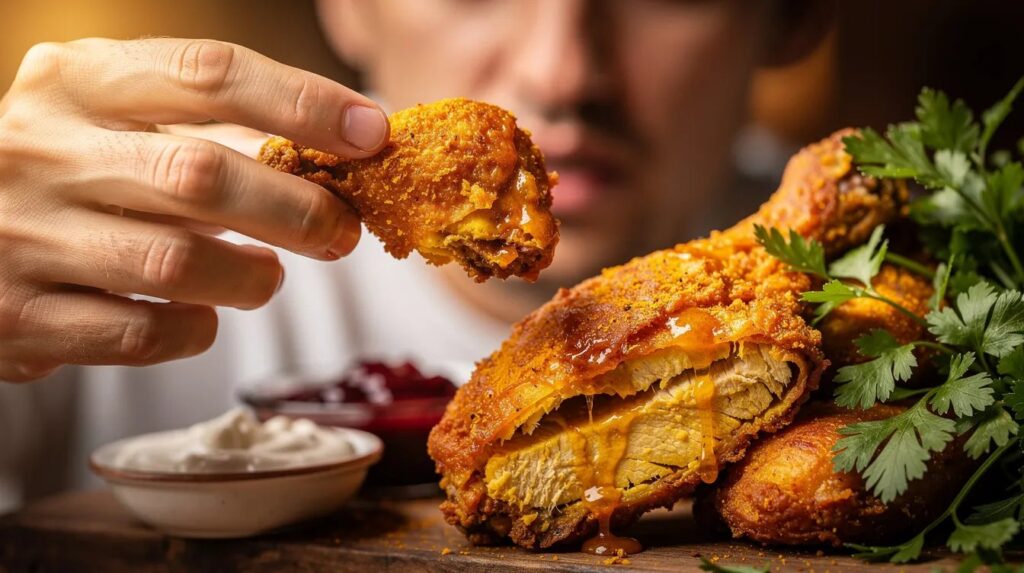
Fried chicken is one of those dishes that rewards small decisions. The spice blend you pat into the flour, the temperature of your oil, the rest between dredging and frying — each choice compounds. Yet one of the most overlooked upgrades sits on your spice rack right now, likely pushed behind the paprika: granulated onion. Swapping out standard onion powder for its coarser, grainier cousin changes the crust in ways you can feel on the first bite.
Where onion powder dissolves almost invisibly into flour, granulated onion holds its structure. It clings to the surface, caramelises under heat, and delivers concentrated allium flavour in sharp, defined bursts rather than a flat background hum. The texture shifts too — that crust picks up micro-pockets of crunch, the kind that make you pause mid-chew and wonder what changed. The swap takes zero extra effort, costs nothing more, and works whether you brine, buttermilk-soak, or dredge straight. Time to clear some bench space and lay out the flour.
| Preparation | 25 min (plus 1 hr marinating) |
| Cooking | 25 min |
| Portions | 4 people |
| Difficulty | Medium |
| Cost | $$ |
| Season | Year-round; pairs well with autumn slaws and spring salads alike |
Ingredients
For the buttermilk marinade
- 1.2 kg chicken pieces (bone-in thighs, drumsticks, or a mix)
- 500 ml buttermilk
- 1 tbsp hot sauce (Crystal, Frank's, or similar vinegar-based)
- 2 tsp fine sea salt
For the dredge
- 300 g plain flour
- 50 g cornflour (cornstarch)
- 2 tbsp granulated onion (the star swap)
- 1 tbsp garlic powder
- 2 tsp smoked paprika
- 1½ tsp freshly ground black pepper
- 1 tsp cayenne pepper (adjust to taste)
- 1 tsp dried thyme
- ½ tsp ground white pepper
- 1 tsp fine sea salt
For frying
- Approx. 1.5 L neutral oil (peanut, sunflower, or rice bran)
Utensils
- Large bowl for marinating
- Deep heavy-based pot or Dutch oven (at least 5 L capacity)
- Probe thermometer or deep-fry thermometer
- Wire rack set over a baking tray
- Tongs
- Large shallow dish or tray for dredging
Preparation
1. Marinate the chicken in seasoned buttermilk
Combine the buttermilk, hot sauce, and salt in a large bowl. Whisk briefly until the salt dissolves. Add the chicken pieces, turning each one so it sits fully submerged or at least well coated. Cover with cling film and refrigerate for a minimum of 1 hour, up to 12 hours if time allows. The buttermilk serves a double purpose: its lactic acid gently denatures the surface proteins, tenderising the outer layer of meat, while also providing a wet, tacky base for the flour to grip. Longer marination deepens the effect, but anything beyond 12 hours risks making the texture too soft. When you pull the chicken out, you want it dripping — that excess buttermilk is your glue.
2. Build the granulated onion dredge
In a large shallow dish, whisk together the plain flour, cornflour, granulated onion, garlic powder, smoked paprika, black pepper, cayenne, dried thyme, white pepper, and salt. Run your fingers through the mix, breaking up any small lumps. Smell it — you should get a sharp, savoury wave of allium right away, more aggressive than the muted sweetness onion powder gives. The cornflour lightens the coating and promotes extra crispness by reducing gluten development in the crust. The granulated onion particles are visibly larger than powder; they won't melt away during frying. Instead, they'll toast in the oil, turning golden brown and delivering concentrated hits of onion flavour across the surface.
3. Dredge with purpose — and double-dip
Lift each chicken piece from the buttermilk, letting the excess drip off for a few seconds but not shaking it dry. Press it firmly into the flour mixture, turning to coat every surface. Use your fingertips to push the flour into any folds or crevices around the bone. Now — and this matters — dip the floured piece back into the buttermilk briefly, then straight back into the flour. This double dredge creates a thicker, shaggier crust with jagged edges and deep ridges that will fry up into that coveted crackly texture. Those exposed granulated onion pieces on the outer layer will catch the oil directly, browning faster and more deeply than the surrounding flour. Place each dredged piece on the wire rack and let it rest for 10 minutes at room temperature. This brief rest allows the coating to hydrate slightly and bond to the chicken, reducing the chance of it sliding off in the oil.
4. Heat the oil to the right window
Pour enough oil into your pot to reach a depth of about 7–8 cm. Clip your thermometer to the side and heat over medium-high until it reads 170°C (340°F). This temperature is intentionally a touch lower than some recipes suggest. Granulated onion and garlic powder both contain sugars that can scorch quickly at higher temperatures. Starting at 170°C gives the crust time to set and the chicken time to cook through without the onion particles burning to black and turning bitter. If you see the oil climb past 180°C, reduce the heat immediately.
5. Fry in batches — never crowd the pot
Lower 3 to 4 pieces into the oil using tongs, skin side down first. The temperature will drop — that's normal. Adjust the heat to maintain a steady 160–170°C throughout cooking. Fry for 6 to 7 minutes per side for thighs, 5 to 6 minutes for drumsticks, turning only once. Listen for a consistent, lively bubble — if it goes quiet, the oil is too cool and the chicken will absorb grease. If it sounds angry and aggressive, it's too hot. The crust should progress from pale to deep amber, with the granulated onion pieces turning a shade darker than their surroundings. Use the probe thermometer to check for 74°C (165°F) at the thickest part of the meat, near the bone. Transfer to the wire rack and resist cutting for at least 5 minutes; the residual heat finishes the carry-over cooking while the crust firms.
6. Season immediately and serve
While each batch is still glistening from the fryer, hit it with a light pinch of flaky sea salt. The oil on the surface will grab and hold those crystals. If you like, dust with a whisper more smoked paprika for colour. Serve the chicken warm — not blazing hot, not lukewarm. That resting period brings the crust to its crunchiest state, and the granulated onion flavour blooms as the pieces cool just enough to handle. You'll notice the difference on the first bite: sharp, toasty onion that announces itself clearly against the savoury meat beneath.
My chef's tip
If you want to push the allium angle even further, add 1 tablespoon of onion powder to the buttermilk marinade itself while keeping granulated onion in the flour. The powder dissolves into the marinade and seasons the meat directly, while the granulated version handles the crust. You end up with onion flavour at two different depths — one embedded in the chicken, one crackling on the surface. It's not subtle, and it's not meant to be. During the cooler months, fold a teaspoon of dried sage into the dredge; it pairs beautifully with that heightened onion note and nudges the whole thing toward something that tastes like autumn even when it isn't.
Drink pairings
Fried chicken with this kind of bold, allium-forward crust needs something with enough body to stand alongside it but enough acidity or carbonation to cut through the richness.
A cold, dry Australian sparkling shiraz — slightly chilled to around 14°C — handles both jobs. The berry fruit and pepper spice complement the smoked paprika and cayenne, while the bubbles scrub the palate clean between pieces. For something lighter, reach for a crisp Adelaide Hills sauvignon blanc or a Tasmanian riesling with its citrus backbone. On the non-alcoholic side, a sharp ginger beer — the kind that burns the back of the throat — mirrors the punchiness of the granulated onion and matches the heat of the cayenne. Lemonade made with fresh lemons and minimal sugar works too, especially on a warm day.
More about this dish
The distinction between onion powder and granulated onion is one of processing. Both start as dehydrated onion, but powder is ground to a fine, talc-like consistency while the granulated form is left coarser — closer in texture to fine semolina. American Southern cooks have long debated the merits of each in fried chicken dredges, with powder dominating most published recipes simply because it blends more evenly. But the very quality that makes granulated onion harder to distribute — its refusal to dissolve — is what makes it superior in a high-heat frying application. Those particles brown independently, almost like tiny croutons scattered across the crust.
Fried chicken itself traces a complex culinary path through Scottish, West African, and American Southern traditions, arriving in Australia largely through American cultural influence and the fast-food chains that followed. The home-cooked version, though, allows for exactly this kind of small, deliberate tweak — choices that a mass-production kitchen can't afford to make. This is a dish that rewards anyone willing to read the label on the jar and choose the grainier option.
Nutritional values (per portion, approximate values)
| Nutrient | Amount |
|---|---|
| Calories | ~520 kcal |
| Protein | ~38 g |
| Carbohydrates | ~32 g |
| of which sugars | ~3 g |
| Fat | ~26 g |
| Fibre | ~1 g |
Frequently asked questions
What exactly is the difference between onion powder and granulated onion?
Both are made from dehydrated onion, but the grind size differs. Onion powder is milled to a fine, almost flour-like consistency that dissolves quickly into liquids and batters. Granulated onion has a coarser, sandier texture — closer to fine sugar or semolina. In a frying context, the granulated form holds its shape in the dredge, browning individually on the crust's surface and delivering sharper, more concentrated onion flavour in each bite.
Can I use both onion powder and granulated onion?
Yes, and it's a strong approach. Use onion powder in the buttermilk marinade where it dissolves and seasons the meat directly. Keep granulated onion in the flour dredge for textural crunch and surface browning. This layers the onion flavour at two different depths — in the meat and on the crust — for a more complete effect.
Can this be prepared ahead of time?
The marinating step benefits from time, so you can marinate the chicken the night before. Dredge the pieces just before frying — if they sit too long in the flour, the coating absorbs too much moisture and turns gummy rather than crisp. Fried chicken can be held warm in a 90°C (195°F) oven on a wire rack for up to 30 minutes without losing too much crunch.
How do I store and reheat leftovers?
Refrigerate leftover fried chicken in an airtight container for up to 3 days. To reheat, place pieces on a wire rack over a baking tray in a 190°C (375°F) oven for 12–15 minutes. This re-crisps the coating far better than a microwave, which will steam the crust into sogginess. Eating cold fried chicken straight from the fridge is also a legitimate tradition.
What oil works best for frying in Australia?
Rice bran oil is widely available here, handles high temperatures well, and has a neutral flavour that won't compete with your spice blend. Peanut oil is another strong choice with a slightly higher smoke point and a faintly nutty quality that complements chicken. Sunflower oil works in a pinch. Avoid olive oil — its smoke point is too low and the flavour too assertive for this style of frying.