


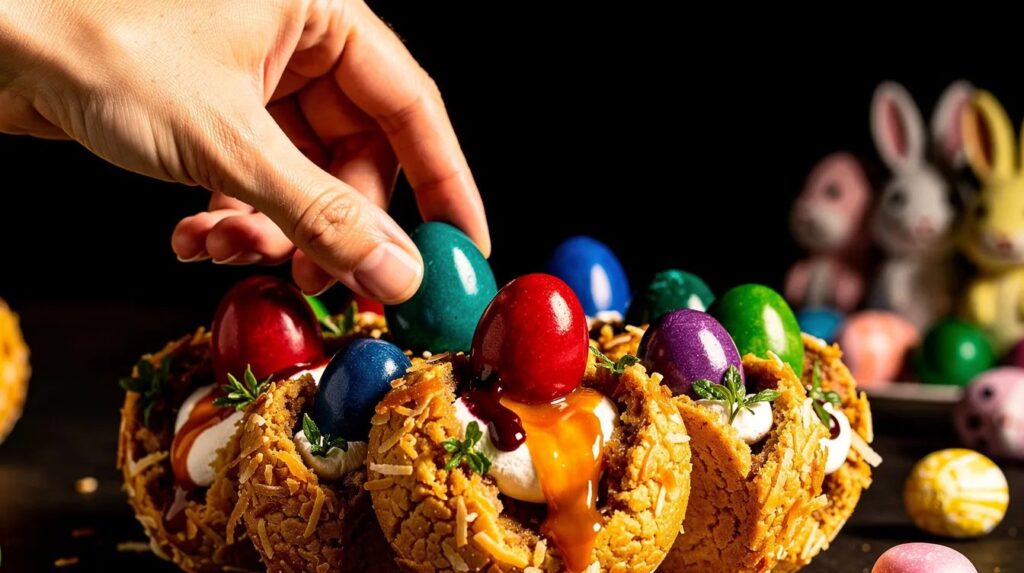
Three ingredients, no oven acrobatics, and a result that looks like you spent half the afternoon fussing. Easter bird's nest cookies have been a favourite on dessert platters across Australia for decades, and it's easy to see why—they capture that late-March feeling when you crave something festive without the hassle of fondant or royal icing. The base is a simple mix of melted chocolate and crunchy noodles shaped into little cups, topped with speckled candy eggs that fit perfectly. The whole process involves about twenty minutes of hands-on time, mostly stirring and shaping.
This version is a winner because of the perfect balance. Too much chocolate makes a dense puck; too little, and the nest crumbles as soon as you pick it up. The recipe below gives you a cookie that keeps its shape on a warm spring afternoon without turning rock hard. They're great for travelling in a tin, freeze well, and kids can almost entirely make them on their own. Time to clear some bench space and get a tray ready.
| Preparation | 15 min |
| Chilling | 30 min |
| Portions | 12 nests |
| Difficulty | Easy |
| Cost | $ |
| Season | Easter / autumn (March–April in AU) |
Suitable for: Vegetarian · Nut-free (check chocolate label) · Egg-free (no raw egg in the recipe itself)
Ingredients
- 200 g milk chocolate, roughly chopped (or compound chocolate for easier melting)
- 100 g crunchy chow mein noodles (the dry, shelf-stable kind sold in the Asian aisle)
- 36 mini speckled candy eggs (approximately 3 per nest)
Utensils
- Medium heatproof bowl
- Saucepan for a bain-marie (double boiler) — or a microwave
- Spatula
- 12-hole muffin tin or a baking tray lined with baking paper
- Tablespoon
Preparation
1. Melt the chocolate
Set a heatproof bowl over a saucepan of gently simmering water, making sure the base of the bowl doesn't touch the water. Add the chopped chocolate and stir slowly with a spatula until the pieces lose their shape and the mixture turns glossy and smooth. This should take roughly 3–4 minutes. If you prefer the microwave method, heat in 30-second bursts at 50% power, stirring between each burst — usually three rounds does the job. The goal is a fluid, lump-free chocolate that coats the back of the spatula in an even layer. Pull the bowl off the heat as soon as the last visible chunk disappears; residual heat will finish the work and you avoid seizing (when chocolate overheats, tightens, and turns grainy).
2. Combine with noodles
Tip the crunchy chow mein noodles into the melted chocolate. Use the spatula to fold — not stir aggressively — until every strand is coated. You want to keep as many noodles intact as possible; broken shards still taste fine, but long, tangled strands are what give the finished cookies that convincing twig-like texture. The mixture will feel stiff, almost reluctant. That's right. If your chocolate was properly warm, it will loosen just enough to coat without pooling at the bottom of the bowl. Work quickly here, because the chocolate begins to set within a few minutes at room temperature, especially in an air-conditioned kitchen.
3. Shape the nests
Using a heaped tablespoon, drop a mound of the noodle mixture into each hole of a 12-hole muffin tin. Press the back of the spoon gently into the centre to create a shallow well — this is where the eggs will sit. If you don't have a muffin tin, spoon the mounds directly onto a lined baking tray and use two spoons to coax each one into a rough circle with a dip in the middle. Aim for nests about 6–7 cm across. Don't worry about perfection; real bird's nests are gloriously untidy, and yours should be too. If any noodle ends spike outward, leave them—they add to the look.
4. Add the eggs and chill
While the chocolate is still tacky, press 3 mini candy eggs into the well of each nest. Give them a gentle push so they anchor into the chocolate rather than perch on top. Transfer the tin or tray to the fridge and chill for at least 30 minutes, or until the chocolate has set firm and the nests release cleanly when nudged. In warmer weather—and late March in much of Australia can still throw a 30°C day—aim for a full hour in the fridge before serving. Once set, they will hold at a cool room temperature for a couple of hours, but bring them out only when you're ready to plate.
My chef's tip
For a more refined look, use dark chocolate (around 55% cocoa)—the deeper colour makes the speckled eggs pop, and the slight bitterness balances the sweetness of the candy. If you're making these with young children, compound chocolate (the kind labelled "cooking chocolate" at Coles or Woolworths) is more forgiving because it doesn't require tempering and sets with a satisfying snap even if you overheat it slightly. And if you can get your hands on crispy fried shallots from the Asian grocery, mix a small handful through the noodles before shaping—they add a salty, savoury edge that makes adults reach for a second nest before the kids notice.
Pairings and serving
These are sweet, crunchy, and chocolatey, so a drink with a bit of acidity or warmth complements them nicely. A cup of strong English breakfast tea with milk is a classic Australian choice for anything chocolate at morning tea. For an after-dinner Easter spread, a Rutherglen muscat from northeast Victoria—rich with toffee and dried-fruit notes—matches the milk chocolate without overwhelming the candy eggs. For children, a cold glass of milk or a homemade lemonade keeps things simple and cuts through the sweetness.
More about these cookies
Bird's nest cookies—sometimes called "Easter nests" or "chocolate crackles' Easter cousin"—are part of a long Australian tradition of no-bake chocolate–cereal treats. The chocolate crackle, built on copha and rice bubbles, has been a children's party staple since the mid-twentieth century, and the bird's nest variation swaps the rice cereal for noodles and the copha for chocolate. The nest shape seems to have gained popularity in the 1990s as supermarkets began stocking mini candy eggs in a wider range of colours and finishes.
Outside Australia, similar treats appear in British baking under the name "Easter nests," often made with shredded wheat or cornflakes. North American versions sometimes use butterscotch chips and peanut butter alongside the noodles, adding a richer, more complex flavour. The genius of the three-ingredient Australian version is its restraint—nothing competes with the crunch of the noodles or the melt of the chocolate, and the candy eggs do all the decorative work.
Nutritional information (per nest, approximate values)
| Nutrient | Amount |
|---|---|
| Calories | ~150 kcal |
| Protein | ~2 g |
| Carbohydrates | ~18 g |
| of which sugars | ~14 g |
| Fat | ~8 g |
| Fibre | ~1 g |
Frequently asked questions
Can I make these ahead of time?
Yes—and they actually get better after a night in the fridge, because the chocolate sets more evenly and the nests firm up. Store them in an airtight container in the fridge for up to 5 days. Bring them to cool room temperature about 15 minutes before serving so the chocolate loses that hard-from-the-fridge snap and returns to a pleasant, slightly yielding bite.
Can I freeze Easter bird's nest cookies?
They freeze well for up to 8 weeks. Arrange them in a single layer in a freezer-safe container with baking paper between layers. Thaw in the fridge overnight rather than at room temperature—this prevents condensation from making the noodles soggy.
What can I use instead of chow mein noodles?
Crunchy fried egg noodles, crushed pretzels, or even shredded coconut all work. For a gluten-free version, use rice noodles that have been deep-fried until puffed and crisp (the kind used as a garnish in Thai salads). The texture is lighter and airier, which gives the nests a different but equally appealing look.
My chocolate seized—can I rescue it?
Add 1 teaspoon of flavourless oil (such as sunflower or rice bran) and stir vigorously. The fat helps re-emulsify the cocoa butter and brings the chocolate back to a workable consistency. If it's still grainy, add another half-teaspoon. It won't be glossy enough for tempering, but for nests bound with noodles, the texture difference is unnoticeable.
Are these safe for kids with nut allergies?
The three core ingredients are naturally nut-free, but always check the label on your chocolate and candy eggs for "may contain traces of tree nuts or peanuts" warnings. Brands vary between batches. If you need a guaranteed nut-free option, look for allergy-friendly chocolate ranges available at most Australian pharmacies and health-food shops.