



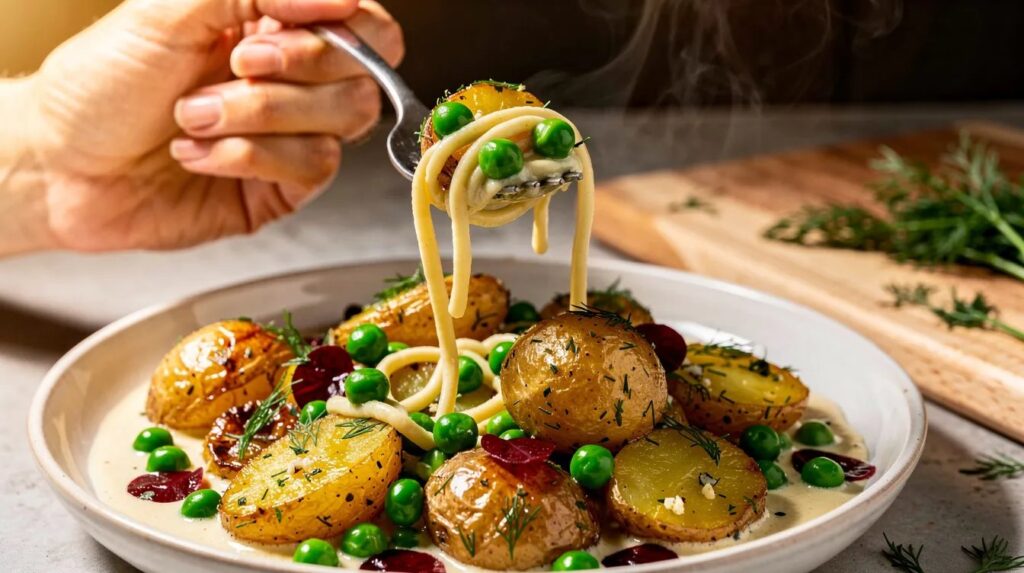
There's a dish that appears on Greek tables every spring, right when the first tender peas arrive at the laïki agora — the neighbourhood farmers' market. It's called arakas me patates, and it does something no roast potato or steamed side ever quite manages: it captures a whole season in one pot. Olive oil, sweet peas, waxy potatoes, tomato, dill and lemon come together into a braise that's both light and deeply satisfying, the kind of thing you eat with thick bread and not much else.
What makes this recipe especially practical is that it tastes better the next day. The potatoes drink up the tomato broth overnight, the dill perfumes every spoonful, and reheating takes minutes. That makes it a perfect make-ahead side for a weeknight dinner, a weekend spread, or an Easter gathering where you'd rather not be chained to the stovetop. Grab a wide, heavy-based pot and let's get started.
| Preparation | 15 min |
| Cooking | 45 min |
| Portions | 4–6 people |
| Difficulty | Easy |
| Cost | $ |
| Season | Fresh peas, spring onions, new-season dill |
Suitable for: Vegan · Gluten-free · Dairy-free
Ingredients
- 500 g fresh or frozen peas
- 500 g waxy potatoes (such as Kipfler or Dutch Cream), peeled and cut into 3 cm chunks
- 1 large brown onion, finely diced
- 2 spring onions, sliced, whites and greens separated
- 400 g tinned crushed tomatoes
- 1 tablespoon tomato paste
- 80 ml extra-virgin olive oil, plus more for finishing
- 1 generous bunch fresh dill (~30 g), fronds roughly chopped
- 1 lemon, juiced
- 1 teaspoon sugar
- 250 ml water
- Flaky sea salt and freshly ground black pepper
Utensils
- Wide, heavy-based pot or deep skillet with a lid (at least 28 cm)
- Wooden spoon
- Sharp knife and chopping board
Preparation
1. Build the aromatic base
Set your pot over medium heat and pour in the olive oil. Once it shimmers — but well before it smokes — add the diced brown onion and the white parts of the spring onions. Stir gently and let them soften for about 5–6 minutes, until they turn translucent and start to smell sweet. You're not looking for colour here; the goal is to sweat the onions, meaning they release their moisture and turn silky without browning. If the pan sounds too aggressive, drop the heat a notch. A quiet, steady sizzle is what you want.
2. Add tomato and let it concentrate
Stir in the tomato paste and cook it for one full minute, pressing it into the onions so it coats everything in a brick-red film. This brief toasting step deepens its flavour and removes the raw, tinny edge. Now pour in the crushed tomatoes and the sugar. The sugar isn't there to make the dish sweet — it simply rounds out the acidity of the tomatoes, especially if you're using tinned ones outside peak summer. Give it all a good stir and let the sauce bubble gently for 3–4 minutes until it thickens just slightly and the oil begins to separate at the edges. That separation is a sign of a well-cooked tomato base in Greek braising.
3. Braise the potatoes
Nestle the potato chunks into the sauce in a single layer if you can manage it. Pour in the water — it should come roughly halfway up the potatoes, not covering them entirely. Season with ¾ teaspoon of salt and a generous grinding of black pepper. Bring the liquid to a steady simmer, then lower the heat, cover with the lid slightly ajar, and let the potatoes cook for 20 minutes. Resist stirring too often; the potatoes will hold their shape better if left mostly undisturbed. After 20 minutes, test a chunk with a knife tip — it should meet slight resistance in the centre. The potatoes will continue cooking with the peas, so don't wait until they're fully tender.
4. Add the peas and dill
Scatter the peas over the potatoes. If using fresh peas, press them gently into the liquid. Frozen peas can go straight from the bag — no thawing needed. Add about two-thirds of the chopped dill, keeping the rest for garnish. Put the lid back on, still slightly ajar, and cook for a further 12–15 minutes until the peas are plump and bright and the potatoes yield easily to a fork. The braising liquid should have reduced to a saucy, almost stew-like consistency — thick enough to coat the back of a spoon, but not dry. If it looks too tight, splash in a few tablespoons of water. If too loose, remove the lid entirely for the last five minutes and let it reduce.
5. Finish with lemon and fresh oil
Take the pot off the heat. Squeeze in the lemon juice and drizzle over a tablespoon of fresh, uncooked olive oil. Fold gently — the potatoes will be soft, so use a light hand. Taste and adjust the salt. Scatter the remaining dill and the sliced spring onion greens over the top. Let the dish sit with the lid off for at least 10 minutes before serving. Greek braised vegetable dishes, known collectively as ladera, are traditionally served warm or at room temperature, never piping hot. That resting time lets the flavours settle and the potatoes absorb more of the tomato-dill broth.
My chef's tip
If you're making this ahead — and you should — let it cool completely, then refrigerate in the pot or a sealed container. The next day, reheat gently on the stovetop over low heat with a splash of water to loosen the sauce. Add a fresh squeeze of lemon and another small handful of chopped dill right before serving. That hit of raw dill and citrus lifts the whole dish back to life. In the warmer months, you can serve it straight from the fridge as a cold side alongside grilled fish.
Wine and drink pairings
This is a bright, herby, tomato-driven dish with a clean lemon finish — it wants something crisp and mineral rather than rich. A Greek Assyrtiko from Santorini, with its saline edge and citrus notes, is a natural match. An unoaked Australian Vermentino or a dry Riesling from the Clare Valley would work beautifully too.
For a non-alcoholic option, try chilled sparkling water with a long strip of lemon peel and a sprig of dill — it sounds unusual, but it echoes the aromatics of the dish and keeps the palate fresh between bites.
About this dish
Arakas me patates belongs to a family of Greek dishes called ladera — "olive oil dishes" — that form the backbone of everyday home cooking across Greece. Rooted in the Eastern Orthodox tradition of fasting, ladera are entirely plant-based, relying on good olive oil, seasonal vegetables and aromatics for flavour. They're peasant food in the best sense: economical, nourishing, built around whatever the season provides. Peas braised with potatoes signal spring in the same way roasted aubergine signals late summer.
Every Greek household has its own version. Some add carrots for sweetness, others toss in a handful of orzo to make it heartier. In Crete, the dish might feature wild fennel fronds instead of dill. On the islands, a squeeze of bitter orange juice replaces lemon. What stays constant is the method: a slow, gentle braise in olive oil and tomato, finished with fresh herbs. The dish doesn't shout — it arrives quietly, room-temperature, on a wide plate, and somehow disappears first.
Nutritional values (per portion, approximate values)
| Nutrient | Amount |
|---|---|
| Calories | ~280 kcal |
| Protein | ~9 g |
| Carbohydrates | ~35 g |
| of which sugars | ~9 g |
| Fat | ~13 g |
| Fibre | ~8 g |
Frequently asked questions
Can I make this dish ahead of time?
This dish is practically designed for making ahead. It keeps well in the fridge for up to 3 days and the flavour actually improves overnight as the potatoes absorb the braising liquid. Reheat gently on the stovetop with a splash of water, and add a fresh squeeze of lemon and chopped dill before serving to brighten it up.
Fresh peas or frozen — does it matter?
Frozen peas work perfectly well and are often sweeter and more consistent than fresh ones, since they're snap-frozen at peak ripeness. If you find genuinely fresh, in-season peas at the market, by all means use them — just know they may need a couple of extra minutes of cooking depending on their size. Avoid tinned peas, which turn mushy.
What potato variety works best?
Choose a waxy or all-purpose potato that holds its shape during braising. Kipfler, Dutch Cream, Nicola or any chat potato will do well. Floury varieties like Sebago can work too, but they'll break down more and thicken the sauce — not a disaster, just a different texture. Cut all chunks to roughly the same size so they cook evenly.
What should I serve this with?
In Greece, ladera dishes are often served as a main course with crusty bread and a block of feta on the side. As a side dish, it pairs well with grilled lamb, roast chicken, or pan-seared fish. A simple salad of sliced tomatoes, cucumber, and red onion dressed with olive oil completes the spread.
Can I add other vegetables?
You can fold in artichoke hearts (quartered, added with the potatoes), diced carrots, or broad beans. Some cooks add a handful of orzo or kritharaki pasta in the last 15 minutes for a more substantial one-pot meal. Just increase the water slightly if you're adding starchy ingredients, and check seasoning at the end.