



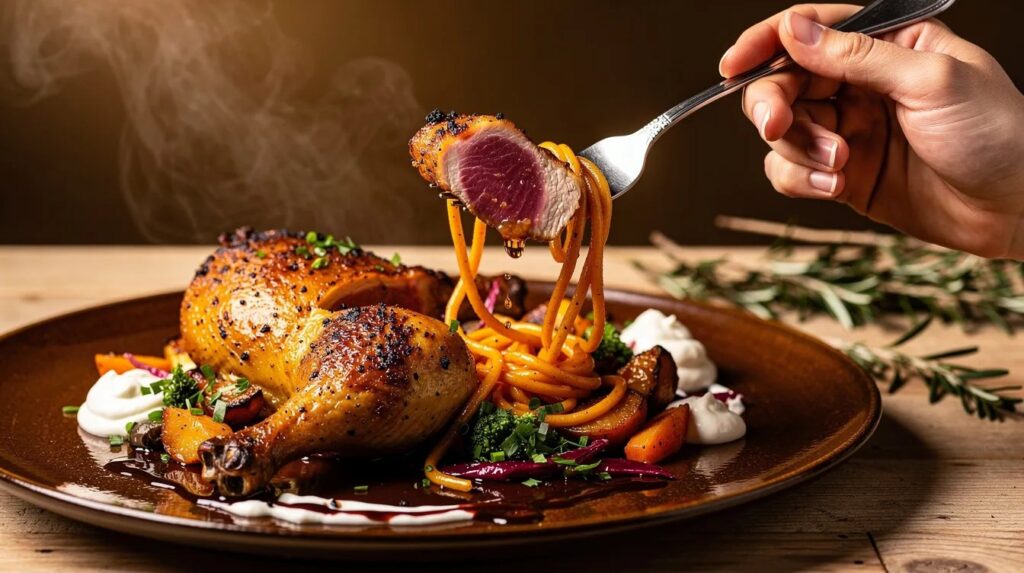
There's something deeply satisfying about a chicken braise — the kind that fills the kitchen with the warm, rounded scent of browning skin, wine-soaked aromatics and slow-melting root vegetables. Traditionally, it's a weekend affair: hours of gentle bubbling, the oven doing its unhurried work while you read the paper. But the craving doesn't politely wait for Saturday. It hits on a Tuesday, after a long day, when you want comfort but not a project.
This weeknight braised chicken solves that tension entirely. By using bone-in, skin-on thighs instead of a whole bird, and by building a flavour base that punches well above its prep time, you get that deep, Sunday-roast complexity in just over an hour — most of it hands-off. The sauce practically makes itself, thickening and concentrating as the thighs braise. The vegetables cook in the same pan, absorbing every drop of rendered fat and stock. Autumn has well and truly landed across Australia, and this is the sort of dish that makes you glad for shorter days and cooler nights. Roll up your sleeves, pull out your heaviest pan, and let's get into it.
| Preparation | 15 min |
| Cooking | 55 min |
| Portions | 4 people |
| Difficulty | Easy |
| Cost | $$ (approx. AUD $18–22 total) |
| Season | Autumn — leeks, carrots, thyme, mushrooms |
Suits: Gluten-free · Dairy-free (without the optional butter finish) · High protein
Ingredients
For the chicken
- 8 bone-in, skin-on chicken thighs (about 1.2 kg total)
- 1 tbsp olive oil
- Fine sea salt and freshly cracked black pepper
For the braise
- 2 medium leeks, white and pale green parts, sliced into 1 cm rounds
- 3 carrots, peeled and cut into chunky oblique pieces
- 200 g Swiss brown mushrooms, halved (or quartered if large)
- 4 cloves garlic, smashed and peeled
- 2 tbsp tomato paste
- 200 ml dry white wine (a Vermentino or unoaked Chardonnay works well)
- 400 ml chicken stock, low-sodium if store-bought
- 4 sprigs fresh thyme
- 2 bay leaves
- 1 tsp Dijon mustard
To finish
- 1 tbsp cold unsalted butter (optional)
- 1 tbsp red wine vinegar or sherry vinegar
- Small handful flat-leaf parsley, roughly chopped
Utensils
- Large, heavy-based ovenproof skillet or Dutch oven (28–30 cm)
- Tongs
- Wooden spoon
Preparation
1. Season and sear the chicken
Preheat your oven to 180 °C (160 °C fan-forced). Pat the chicken thighs thoroughly dry with paper towel — this is the single most important step for achieving crisp, deeply golden skin. Season generously on both sides with fine sea salt and cracked pepper. Set your skillet over medium-high heat and add the olive oil. When the oil shimmers and just begins to smoke, lay the thighs in skin-side down, working in two batches if necessary to avoid crowding. Crowded thighs steam rather than sear, and steam is the enemy of colour. Let them cook undisturbed for 6–7 minutes, until the skin has rendered its fat and turned a deep, burnished gold. You'll hear the sizzle soften as moisture leaves the skin — that's your auditory cue that the Maillard reaction (the chemical browning that builds savoury depth) is well underway. Flip and sear the flesh side for just 2 minutes. Transfer to a plate and set aside.
2. Build the aromatic base
Pour off all but about one tablespoon of the rendered chicken fat. Drop the heat to medium. Add the sliced leeks and a pinch of salt, stirring them through the fat. Cook for 3–4 minutes, scraping up the caramelised fond (those dark, sticky bits clinging to the pan — pure concentrated flavour). Toss in the carrots, mushrooms and smashed garlic and cook for another 3 minutes, until the mushrooms begin to soften and take on colour at the edges. Now push the vegetables to one side and add the tomato paste directly to the exposed pan surface. Allow it to fry for about 1 minute, stirring it into the fat — this brief toasting step drives off raw acidity and deepens the paste's sweetness and brick-red colour.
3. Deglaze and combine
Pour in the white wine. It will hiss and bubble furiously. Use your wooden spoon to scrape every last bit of fond from the pan floor — this is deglazing, and it's where the weeknight version starts to taste like it simmered all afternoon. Let the wine reduce by roughly half, about 2 minutes. Stir in the chicken stock, Dijon mustard, thyme sprigs and bay leaves. Bring the liquid to a steady simmer. The sauce will look loose and brothy at this stage, but the oven will concentrate it considerably.
4. Nestle and braise
Arrange the seared chicken thighs back in the pan, skin-side up, nestling them among the vegetables. The liquid should come about two-thirds of the way up the thighs, leaving the skin exposed above the surface. This is the trick: submerged flesh braises and turns meltingly tender, while the exposed skin stays in the dry heat of the oven and crisps further. Slide the pan, uncovered, onto the middle rack and let it braise for 40–45 minutes. You'll know it's ready when the sauce has thickened to a glossy, spoon-coating consistency, the carrots yield easily to a fork, and the chicken skin looks lacquered and taut.
5. Finish and serve
Remove the pan from the oven (careful — that handle is scorching). Discard the thyme sprigs and bay leaves. If you like a richer, more velvety sauce, stir the cold butter through the braising liquid off the heat — monter au beurre, the French call it, and even a single tablespoon transforms the texture. Add the red wine vinegar and stir gently. The vinegar brightens everything, cutting through the richness and lifting each vegetable's flavour into sharper focus. Taste the sauce and adjust salt. Scatter the chopped parsley over the top. Serve straight from the pan with crusty bread, mashed potatoes or a mound of buttery polenta to soak up the sauce.
My chef's tip
Don't be tempted to use chicken breast here. Thighs braise beautifully because of their higher fat and connective tissue content — that collagen melts into the sauce, giving it body without any flour or thickener. If you can only find thighs with the bone removed, reduce the braising time by about 10 minutes and check for doneness early. And if autumn mushrooms like slippery jacks or pine mushrooms appear at your local farmers' market, swap them in for the Swiss browns. Their earthy, almost smoky perfume will take this dish somewhere extraordinary.
Wine and drink pairings
You want a wine that mirrors the dish's warmth and savoury depth without overpowering the delicate leek and mushroom flavours. A medium-bodied red with soft tannins is ideal.
A yarra valley pinot noir is a natural partner — its cherry-toned fruit and gentle spice echo the thyme and tomato base. A mclaren vale grenache, slightly chilled, offers a more generous, berry-forward option. For white-wine lovers, the same unoaked Chardonnay you used in the braise works beautifully at the table — there's a pleasing symmetry to it. For a non-alcoholic option, try sparkling apple cider with a squeeze of lemon: its acidity and gentle sweetness cut through the braising liquid in much the same way wine does.
More about this dish
Braising is one of the oldest cooking techniques in the human repertoire. The word itself derives from the French braiser, which traces back to braise — glowing embers. Before ovens were reliable, cooks would nestle a sealed pot into hot coals, surrounding it with slow, even heat. The principle has barely changed: sear for colour, add liquid for moisture, then cook low and slow until tough cuts surrender. Chicken thigh braises appear in nearly every cuisine that raises poultry, from Italian pollo in umido to West African groundnut stews.
In Australia, the weeknight braise has experienced a quiet renaissance. As home cooks rediscover the economy and satisfaction of cooking with bone-in cuts — far cheaper per kilo than breast fillets — dishes like this have transitioned from Sunday-only territory into the regular midweek rotation. The method rewards simplicity: good stock, seasonal vegetables, a decent splash of wine, and patience measured in minutes rather than hours. Every autumn, as the first genuinely cool evenings settle in, this is the kind of cooking that feels just right.
Nutritional information (per portion — 2 thighs + vegetables + sauce, approximate values)
| Nutrient | Amount |
|---|---|
| Calories | ~480 kcal |
| Protein | ~42 g |
| Carbohydrates | ~16 g |
| Of which sugars | ~7 g |
| Fat | ~24 g |
| Fibre | ~4 g |
Frequently asked questions
Can I prepare this dish ahead of time?
You can braise the chicken up to a day in advance and store it, covered, in the fridge. The flavours will deepen overnight. Reheat gently in a 160 °C oven for 20–25 minutes. The skin won't be quite as crisp as fresh from the oven, but you can flash it under a hot grill for the last 3 minutes to restore some crunch.
How should I store leftovers?
Transfer the chicken and sauce to an airtight container and refrigerate for up to 3 days. The braising liquid will set into a soft jelly — that's the collagen from the bones doing its work, and it's a sign of a well-made braise. Reheat portions in a small saucepan over medium-low heat or in the microwave. The dish also freezes well for up to 2 months; defrost overnight in the fridge before reheating.
What substitutions or variations work well?
Swap the leeks for a large brown onion if leeks aren't available. Replace carrots with parsnips or turnips for a slightly earthier result — both are plentiful throughout Australian autumn. If you prefer not to use wine, increase the stock by 150 ml and add a tablespoon of white wine vinegar at the deglazing stage for acidity. Chicken drumsticks also braise well with this method; just add 5–10 minutes of oven time.
Can I make this on the stovetop instead of the oven?
Yep. After arranging the thighs back in the pan, reduce the heat to low, cover with a lid slightly ajar, and simmer for 35–40 minutes. The trade-off is the skin: it won't crisp as well with a lid on. For the best of both worlds, finish the dish under a hot grill for 3–4 minutes to crisp the skin after the stovetop braise.
What should I serve alongside this?
Anything that absorbs sauce generously. Creamy mashed potatoes are the classic pairing. Soft polenta, egg noodles or a torn piece of sourdough all work. A simple green salad dressed with lemon and olive oil provides a fresh counterpoint to the richness. Steamed greens — broccolini, green beans, or wilted silverbeet — round out the plate without competing for attention.