

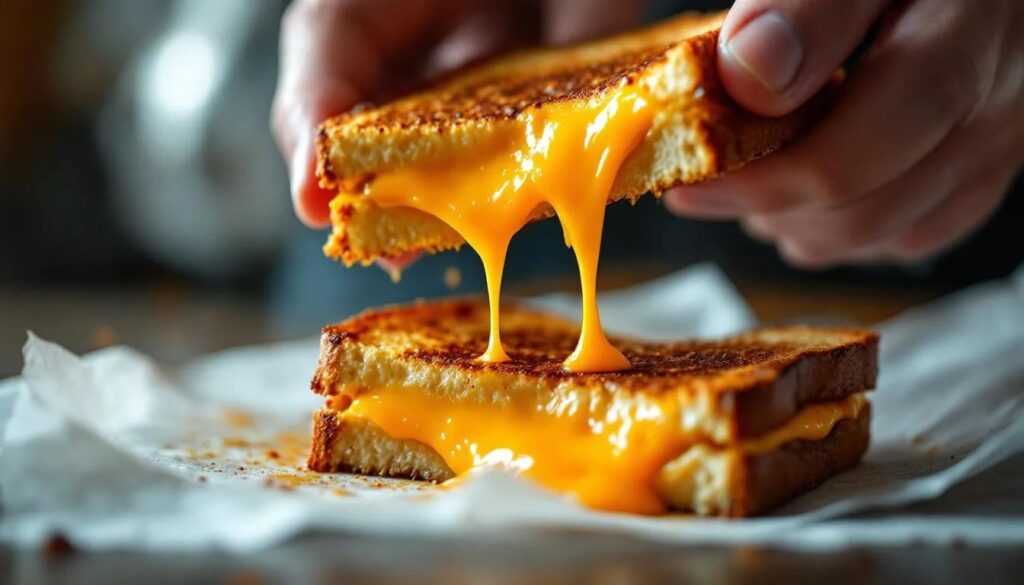
Every home cook has that moment when a single substitution completely changes the game. Kenji López-Alt, culinary scientist, author of The Food Lab, and one of today's most methodical recipe testers, sparked such a revolution when he made the case for using mayonnaise instead of butter on grilled cheese sandwiches. In much of North America, late March is ideal for soup and sandwiches. As winter's tail end lingers into the evenings, a grilled cheese fresh from a cast-iron pan is one of the most comforting meals you can have.
What seems like a gimmick turns out to be grounded in kitchen chemistry. Mayonnaise and butter react differently to heat, which results in a deeper, more uniform crust with a glossy finish. These differences aren't just subjective; they are measurable. Below, we'll break down why this substitution works, examine the molecular-level science, provide execution tips, and discuss when butter might still be the better choice.
The science behind the swap
Butter is approximately 80% fat, with the remaining 20% consisting of water and milk solids. When butter is exposed to a hot pan, the water evaporates, potentially causing uneven browning or burning if the heat isn't controlled carefully. The milk solids brown through the Maillard reaction, the same mechanism that gives bread its crust and seared meat its richness. However, they can also burn quickly at temperatures above 150°C (300°F).
Mayonnaise, conversely, is an emulsion consisting of oil, egg yolk, and a bit of acid, usually vinegar or lemon juice. Its fat content is approximately 75–80%, similar to butter, but it has no water to evaporate. The egg yolk offers more emulsifiers and proteins, which brown steadily and evenly. The outcome is a sandwich with a uniformly crisp surface, edge to edge, without the need for constant heat monitoring.
Another practical advantage is how easily it spreads. Cold butter can tear soft bread, while room-temperature mayonnaise glides on effortlessly, ensuring an even, thin coat that results in a consistent crust.
What Kenji actually observed
López-Alt's experiment was characteristically thorough, involving side-by-side comparisons on identical bread, cheese, and pan temperatures. The butter sandwich required constant attention and reduced heat, yet still showed pale spots. The mayonnaise sandwich, spread thinly and evenly, achieved a rich amber colour across its entire surface in about the same time, without needing as much attention.
He also stated that the flavor difference is less noticeable than most skeptics expect. The vinegar in the mayonnaise largely cooks off at high heat, and the egg proteins contribute a richness that tastes more buttery than eggy. In blind taste tests, participants often preferred the texture of the mayonnaise version without knowing why.
"The mayonnaise sandwich is more forgiving, more consistent, and produces a better crust than butter, and most people can't taste the difference."
How to apply the technique
The method is simple: Use a full-fat, commercial mayonnaise like Hellmann's or Duke's, as these contain more oil than artisanal versions. Apply a thin layer to the outside of each slice of bread, similar to how you would butter toast. Preheat the pan to medium-low heat. Though mayonnaise is more forgiving than butter, being patient yields better results than using high heat.
Place the coated side down in the dry pan, no extra fat is needed as the mayonnaise acts as its own cooking medium. Let it sit until the bottom develops colour, usually in 3 to 4 minutes, without pressing. Flip it once, press it gently, and cook the other side for another 2 to 3 minutes.
The cheese inside should be fully melted once both crusts have turned a deep amber colour. If this isn't happening, reduce heat slightly and cover the pan loosely for the last minute.
Choosing the right cheese
The mayonnaise technique works with any cheese, but it's especially effective with cheeses that take more time to melt, such as aged cheddar, Gruyère, or a mix of fontina and provolone. Given that mayonnaise ensures a slower, steadier crust development, the bread is less likely to brown too quickly before the cheese has melted properly.
Avoid using pre-shredded cheese as it contains anti-caking agents, which can affect melting and result in a grainy texture. Instead, slice or grate your cheese directly from the block. As the weather warms up, a sharp aged cheddar with a thin spread of Dijon mustard can make for a particularly satisfying sandwich.
When butter still wins
This substitution isn't always ideal. If the goal is pure flavor, especially with a simple sandwich made with exceptional sourdough and high-quality cheese, the richness of butter adds complexity that mayonnaise can't fully match. Brown butter, with its nutty and caramel notes, brings another dimension that emulsified oil can't replicate.
Bread type also matters. Mayonnaise's advantage lies in its ability to ensure a slower, more even crust on a thick, dense loaf. The difference between fats is less significant on thin, commercial white bread, where the gap between golden and overcooked is narrow.
A note on variations
Some cooks add a bit of garlic powder or smoked paprika directly to the mayonnaise before spreading, which infuses the crust as it cooks. Others combine softened butter and mayonnaise in equal parts for a hybrid that offers both flavour and better browning. Both methods are worth exploring.
To elevate the sandwich, consider adding a thin layer of caramelised onions or whole-grain mustard alongside the cheese, as they pair well with the richer crust that mayonnaise creates.
Nutritional information (per serving, approximate values)
| Nutrient | Amount |
|---|---|
| Calories | ~480 kcal |
| Protein | ~18 g |
| Carbohydrates | ~32 g |
| of which sugars | ~3 g |
| Fat | ~32 g |
| Fiber | ~2 g |
Frequently asked questions
Does the sandwich taste like mayonnaise once cooked?
Not really. The acid in the mayonnaise mostly evaporates during cooking, and the egg proteins contribute a richness that makes it taste savoury and buttery rather than eggy or tangy. Most people in blind taste tests can't tell which fat was used once the sandwich is cooked.
Does this work with vegan mayonnaise?
Yes, but with a few caveats. Vegan mayonnaise, usually made with aquafaba or other plant-based emulsifiers, has a different water content and emulsion stability, which may affect browning. Brands with more oil work better. Generally, the results are good, though the crust might be a bit less uniform than when using egg-based mayonnaise.
How much mayonnaise should you use?
Less than you'd think. A thin, even layer, about as much as you'd use on toast, is enough. Too much will make the crust greasy instead of crispy. You want full coverage with minimal thickness, which is where mayonnaise performs better than cold butter; it spreads easily without tearing the bread.
Can this technique be used in a panini press or sandwich maker?
Yes, but the results will be a little different. A press heats both sides at once while applying pressure, which speeds up browning. Mayonnaise works well here because it doesn't have water that creates steam pockets. Lower the heat a bit from your normal setting and check after 2 minutes to avoid over-browning.
Is there a bread type that works best with this technique?
Medium-density bread is best, such as a good pullman loaf, a mild sourdough, or a sturdy white sandwich bread. Very open-crumb breads, like a rustic bâtard, can let the mayonnaise seep into the holes instead of coating the surface evenly. Thicker slices also benefit more from this technique because the slower, even heat lets the cheese melt fully before the crust gets too brown.